Guides
Router buying content that covers the base types, motor specs, collet sizes, and when a router table pays for itself.
Why this page exists
Router content online oscillates between "beginner's guide to using a router" and brand-comparison roundups. Neither explains why the collet size matters more than HP for most hobbyists, or when a compact trim router is actually the better choice over a full-size machine for the operations you'll actually do.
This page focuses on the decisions: base type, motor size, collet diameter, variable speed, and the router-table question — with enough context to match the tool to your real workflow.
Wood routers worth searching on eBay
Compact trim routers through full-size plunge routers and router table setups. We earn a small commission on qualifying sales; your price is unchanged. Full disclosure.
 Plunge Router
Spring-loaded motor unit that plunges down into the workpiece. Required for mortises, inlays, and any cut that starts mid-panel. Typically 2–2.25HP with ½-inch collet.
Plunge Router
Spring-loaded motor unit that plunges down into the workpiece. Required for mortises, inlays, and any cut that starts mid-panel. Typically 2–2.25HP with ½-inch collet.
 Router Kit (Fixed + Plunge)
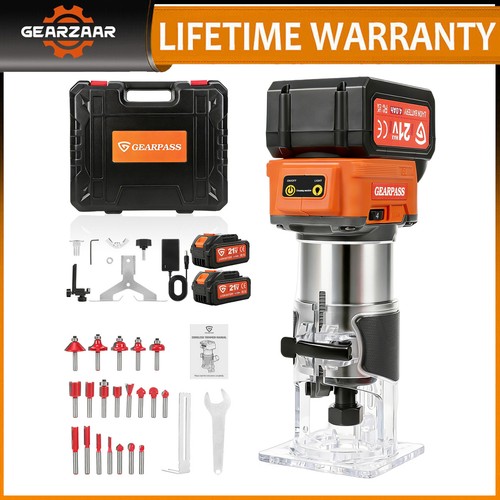
One motor unit with interchangeable fixed and plunge bases. Efficient buy for woodworkers who do both edge profiling and freehand routing. Verify base compatibility before buying used.
Router Kit (Fixed + Plunge)
One motor unit with interchangeable fixed and plunge bases. Efficient buy for woodworkers who do both edge profiling and freehand routing. Verify base compatibility before buying used.
 Router Table
Inverts the router under a flat table surface with a fence. Adds precise, repeatable edge profiling without hand-holding. Benchtop and full-size floor models available. Check router compatibility.
Router Table
Inverts the router under a flat table surface with a fence. Adds precise, repeatable edge profiling without hand-holding. Benchtop and full-size floor models available. Check router compatibility.
 Compact Router (Trim Router)
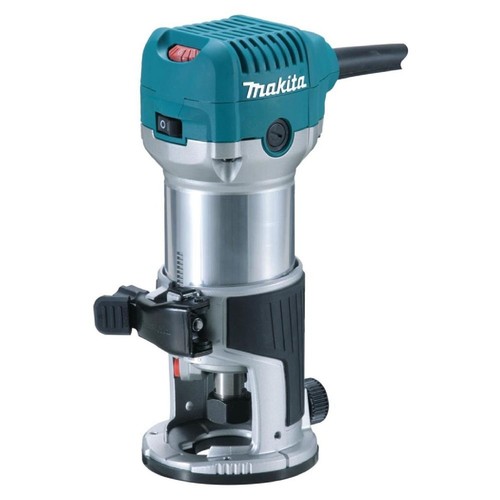
1–1.25HP, typically ¼-inch collet only. Excellent for edge profiling, chamfers, and laminate trimming. Far easier to control one-handed. The right choice for many finish woodworking tasks.
Compact Router (Trim Router)
1–1.25HP, typically ¼-inch collet only. Excellent for edge profiling, chamfers, and laminate trimming. Far easier to control one-handed. The right choice for many finish woodworking tasks.
 Router Bits Set
Carbide-tipped sets covering the most common profiles: roundover, chamfer, cove, rabbet, flush trim, and straight. Check shank diameter (¼ or ½ inch) matches your collet.
Router Bits Set
Carbide-tipped sets covering the most common profiles: roundover, chamfer, cove, rabbet, flush trim, and straight. Check shank diameter (¼ or ½ inch) matches your collet.