Guides
Practical table-saw content — saw types, fence quality, motor specs, and dust collection. No filler.
Troubleshooting
Why your table saw burns, binds, or cuts crooked — it's the alignment, not the motor or the blade
The scorch line, the bogging motor, and the board that snaps back at you are all one thing: three flat references drifted out of parallel. How to read which one, fix it free with a square, and why that bind is the same condition as kickback.
Buying guide
How to choose a table saw: portable vs contractor vs cabinet, fence quality & motor power
The four saw classes explained by what actually changes: rip capacity, fence stiffness, motor duty cycle, and whether the saw lives on a truck or in a permanent shop.
Why this page exists
Most table-saw content either targets contractors buying their fifth saw or first-timers scared of the tool. Neither camp explains what the fence quality actually determines, or why a contractor-class saw motor runs hot after 30 minutes of resawing hardwood.
The buying decision depends almost entirely on three things: where the saw lives, what material you cut, and how long your sessions run. This page explains each factor plainly so you can match the saw class to your actual workflow.
Plain note about money. Links below go to eBay searches with an affiliate tag. If you buy through one, a small commission comes to this site. Your price is identical either way. The searches are ones we'd actually run — not sponsored placements.
Table saws worth searching on eBay
Portable jobsite saws through cabinet-class stationary machines. We earn a small commission on qualifying sales; your price is unchanged. Full disclosure.
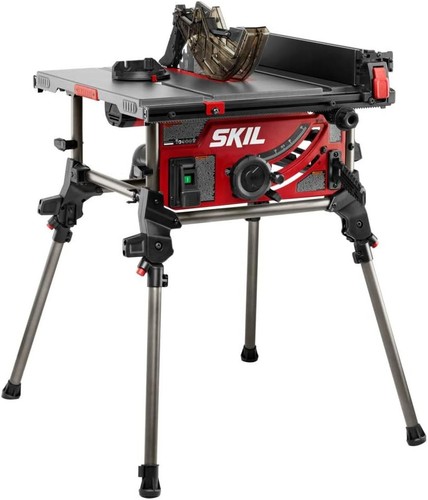 Portable Table Saw
Typically 15A direct-drive, 24–28½ inch rip capacity. Folds for transport. Best for jobsite use or small shops where the saw doesn't have a permanent home.
Portable Table Saw
Typically 15A direct-drive, 24–28½ inch rip capacity. Folds for transport. Best for jobsite use or small shops where the saw doesn't have a permanent home.
 Contractor Table Saw
Open-base design, typically 1.75–2HP belt-drive motor. Heavier than portable saws, better fence systems, suitable for semi-permanent shop setups with limited budget.
Contractor Table Saw
Open-base design, typically 1.75–2HP belt-drive motor. Heavier than portable saws, better fence systems, suitable for semi-permanent shop setups with limited budget.
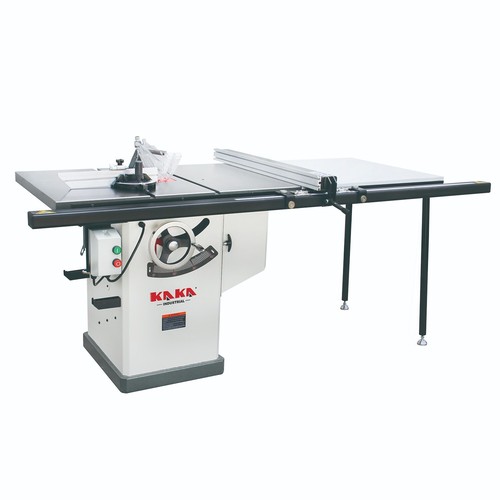 Cabinet Table Saw
Enclosed base, 3–5HP induction motor, 30–52 inch rip capacity, precision T-square fence. The stationary shop workhorse for serious woodworkers who run long sessions.
Jobsite Table Saw
Compact, stand-mounted, 10-inch blade. Designed for portability with better fence systems than entry portables. Common choice for finish carpenters working on-site.
Cabinet Table Saw
Enclosed base, 3–5HP induction motor, 30–52 inch rip capacity, precision T-square fence. The stationary shop workhorse for serious woodworkers who run long sessions.
Jobsite Table Saw
Compact, stand-mounted, 10-inch blade. Designed for portability with better fence systems than entry portables. Common choice for finish carpenters working on-site.
 10-Inch Table Saw Blade
Combination, rip, or crosscut profiles in carbide-tipped. Tooth count drives finish quality — 40T combo for general use, 60–80T ATB for clean sheet goods and hardwood.
10-Inch Table Saw Blade
Combination, rip, or crosscut profiles in carbide-tipped. Tooth count drives finish quality — 40T combo for general use, 60–80T ATB for clean sheet goods and hardwood.