The four classes and what actually separates them
Table saws are sold in four broad categories: portable/jobsite, contractor, hybrid, and cabinet. Marketing language blurs these — manufacturers use "professional" on everything — so it helps to sort them by structural design rather than price bracket.
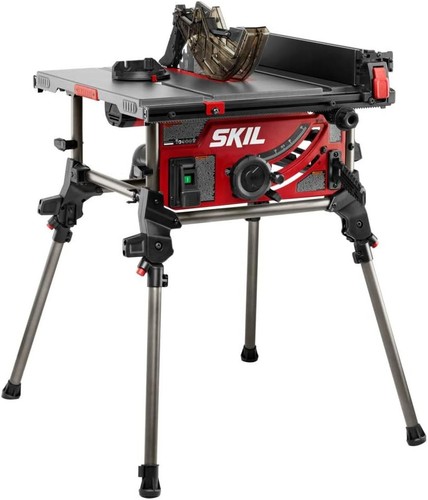
- Portable/jobsite saws use a direct-drive motor mounted directly to the blade arbor, sit on a folding stand or rolling cart, and typically weigh 45–70 lb. They run on 120V 15A circuits and produce 1.5–2HP (measured generously).
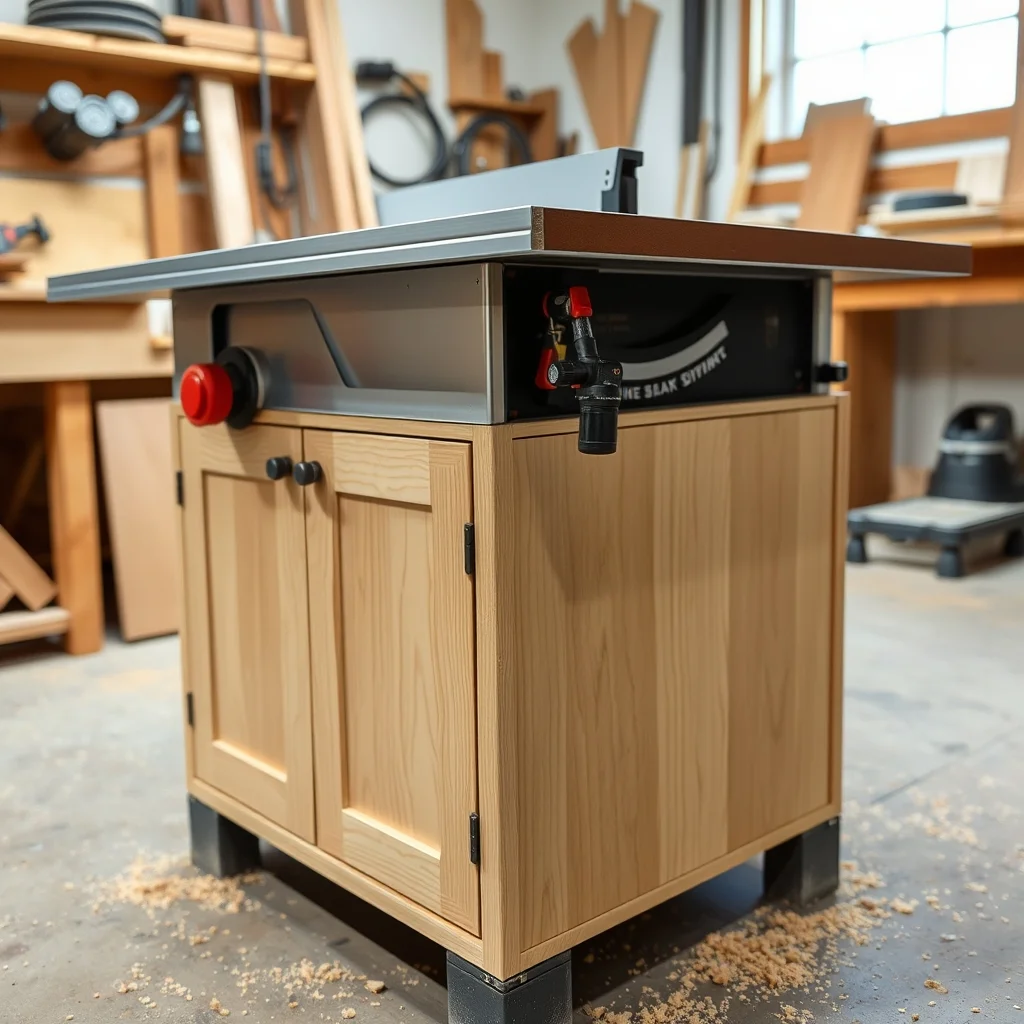
- Contractor saws have an open-base cast-iron or cast-aluminum table, a belt-drive motor hung off the back of the saw (often externally), and more mass — typically 250–350 lb. They have better vibration damping than portables and accept rip fence upgrades.
- Hybrid saws occupy the gap between contractor and cabinet: enclosed or semi-enclosed bases, 1.75–2HP induction motors, and better fence systems than contractor-class saws. They weigh 300–450 lb and typically run on 120V or 240V.
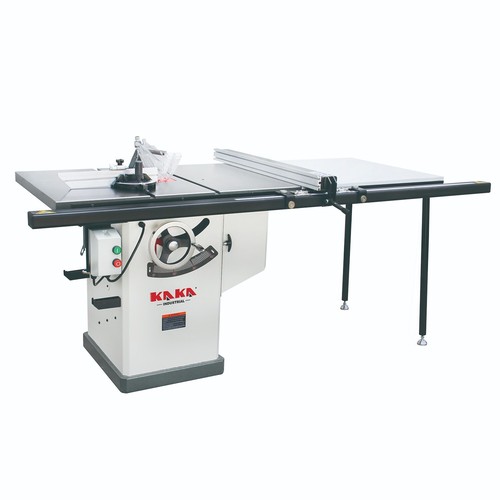
- Cabinet saws use fully enclosed bases, heavy cast-iron tables, 3–5HP induction motors on 240V circuits, and precision fence systems. They weigh 500–700+ lb, are not portable, and are designed for production-level or serious hobbyist use.
| Class | Motor type | Typical HP | Fence quality | Weight |
|---|---|---|---|---|
| Portable/jobsite | Direct-drive | 1.5–2HP (nominal) | Basic rack-and-pinion | 45–70 lb |
| Contractor | Belt-drive, open mount | 1.5–2HP induction | Improved, upgradeable | 250–350 lb |
| Hybrid | Belt-drive, enclosed | 1.75–2HP | T-square style | 300–450 lb |
| Cabinet | Induction, enclosed base | 3–5HP | Precision T-square | 500–700+ lb |
What "fence quality" actually determines
The fence is arguably the most important component on a table saw, and it's where manufacturers cut costs most visibly. A fence's job is to remain parallel to the blade over its full travel range — any deviation produces a rip cut that drifts, burns the wood, or binds the blade.
Rack-and-pinion vs T-square fences
Jobsite saws typically use rack-and-pinion fences that lock via a cam mechanism. They work reasonably well for crosscuts and occasional ripping, but the lock mechanism can introduce slight movement as it engages. Higher-end T-square fences (named because they look like a T in cross-section) clamp along a front rail with a single lever and stay parallel to the blade over the full rail width. The difference is noticeable when ripping long stock — a T-square fence stays put; a budget fence can flex or creep.
Rip capacity
This is the distance from the blade to the right side of the fence at maximum extension. Standard portable saws offer 24–28.5 inches, which handles a 4×8 sheet ripped down the middle. Cabinet saws commonly offer 30–52 inch rip capacity — the extra width lets you rip sheet goods without having to move the fence between cuts. If you process 4×8 plywood regularly, a minimum 24-inch rip capacity is needed; 30+ inches is noticeably more comfortable for sheet goods.
Motor power: what matters and what doesn't
Horsepower ratings on table saws are often inflated, particularly on portable and contractor-class saws where "peak HP" (measured at the moment of startup, not under load) appears in the specs. A 15A direct-drive motor on 120V delivers roughly 1.5–1.7 continuous HP under cutting load. That's sufficient for construction lumber and softwood but will bog down on thick hardwood or dense sheet goods.
Direct-drive vs belt-drive
Direct-drive motors sit on the arbor — the motor shaft is the blade arbor, or is coupled directly to it. This makes the saw compact and light, but the motor runs at blade speed (typically 3,450 RPM for a 10-inch blade) and any vibration in the motor transmits directly to the blade. Belt-drive motors spin at motor speed (typically 3,450 RPM) and the belt reduces to blade speed while absorbing vibration. The result is a smoother cut, quieter operation, and longer motor life for the same nominal horsepower.
Duty cycle: the practical limit
This is where portable saw specs meet shop reality. A direct-drive 15A saw motor running flat-out on dense hardwood generates significant heat. The motor thermal protection may cut out after 20–30 minutes of continuous heavy use. Cabinet-saw induction motors run cooler, draw more cleanly from the power supply, and can sustain hours of production work. If you're doing furniture-scale resawing in hardwood, this matters. For occasional cuts in softwood or plywood, it typically doesn't.
Shopping for a table saw? Browse current eBay listings → (we earn a small commission; your price is unchanged).
Dust collection: a real functional concern, not just cleanup
Table saws generate significant fine sawdust — especially when cutting MDF or hardwood. Inadequate dust collection is a health concern (fine particles accumulate in lungs) and a shop concern (sawdust in the motor reduces airflow and longevity).
Portable saws typically have a dust port at the back accepting a 2.5-inch hose, and they capture roughly 50–70% of dust below the table — above-table dust escapes freely unless you add a blade guard with integrated collection. Cabinet saws with enclosed bases seal around the blade and connect to 4-inch dust collectors; combined with a proper blade guard, they can achieve 90%+ collection efficiency.
Blade guards and riving knives
Modern table saws ship with a riving knife — a blade-shaped plate behind the blade that keeps the kerf open and prevents the wood from pinching back onto the blade (which causes kickback). Older saws used a splitter instead, which doesn't move with the blade on bevel cuts. A riving knife is meaningfully safer than a splitter. If you're buying a used saw, check whether it has a riving knife or splitter — the riving knife is the upgrade.
Portable vs permanent shop: the real decision
The most important question before buying is whether the saw needs to move. If you work on-site — framing, trim, finish carpentry in client spaces — portability is non-negotiable and you need a jobsite saw, full stop. The limitations in fence quality and motor duty cycle are real but acceptable given that you're cutting dimensional lumber and plywood, not furniture-grade hardwood.
If the saw lives in a garage shop or dedicated woodworking space, the calculus changes. A contractor saw weighs 300 lb and doesn't move easily, but for the same money as a premium jobsite saw it offers better fence, quieter operation, and longer duty cycles. A hybrid saw at a similar weight and price point offers better dust enclosure and fence systems. A used cabinet saw — frequently available as woodworkers upgrade or estates sell tools — offers full production capability at prices that overlap with new contractor saws.
Used market considerations
Cabinet saws from brands like Delta Unisaw, Powermatic, and older General (Canadian) machines hold up extremely well. A properly maintained Delta Unisaw from the 1980s will outperform a new mid-range contractor saw in every meaningful spec. The cast iron stays flat, the fence systems have been upgraded by the previous owner in many cases, and the induction motor runs indefinitely.
Things to check on a used table saw: arbor runout (spin the arbor by hand and feel for wobble), fence parallelism to the blade (requires a dial indicator), trunnion tightness (rock the blade assembly for play), and motor start-up (listen for any grinding or hesitation). A saw that passes those checks is typically sound regardless of age.
10-inch vs 8-inch blades
The vast majority of table saws use 10-inch blades. The 10-inch standard means the blade market is enormous — wide selection, competitive pricing, and availability from every hardware store. An 8-inch saw saves some cost at purchase but severely limits blade options and resale value. Unless you have a specific reason for an 8-inch saw (usually a very space-constrained hobby workshop), buy a 10-inch machine.
For 10-inch blades, the specs that matter are tooth count and grind. A 40-tooth alternate top bevel (ATB) combination blade handles most cutting tasks well. A 60–80 tooth ATB or triple-chip grind blade handles melamine, veneer-core plywood, and hardwood finish cuts cleaner. A 24–30 tooth flat-top grind (FTG) rips solid lumber quickly with minimal heat. For most hobbyists, a quality 40T combo blade plus a 60T finishing blade covers the full range.
The honest buying path
Start with the portability requirement, not the brand. If the saw must move, buy the best jobsite saw your budget allows and prioritize fence quality over raw HP ratings. The DEWALT DWE7491RS, Bosch 4100XC-10, and similar saws represent the realistic ceiling of the jobsite class.
If the saw is permanent, consider the used cabinet-saw market seriously before buying new at the contractor or hybrid level. A used Powermatic or Delta in good condition is typically a better saw than a new contractor saw at the same price. Used pricing varies significantly by region and condition; eBay gives you market visibility beyond your local listings.
Search eBay for table saws
 Portable Table Saws
Jobsite and compact saws. Verify weight, rip capacity, and whether a stand is included.
Portable Table Saws
Jobsite and compact saws. Verify weight, rip capacity, and whether a stand is included.
 Cabinet Table Saws
Used Powermatic, Delta Unisaw, and General machines. Check arbor and fence condition.
Cabinet Table Saws
Used Powermatic, Delta Unisaw, and General machines. Check arbor and fence condition.
 10-Inch Saw Blades
Carbide-tipped combination, ripping, and finishing blades. Check arbor bore (typically 5/8 inch).
10-Inch Saw Blades
Carbide-tipped combination, ripping, and finishing blades. Check arbor bore (typically 5/8 inch).