Guides
Technical depth on hardware samplers — sample rates, disk drive replacement, RAM expansion, and what to check before buying used.
Why this page exists
Most vintage sampler content either fetishizes gear without technical grounding or is dealer listings missing the condition details that matter. Neither tells you whether the floppy drive on a used MPC60 is likely to load or fail on arrival.
The E-mu SP-1200 runs at 26.04 kHz with 12-bit resolution — specs that would be considered inadequate for professional work today, yet that exact combination produces a sonic character that software cannot replicate convincingly. Understanding what those numbers mean, and what they imply for condition assessment and use, is the actual knowledge gap this page addresses.
Vintage samplers worth searching on eBay
The machines with proven collector and producer markets. We earn a small commission on qualifying sales; your price is unchanged. Full disclosure.
 Akai MPC60
Roger Linn design (1988). 12-bit, 40 kHz max sample rate. 16 velocity/pressure-sensitive pads. Floppy drive is the key condition variable — ask if it loads disks reliably.
Akai MPC60
Roger Linn design (1988). 12-bit, 40 kHz max sample rate. 16 velocity/pressure-sensitive pads. Floppy drive is the key condition variable — ask if it loads disks reliably.
 E-mu SP-1200
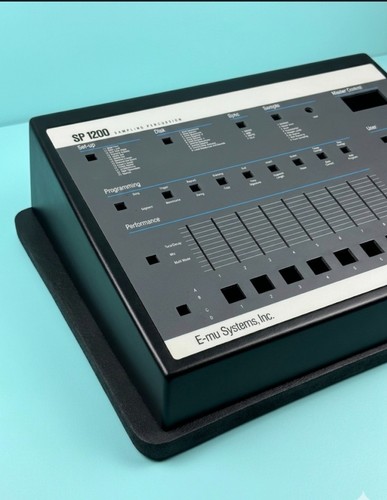
12-bit, 26.04 kHz — the grit standard. Definitive hip-hop production machine. Only 10 seconds total sample time at base; memory expansion changes the math. Check all pads.
E-mu SP-1200
12-bit, 26.04 kHz — the grit standard. Definitive hip-hop production machine. Only 10 seconds total sample time at base; memory expansion changes the math. Check all pads.
 Akai MPC3000
1994 upgrade to 16-bit/44.1 kHz. More RAM, SCSI expansion, better sequencer. The studio-standard MPC. Verify SCSI port function and internal drive condition if present.
Akai MPC3000
1994 upgrade to 16-bit/44.1 kHz. More RAM, SCSI expansion, better sequencer. The studio-standard MPC. Verify SCSI port function and internal drive condition if present.
 Ensoniq samplers
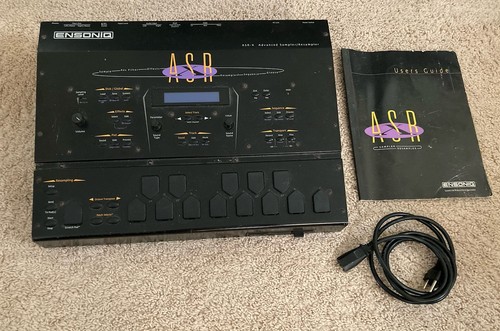
Mirage (8-bit), EPS (13-bit), ASR-10 (16-bit). The accessible end of vintage sampling. Check floppy drives, SCSI if present, and key function across the keyboard.
Ensoniq samplers
Mirage (8-bit), EPS (13-bit), ASR-10 (16-bit). The accessible end of vintage sampling. Check floppy drives, SCSI if present, and key function across the keyboard.
 Vintage hardware samplers (broad)
Catches Akai S-series, Roland S-series, Korg DSS-1, Korg DSM-1, and others. Good for finding adjacent machines before the market fully prices in the collector premium.
Vintage hardware samplers (broad)
Catches Akai S-series, Roland S-series, Korg DSS-1, Korg DSM-1, and others. Good for finding adjacent machines before the market fully prices in the collector premium.