Guides
Practical fishing kayak content — sit-on-top vs sit-in, stability and hull design, pedal vs paddle vs motor, weight limits, and rigging for rods and fish finders.
Why this page exists
Kayak fishing content is dominated by brand reviews that talk about features without explaining the hull physics behind stability. Whether you can stand to cast on a kayak is determined by hull width and secondary stability — two specs that most reviews don't explain at all.
This page addresses the design decisions behind fishing kayak specs so you can match the hull to your fishing style before spending $600–$4,000 on a platform.
Fishing kayaks worth searching on eBay
Paddle, pedal, and motorized kayaks matched to fishing style and water type. We earn a small commission on qualifying sales; your price is unchanged. Full disclosure.
 Fishing kayak
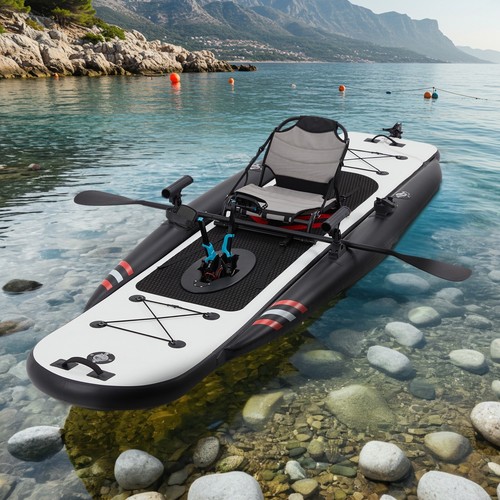
Sit-on-top fishing platforms. Check hull width for stability, weight capacity vs your gear load, and whether it includes flush-mount rod holders or requires separate rigging.
Fishing kayak
Sit-on-top fishing platforms. Check hull width for stability, weight capacity vs your gear load, and whether it includes flush-mount rod holders or requires separate rigging.
 Sit-on-top fishing kayak
Open deck design. More stable for fishing and self-rescue if you capsize. The dominant platform for freshwater and inshore saltwater kayak fishing. Look for molded-in scupper holes for drainage.
Pedal fishing kayak
Hands-free propulsion via rotating fins or propeller. Best for covering open water and trolling. Heavier and wider than paddle kayaks; typically requires more minimum water depth (6–8 inches) for the drive.
Sit-on-top fishing kayak
Open deck design. More stable for fishing and self-rescue if you capsize. The dominant platform for freshwater and inshore saltwater kayak fishing. Look for molded-in scupper holes for drainage.
Pedal fishing kayak
Hands-free propulsion via rotating fins or propeller. Best for covering open water and trolling. Heavier and wider than paddle kayaks; typically requires more minimum water depth (6–8 inches) for the drive.
 Kayak fishing accessories
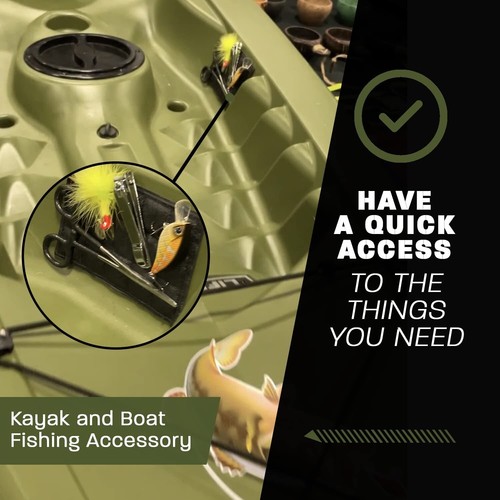
Rod holders, anchor systems, fish finders, transducer mounts, and crate systems. A bare kayak needs significant rigging before it's an efficient fishing platform.
Kayak fishing accessories
Rod holders, anchor systems, fish finders, transducer mounts, and crate systems. A bare kayak needs significant rigging before it's an efficient fishing platform.
 Inflatable fishing kayak
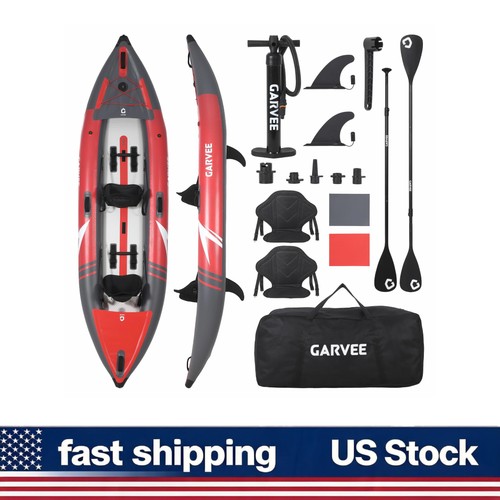
Storage and transport solution for anglers without roof rack or trailer space. Drop-stitch floor construction in quality inflatables provides rigidity comparable to hard shells at fishing speeds.
Inflatable fishing kayak
Storage and transport solution for anglers without roof rack or trailer space. Drop-stitch floor construction in quality inflatables provides rigidity comparable to hard shells at fishing speeds.