Guides
Practical rod-buying content — power ratings, action explained, length tradeoffs, and material comparison. No marketing fluff.
GuideAction and power, not price, are the rod specs that matterBeginners shop for fishing rods by price and brand, then wonder why the rod feels wrong for what they're doing. Two specs printed right on the rod tell you a…
Buying guide
How to choose a fishing rod: power, action, length, and material
Power ratings from ultralight to heavy, fast vs moderate action, spinning vs casting, and when graphite beats fiberglass (and when it doesn't).
Why this page exists
Fishing rod content online is full of affiliate reviews that stop at brand names and price points. What it rarely explains is how the underlying specs — power, action, length — connect to the fish you're targeting and the technique you're using.
A medium-heavy fast rod and a medium-light moderate rod can cost the same and look similar on a rack. They fish completely differently. This page explains the specs plainly so you can match rod to technique before spending money.
Plain note about money. Links below go to eBay searches with an affiliate tag. If you buy through one, a small commission comes to this site. Your price is identical either way. The searches are ones we'd actually run — not sponsored placements.
Fishing rods worth searching on eBay
Rods matched to technique and target species. We earn a small commission on qualifying sales; your price is unchanged. Full disclosure.
 Spinning rod
The most versatile rod style — guides face down, pairs with a spinning reel. Works from ultralight panfish to medium-heavy bass setups. Easier to learn than casting.
Casting rod
Trigger grip, guides face up. Pairs with baitcasting or spincast reels. Better leverage for heavy lures and pitching accuracy once you master the thumb brake.
Spinning rod
The most versatile rod style — guides face down, pairs with a spinning reel. Works from ultralight panfish to medium-heavy bass setups. Easier to learn than casting.
Casting rod
Trigger grip, guides face up. Pairs with baitcasting or spincast reels. Better leverage for heavy lures and pitching accuracy once you master the thumb brake.
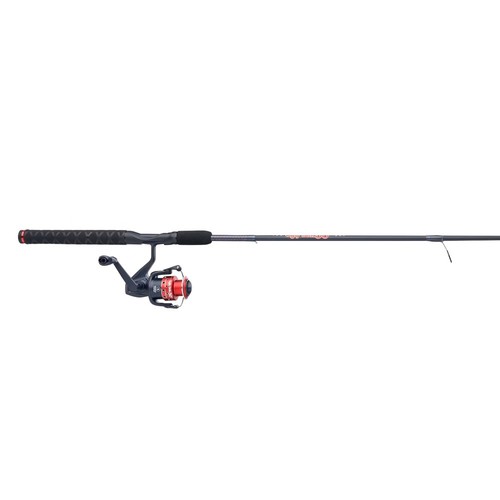 Fishing rod combo
Rod and reel pre-matched from the manufacturer. Good starting point — components are balanced for each other. Look for the power/action rating on the rod blank.
Fishing rod combo
Rod and reel pre-matched from the manufacturer. Good starting point — components are balanced for each other. Look for the power/action rating on the rod blank.
 Ultralight fishing rod
Power rating: UL. Designed for 2–6 lb test line and 1/32–1/4 oz lures. Excellent for trout, panfish, and creek bass. Fast action UL rods feel wildly different from moderate UL.
Ultralight fishing rod
Power rating: UL. Designed for 2–6 lb test line and 1/32–1/4 oz lures. Excellent for trout, panfish, and creek bass. Fast action UL rods feel wildly different from moderate UL.
 Surf fishing rod
Long (9–14 ft) heavy-power rods built for beach and jetty casting. Extra length generates the arc needed to clear waves. Usually moderate-fast action with durable SiC or aluminum oxide guides.
Surf fishing rod
Long (9–14 ft) heavy-power rods built for beach and jetty casting. Extra length generates the arc needed to clear waves. Usually moderate-fast action with durable SiC or aluminum oxide guides.