Guides
Practical trail camera content — trigger specs, flash comparison, and cellular vs SD trade-offs. No affiliate marketing disguised as advice.
Why this page exists
Trail camera spec sheets list trigger speed in tenths of a second and megapixel counts in the high teens — neither number tells you much on its own. The trigger speed only matters relative to the detection zone width and the distance at which the animal trips it.
A camera with a 0.5-second trigger and a 60-foot detection zone will catch deer crossing a trail at normal walking speed. The same 0.5-second trigger on a camera with a 20-foot narrow cone misses the approach entirely. This guide explains the relationship, then covers flash type and cellular honestly.
Trail cameras worth searching on eBay
Current production cameras across cellular, night-vision, and solar categories. We earn a small commission on qualifying sales; your price is unchanged. Full disclosure.
 Cellular trail camera
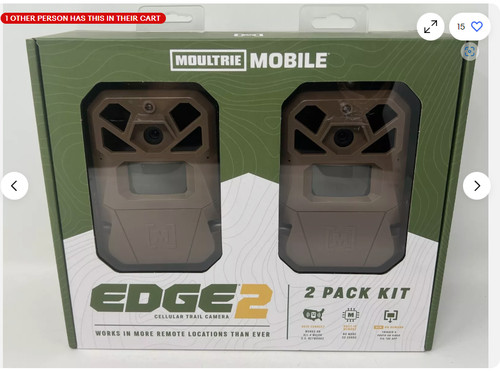
Sends images via LTE to your phone without a site visit. Requires an active data plan — factor that into total cost. Best for remote locations or active scouting during season.
Cellular trail camera
Sends images via LTE to your phone without a site visit. Requires an active data plan — factor that into total cost. Best for remote locations or active scouting during season.
 Trail camera night vision
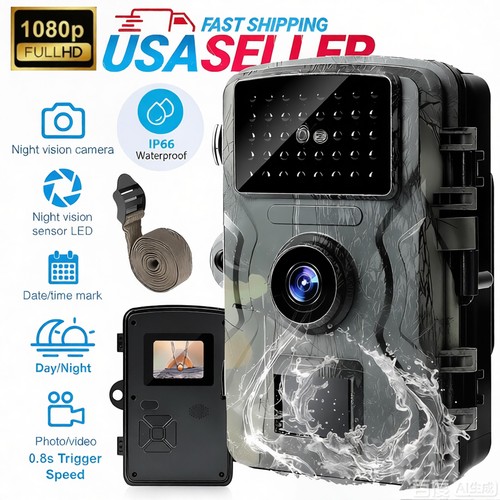
Infrared illumination for nighttime captures without visible flash. Low-glow (850nm) vs no-glow (940nm) — no-glow is less visible to animals and people but produces darker images.
Game camera
Standard SD-card trail camera. No monthly fees — you retrieve the card to view images. Simpler, more affordable, and longer battery life than cellular models. The practical choice for most deer hunters.
Trail camera night vision
Infrared illumination for nighttime captures without visible flash. Low-glow (850nm) vs no-glow (940nm) — no-glow is less visible to animals and people but produces darker images.
Game camera
Standard SD-card trail camera. No monthly fees — you retrieve the card to view images. Simpler, more affordable, and longer battery life than cellular models. The practical choice for most deer hunters.
 Trail camera solar
Solar panel trickle-charges internal battery for extended deployments. Most effective in open-canopy locations with consistent sun. Reduces battery-swap trips on long-term setups.
Trail camera solar
Solar panel trickle-charges internal battery for extended deployments. Most effective in open-canopy locations with consistent sun. Reduces battery-swap trips on long-term setups.
 No glow trail camera
940nm black flash — completely invisible to human and animal eyes. Trade-off is lower nighttime image brightness versus 850nm low-glow. Best for high-pressure areas or theft-prone locations.
No glow trail camera
940nm black flash — completely invisible to human and animal eyes. Trade-off is lower nighttime image brightness versus 850nm low-glow. Best for high-pressure areas or theft-prone locations.