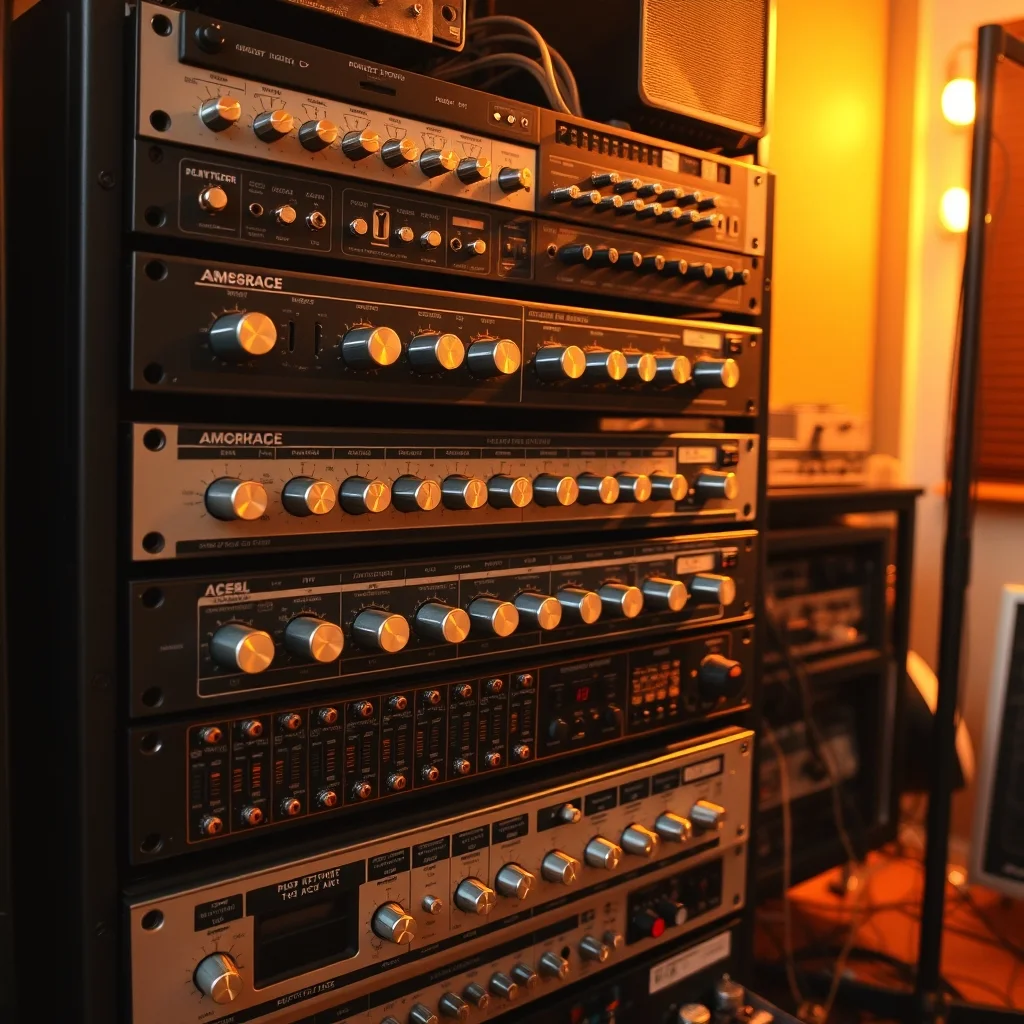
Three compression topologies and why they matter
Compressors are often described by their sonic character — "punchy," "smooth," "transparent" — but the character follows from the circuit topology. Knowing which type of gain-control element a compressor uses tells you how it behaves, what it sounds like under load, and what typically fails with age.
A FET (field-effect transistor) compressor like the 1176 uses a FET as a variable resistance in the signal path. FETs respond extremely quickly — the 1176's attack time starts at 20 microseconds — which gives it the aggressive, grab-heavy character useful on drums and bass. The transformer, FET, and biasing circuitry are the primary variables that distinguish different vintage units and revisions.
An optical compressor like the LA-2A uses a light source and a photoresistor as the gain-control element. When the signal exceeds the threshold, the electroluminescent panel (EL panel, housed in the T4 optical cell) brightens; the photoresistor responds to light by decreasing resistance, which reduces gain. The response of a photoresistor is inherently slower and non-linear — it does not respond instantly, and its release characteristic has a two-stage release that is program-dependent. This gives optical compressors a musical, program-dependent behavior that sounds natural on vocals and acoustic instruments.
A VCA (voltage-controlled amplifier) compressor like the dbx 160 uses a VCA chip as the gain-control element. VCAs are fast and accurate, making them useful for transparent, precise compression or for aggressive limiting. The character of a VCA compressor is heavily influenced by the specific VCA chip used — different dbx VCA chips from different eras sound different.
UREI/Universal Audio 1176LN: revisions and what they mean
The 1176 was designed by Bill Putnam and manufactured by UREI beginning in the late 1960s. Universal Audio later manufactured reissues, and the original UREI units are the ones with collector value. The revision history is complex and documented extensively by the vintage audio community, but the key revision points that matter for buyers are:
| Revision | Approx. era | Key characteristics |
|---|---|---|
| A/B | 1967–1969 | Blue-stripe faceplate, original output transformer. Rarest, highest collector value. |
| C/D | 1969–1970 | Black faceplate introduced. Rev D uses a revised output transformer. Sonically close to A/B. |
| E | 1970–1973 | Further refinements. Output transformer change. The "blackface" look standardized. |
| F/G | 1973–1981 | Output transformer changes continue. Widely used studio workhorse of the era. |
| H | 1981–1992 | Final UREI revision. Lowest collector premium relative to earlier revisions. |
1176 condition priorities
- Transformer condition: The output transformer is the most sonically significant component and the most expensive to replace. Ask if the transformer has been replaced and by what.
- FET biasing: The 2N3819 FET (or equivalent) needs proper biasing for correct operation. A unit that distorts asymmetrically or has inconsistent gain reduction may need FET replacement or bias adjustment.
- All-buttons-in mode: This undocumented operating mode (pressing all four ratio buttons simultaneously) produces a distinctive sound. Verify it functions — it's an expected feature on any working 1176.
- VU meter: Test both input and output meters. Sticky needles or dead segments indicate meter mechanism or driver circuit issues.
- Potentiometer noise: Scratchy behavior when turning attack, release, input, or output controls indicates dirty or worn potentiometers. Cleaning or replacement is straightforward but should be noted.
Teletronix LA-2A: the T4 cell and optical behavior
The LA-2A was manufactured by Teletronix beginning in the mid-1960s, later acquired by UREI and then Universal Audio. Original Teletronix and early UREI units carry significant collector premiums. The machine uses a tube-based signal path with optical gain control via the T4 optical attenuator cell.
The T4 cell contains an electroluminescent panel (the light source) and a cadmium sulfide photoresistor (the gain-control element). The EL panel is driven by the sidechain circuit; as it brightens, the photoresistor reduces its resistance, attenuating the signal. The release characteristic of the LA-2A is program-dependent because the CdS photoresistor has an inherent memory effect — it remains partially excited for a brief period after the light source dims, which creates the two-stage release behavior.
LA-2A condition priorities
- T4 cell function: This is the defining component. A functioning T4 cell produces smooth, musical gain reduction with the characteristic program-dependent release. An aging or failing T4 cell produces inconsistent compression, stuck gain reduction, or no gain reduction at all. Replacement T4 cells are available from suppliers including Universal Audio and third parties.
- Tube complement: The LA-2A uses several tubes including the 12AX7 and 6AQ5 (or equivalent). Verify the tube complement is present and that the unit has been tested with the current tubes.
- Gain reduction meter: The GR meter should track compression smoothly. Erratic or stuck meter behavior can indicate T4 or meter driver issues.
- Peak reduction and gain controls: Both controls should operate smoothly without noise. Scratchy potentiometers are a minor issue but indicate the unit needs service.
Shopping for vintage outboard? Browse current eBay listings → (we earn a small commission; your price is unchanged).
Pultec EQP-1A: the passive paradox
The Pultec EQP-1A is a passive equalizer — it uses inductor-capacitor (LC) filter networks that inherently attenuate the signal. A tube makeup gain amplifier restores the signal level after the passive EQ section. This two-stage design (passive filter + active makeup gain) produces the Pultec's characteristic behavior: shelving boost and cut controls that operate somewhat independently at the same frequency, which produces a subtle phase and resonance character not achievable with active filter designs.
The most discussed Pultec behavior is the "low-frequency boost and attenuate simultaneously" trick: setting both the low-frequency boost and the low-frequency attenuation controls active at the same frequency simultaneously does not cancel out. Instead, it creates a resonant peak below the selected frequency and a cut above it — a sound that engineers have described as "shelf with warmth" or "controlled bump." This behavior arises from the interaction of the boost and cut filter networks, which have different Q characteristics.
Pultec EQP-1A condition priorities
- Inductor condition: The frequency-determining inductors are wound components that can develop inter-winding shorts or open windings. A frequency band that does not boost or cut correctly may indicate an inductor problem.
- Tube complement: The makeup amplifier uses tubes that should be functioning and reasonably matched. Ask about the current tube complement.
- Switch and pot condition: The frequency selector switches and the boost/attenuate potentiometers are subject to oxidation. Scratchy or intermittent behavior is common on unserviced units.
- Correct operation of both boost and cut at each frequency: Test all available frequency positions with both boost and cut controls. A dead band means a component issue in that filter network.
dbx 160 and 165: VCA compression
The dbx 160 (introduced circa 1976) was one of the first professional VCA compressors. It uses an early dbx 202 VCA chip, a true RMS detector, and an over-easy ratio curve that avoids a hard knee. The 160 is notable for transparency at moderate settings and for its ability to be pushed into aggressive limiting — it is less forgiving than the 1176 but faster and more accurate.
The dbx 165 added variable frequency sidechain filtering (the DeEsser/Low Frequency Contour switch) and some refinements to the 160's design. Both units are solid-state throughout and generally more reliable than tube-based vintage gear, but VCA chip availability can be a concern for very aged units — early dbx VCA chips are specialized components.
dbx condition priorities
- VCA chip function: Test the compressor with consistent input levels and verify smooth, predictable gain reduction. Distortion or inconsistent behavior may indicate VCA issues.
- Meter calibration: Both GR and output meters should track correctly. dbx metering is characteristic; misaligned meters affect usability.
- Sidechain filter (165): Test the sidechain filter on the 165 — the switch and the filter network should function correctly.
Rack condition: what to assess
Beyond circuit-specific checks, rack condition factors affect both value and practical usability:
- Rack ears and mounting: Bent or missing rack ears reduce usability in a standard rack. Replacement ears are often available but may require drilling.
- Panel cosmetics: Scratched, dented, or cleaned-off panel lettering does not affect function but affects value significantly for collectors. Knob condition is part of this — original knobs in good condition versus replacements.
- Transformer hum: Place your ear near the unit at idle with no signal. A well-functioning unit should be quiet. Audible transformer hum indicates either a ground loop in the listed environment (common and not a unit defect) or an actual transformer problem (less common but worth clarifying).
- XLR connector condition: Worn or loose XLR connectors are a maintenance item. Test input and output connections with a known-good cable and verify secure seating.
Original rack-mount handles, original knobs, and original documentation add meaningful value for collector-grade units. Service records or recent calibration documentation are worth significant premium for working studio purchases.
Search eBay for these units
 UREI 1176
Identify revision from serial and faceplate. Test all-buttons-in mode.
UREI 1176
Identify revision from serial and faceplate. Test all-buttons-in mode.
 Teletronix LA-2A
T4 cell condition is the key question. Ask for a video of compression in action.
Teletronix LA-2A
T4 cell condition is the key question. Ask for a video of compression in action.
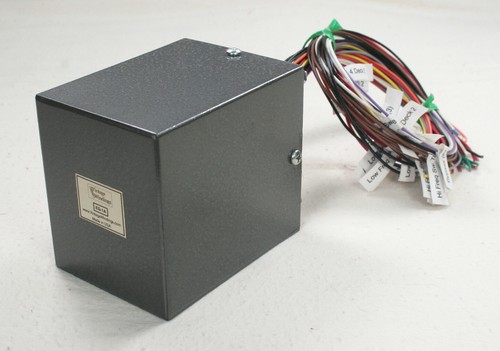 Pultec EQP-1A
Test all frequency bands for both boost and cut. Verify tube complement.
Pultec EQP-1A
Test all frequency bands for both boost and cut. Verify tube complement.
 dbx 160 / 165
VCA function and meter tracking are the primary checks.
dbx 160 / 165
VCA function and meter tracking are the primary checks.