Guides
Practical pottery wheel buying content — motor specs, form factors, and what beginners get wrong about centering capacity.
Why this page exists
Pottery wheel marketing loves to list horsepower without explaining what it means for 5 lbs of centered clay vs 25 lbs. A ¼ HP wheel will bog under a 10-lb clay body; a 1 HP wheel will not.
This page connects those specs to the work you are actually trying to do — whether you are a complete beginner centering small mugs or an intermediate thrower working with larger bowl forms. The guide covers centering math, the tabletop vs standing trade-off, reversible direction, and which splash pan sizes keep your floor clean.
Pottery wheels worth searching on eBay
Electric, tabletop, and beginner-kit options from Shimpo, Brent, and others. We earn a small commission on qualifying sales; your price is unchanged. Full disclosure.
 Electric pottery wheel
The main category. Look for ¼ HP for beginners (up to ~10 lbs clay), ½ HP for intermediate (up to ~25 lbs), and 1 HP for serious studio work. Check centering capacity in the specs, not just HP.
Electric pottery wheel
The main category. Look for ¼ HP for beginners (up to ~10 lbs clay), ½ HP for intermediate (up to ~25 lbs), and 1 HP for serious studio work. Check centering capacity in the specs, not just HP.
 Tabletop pottery wheel
Compact, portable, and typically lower HP. Good for apartment studios and smaller centering loads. Trade-off is centering capacity and foot-pedal options — check before buying.
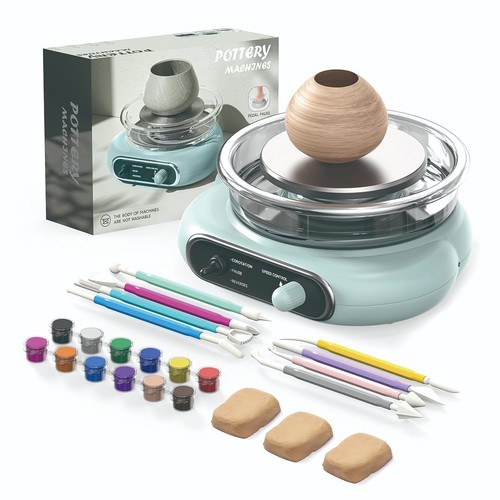
Pottery wheel kit
Bundles often include basic tools and a clay starter bag. Good entry point for complete beginners — just check kit tool quality separately, as included tools vary widely.
Tabletop pottery wheel
Compact, portable, and typically lower HP. Good for apartment studios and smaller centering loads. Trade-off is centering capacity and foot-pedal options — check before buying.
Pottery wheel kit
Bundles often include basic tools and a clay starter bag. Good entry point for complete beginners — just check kit tool quality separately, as included tools vary widely.
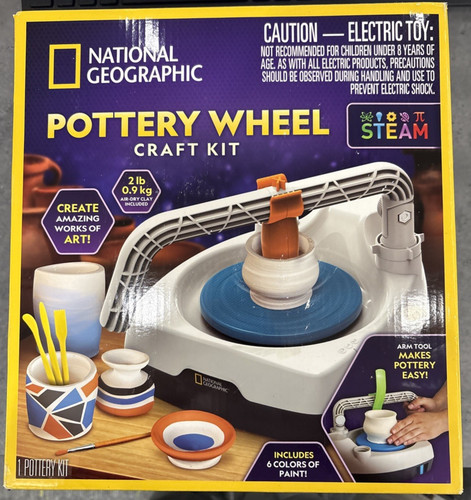 Pottery wheel for beginners
Beginner-rated wheels prioritize low noise and easy splash pan removal. Ensure the model has reversible direction — not all budget options include it, and it matters for left-handed throwing.
Pottery wheel for beginners
Beginner-rated wheels prioritize low noise and easy splash pan removal. Ensure the model has reversible direction — not all budget options include it, and it matters for left-handed throwing.
 Shimpo pottery wheel
Shimpo (and comparable Brent models) are the studio workhorses. Known for quiet motors, smooth RPM response, and large splash pans. Used models hold value well and are worth seeking out.
Shimpo pottery wheel
Shimpo (and comparable Brent models) are the studio workhorses. Known for quiet motors, smooth RPM response, and large splash pans. Used models hold value well and are worth seeking out.