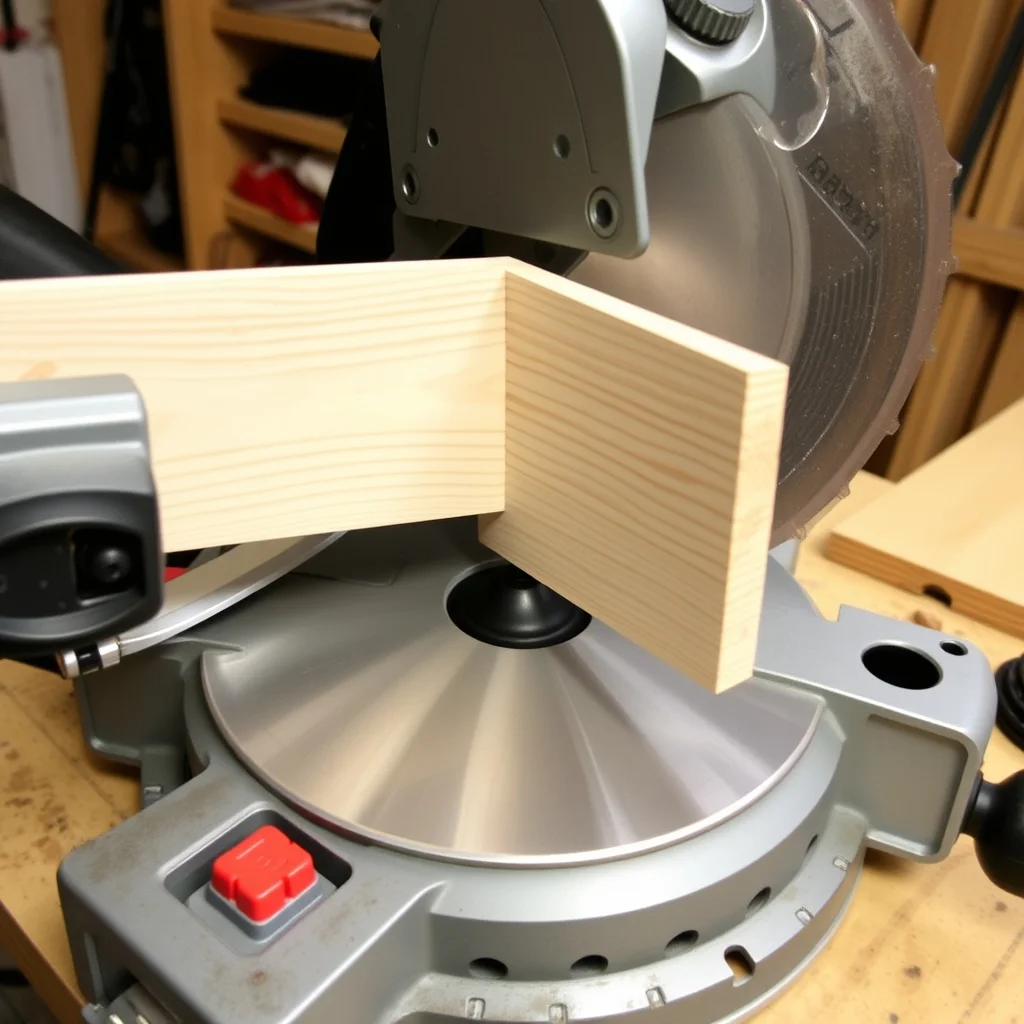
The three saw types and what they do
Miter saws share a basic form — a circular blade mounted on an arm that pivots down onto the workpiece — but differ in how many axes they can cut at once and how wide a board they can handle.
Single-miter saws
A basic miter saw rotates the base left and right (the miter angle) and cuts straight down. It can't tilt the blade for compound angles. These are uncommon in current production but still appear used; they're sufficient for simple framing crosscuts and 45° picture-frame cuts where you never need a bevel.
Compound miter saws
A compound saw adds bevel capability — the blade tilts left (single-bevel) or left and right (dual-bevel) in addition to rotating the base. Compound capability is required for crown molding, angled chair rails, and any cut where two planes intersect. Single-bevel saws handle compound cuts by flipping the workpiece; dual-bevel saws handle them by tilting the head, which is faster and reduces setup error on production runs.
Sliding compound miter saws
Sliding rails let the blade assembly travel forward as it cuts, substantially increasing crosscut capacity. A 10-inch sliding saw can typically crosscut 12–14 inches at 90° and 8–9 inches at 45°. A non-sliding 10-inch saw is limited to roughly 5–6 inches at 45°. The trade-off is that rails require 10–14 inches of clearance behind the saw — a real constraint if your saw mounts against a wall.
| Type | Bevel | Crosscut at 90° | Wall clearance needed |
|---|---|---|---|
| Single miter | None | Blade diameter dependent | Minimal |
| Compound (single-bevel) | Left only | Non-sliding capacity | Minimal |
| Compound (dual-bevel) | Left and right | Non-sliding capacity | Minimal |
| Sliding compound | Left and/or right | 12–16 inches typically | 10–14 inches behind saw |
Bevel range and detent quality
The bevel range on a compound saw is typically 0–45° to the left (single-bevel) or 0–45° both directions (dual-bevel). Some saws extend to 48° or even 50° on the left, which lets you cut steeper angles without repositioning the workpiece — useful for some crown profiles.
Detents: where accuracy lives
Positive detent stops at common angles (0°, 15°, 22.5°, 31.62°, 45°) let you snap the miter or bevel to a preset position without using a scale. The quality of those detents — how crisply they engage and how accurately they hold — varies substantially between saws. A detent that's 0.1° off at 45° produces a measurable gap at the corner of a mitered frame. Budget saws have loose detents; professional-grade saws have detents you can feel snap into place cleanly.
The bevel detent gets used less often than the miter detent but matters for crown molding work. If you're cutting a lot of crown, a saw with a bevel detent at 33.9° and 31.6° (the two common spring angles for crown) saves significant setup time per cut.
10-inch vs 12-inch blades: the real trade-off
A 12-inch blade increases crosscut capacity compared to a 10-inch blade on the same saw platform. On a non-sliding saw, a 12-inch blade can cross-cut roughly 7.5 inches at 90° vs 5.5 for a 10-inch. On a sliding saw, the difference is less dramatic because the rails already extend crosscut capacity substantially.
The downsides of a 12-inch blade: the saw is heavier, louder, and costs more. Blade selection is narrower and replacement blades cost more. The saw requires more powerful motor (typically 15A vs 12–15A for a 10-inch), which matters if you're running on a loaded circuit.
For most woodworking and trim work, a sliding 10-inch saw handles more material than you'll encounter. A 12-inch saw makes sense if you regularly crosscut stock wider than 6 inches and can't use a sliding saw due to wall clearance constraints.
Shopping for a miter saw? Browse current eBay listings → (we earn a small commission; your price is unchanged).
Laser guides and shadow lines
Many miter saws ship with laser guides — a red or green beam that projects onto the workpiece to show the cut line. These sound useful but have real limitations: lasers drift as the saw warms up and the diode changes temperature, and they're typically aligned at the factory but may need recalibration after shipping. Some woodworkers disable their lasers entirely after finding them misleading.
Shadow lines (a blade kerf indicator cut into the fence) are more reliable than lasers for consistent accuracy. A well-set shadow line doesn't drift or require batteries. High-end saws from brands like Festool use shadow lines exclusively.
Dust collection on miter saws
Miter saws generate substantial fine dust and ejected chips. The standard dust port (typically 2.5–4 inch diameter) at the rear connects to a shop vacuum or dust collector. Capture efficiency with a shop vacuum is typically 60–75% — the blade's motion flings some dust forward and sideways before it reaches the port. Some saws have better dust chutes than others; it's worth reading user reviews specifically for dust behavior rather than relying on manufacturer claims.
If you're cutting in an enclosed space, dust collection plus a blade guard is important for air quality. MDF is particularly aggressive — always use dust collection and respiratory protection when cutting MDF on a miter saw.
Miter saw stands: when they're worth it
A miter saw stand with outfeed supports makes a meaningful difference when you're cutting long stock alone — 8-foot trim pieces and longer become manageable without a second person holding the infeed end. Roller-arm stands extend 3–6 feet on each side and fold for transport.
For permanent shop installation, many woodworkers build a dedicated workbench section at saw height (typically 34–36 inches) with infeed and outfeed tables at blade height. This is more stable than any commercial stand and adds workspace. For jobsite use, a folding stand with a quick-release mounting system is worth the investment.
Common mistakes when buying
- Overbuying on blade size. A sliding 10-inch saw handles virtually all trim and furniture cuts; most buyers don't need a 12-inch.
- Ignoring wall clearance for sliding saws. Measure the wall distance before buying any sliding saw. Some require 12+ inches behind the pivot point.
- Skipping dual-bevel to save money. If you do any crown molding, the time saved by not flipping heavy stock justifies the dual-bevel cost within the first few jobs.
- Not testing the detents. The click and hold quality of the detents tells you more about the saw's precision than any spec sheet figure.
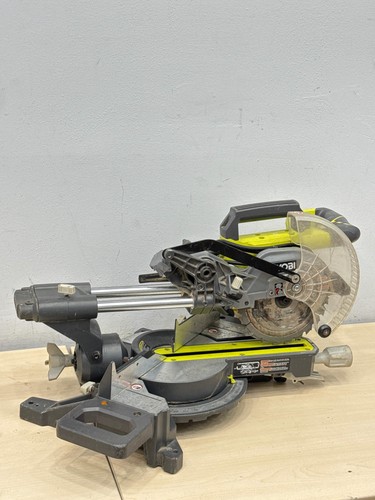 Sliding Miter Saws
 Compound Miter Saws
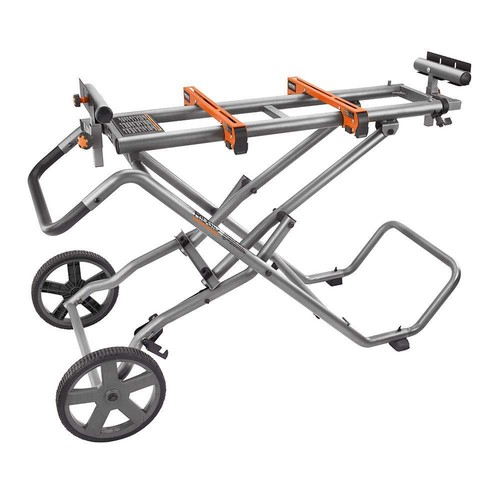 Miter Saw Stands