Guides
How to choose between garage flooring options based on your concrete, your use case, and how long you want it to last.
Why this page exists
Garage flooring fails in ways that are predictable but rarely disclosed upfront. Budget PVC tiles deform under the static weight of parked vehicles. Roll-out mats trap moisture against concrete. Epoxy coatings peel if the concrete has moisture vapor transmission issues that weren't addressed in prep.
Understanding the failure modes before you buy — and which options avoid them given your specific garage — is the whole point of this page.
Plain note about money. Links below go to eBay searches with an affiliate tag. If you buy through one, a small commission comes to this site. Your price is identical either way.
Garage flooring worth searching on eBay
Interlocking tiles, roll mats, and epoxy kits for DIY garage floor upgrades. We earn a small commission on qualifying sales; your price is unchanged. Full disclosure.
 Garage floor tiles interlocking
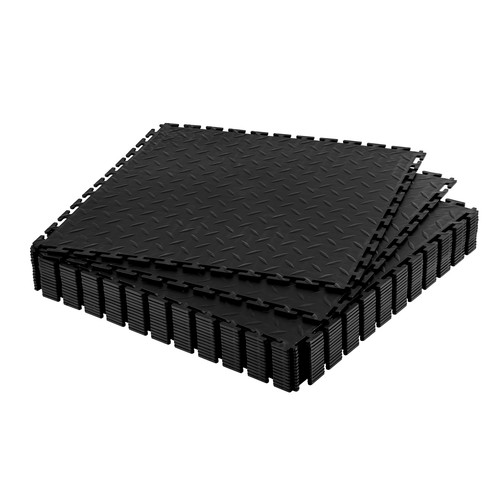
PVC interlocking tiles for vehicle-rated applications. Look for ½-inch minimum thickness and a vehicle load rating. Thinner tiles deform under parked car weight over time.
View on eBay →
Garage floor tiles interlocking
PVC interlocking tiles for vehicle-rated applications. Look for ½-inch minimum thickness and a vehicle load rating. Thinner tiles deform under parked car weight over time.
View on eBay →
 Garage floor mat roll
Rolled rubber or vinyl mats for quick install. Good for workspace zones. Avoid running wall-to-wall under parked vehicles as they trap moisture against concrete when not periodically removed.
View on eBay →
Garage floor mat roll
Rolled rubber or vinyl mats for quick install. Good for workspace zones. Avoid running wall-to-wall under parked vehicles as they trap moisture against concrete when not periodically removed.
View on eBay →
 Epoxy garage floor kit
Two-part epoxy systems for a permanent bonded coating. Requires thorough concrete prep. Most DIY kits cover 250–500 sq ft. Check whether kit includes decorative chips and topcoat or just the base coat.
View on eBay →
Epoxy garage floor kit
Two-part epoxy systems for a permanent bonded coating. Requires thorough concrete prep. Most DIY kits cover 250–500 sq ft. Check whether kit includes decorative chips and topcoat or just the base coat.
View on eBay →
 Garage floor coating
Single-component or water-based coatings for color and basic protection. Easier to apply than epoxy but less durable under vehicle use. Suitable for pedestrian and light-use areas.
View on eBay →
PVC garage tiles
Rigid PVC tiles with patterned surfaces (diamond plate, coin, ribbed). Surface texture affects slip resistance when wet — look for coefficient of friction specs if wet traction is a priority.
View on eBay →
Garage floor coating
Single-component or water-based coatings for color and basic protection. Easier to apply than epoxy but less durable under vehicle use. Suitable for pedestrian and light-use areas.
View on eBay →
PVC garage tiles
Rigid PVC tiles with patterned surfaces (diamond plate, coin, ribbed). Surface texture affects slip resistance when wet — look for coefficient of friction specs if wet traction is a priority.
View on eBay →