The three options and where each fits
Three formats dominate DIY garage flooring: interlocking tiles, roll-out mats, and epoxy or polyurea coatings. They differ in cost, permanence, installation requirements, and how they handle the specific stresses of a garage environment.
The broad strokes: tiles and mats are removable and work on imperfect concrete; coatings are permanent and demand good concrete in good condition. None of them is universally best — each has a use case where it's the right answer.
Interlocking tiles: vehicle-rated PVC and polypropylene
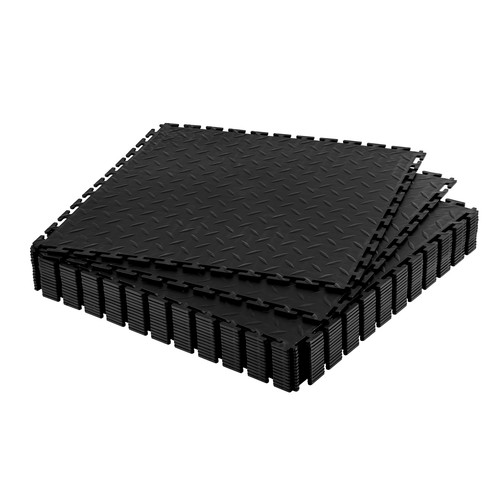
Interlocking tiles click together over bare concrete without adhesive. They can be installed in hours, moved or replaced if a tile gets damaged, and removed entirely if you change your mind. For a renter or someone who wants flexibility, this is the most practical option.
Thickness and vehicle load
The critical spec for interlocking tiles is thickness — specifically, whether it's adequate for the static load of a parked vehicle. A typical passenger car exerts roughly 300–500 lbs per tire footprint on the floor. Budget tiles at 3/16-inch thickness will gradually deform (creep) at tire contact points under this load over months or years. Vehicle-rated tiles typically run ½ inch or thicker, and their spec sheets include a static load rating.
If you'll park vehicles on the tiles, buy tiles with a published vehicle load rating. If the listing doesn't include one, treat it as not rated for vehicle use.
Hot-tire lift
Hot-tire lift (also called hot-tire pick-up) refers to tiles that stick to a warm tire and peel up when the car moves. It's a problem with some PVC tile formulations, particularly softer or lower-quality compounds. Better tiles use a harder PVC compound and a specific surface texture that reduces contact area. This is worth searching product reviews specifically for, as it's a real issue that doesn't always surface in specs.
Edge transitions
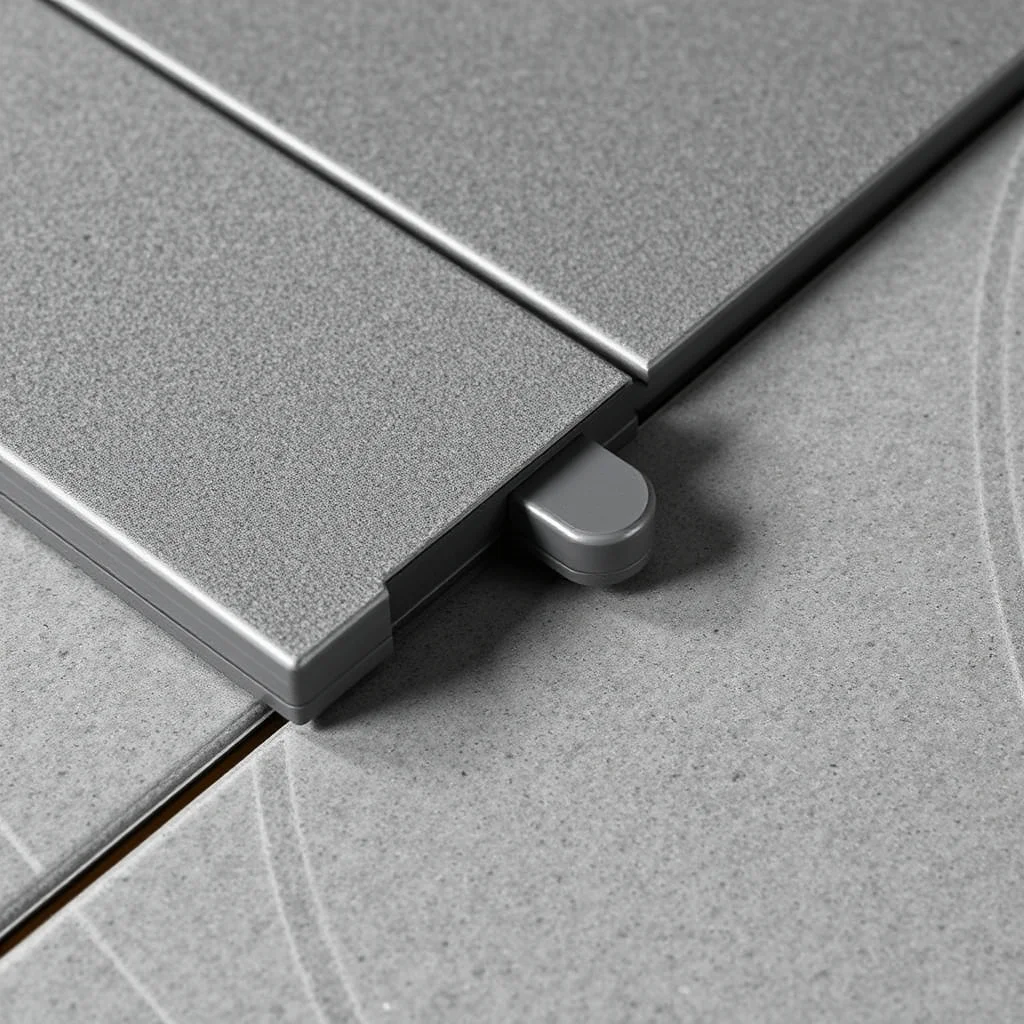
Budget for edge and corner trim pieces — these finish the perimeter where tiles meet the garage wall or transition to bare concrete at a door threshold. Most tile systems sell these as accessories and they're easy to overlook until installation day.
Roll-out mats: quick coverage, limited permanence
Roll-out rubber and vinyl mats are the fastest way to cover a garage floor. Unroll, cut to fit, done. They're typically sold in 7.5-foot-wide rolls in lengths from 10 to 30 feet, or in smaller pre-cut sections.
Shopping for garage flooring? Browse current eBay listings → (we earn a small commission; your price is unchanged).
The main limitation is moisture trapping. Any impermeable mat laid wall-to-wall over concrete creates a pocket where moisture vapor from the concrete has nowhere to go. In garages with moisture transmission issues (which is most uninsulated slabs to some degree), this leads to mold or concrete efflorescence under the mat. Periodically rolling the mat back for drying, or choosing a perforated or drainage-surface mat rather than solid vinyl, reduces this risk.
Roll-out mats work well in specific zones — under a workbench, in front of a tool cabinet, as a standing surface in the work area — rather than as total floor coverage under parked vehicles. They handle chemical spills and provide anti-fatigue benefit in standing work areas. Vehicle coverage is better handled by tiles or coating.
Epoxy and polyurea coatings: permanent, demanding, durable
Epoxy and polyurea floor coatings bond chemically to the concrete and form a hard, semi-gloss surface that's easy to clean and highly resistant to chemicals, abrasion, and staining. Done properly, they last for years. Done on inadequately prepared concrete, they peel within months.
Concrete prep is everything
The coating's bond depends entirely on a clean, properly profiled, dry concrete surface. Prep requires removing existing oil stains (TSP or a dedicated degreaser), etching or grinding the surface to create mechanical profile for the coating to grip, and ensuring the slab is dry — typically meaning it has been below 3% moisture content for a minimum period specified by the coating manufacturer.
DIY epoxy kits vs professional polyurea
Consumer epoxy kits — typically water-based, single or two-part — are available at hardware stores and cover 250–500 sq ft per kit. They're workable for a prepared slab but are typically thinner (2–3 mils dry film thickness) than professional applications and less chemically resistant. They're a reasonable choice for a clean slab in a temperate climate with moderate use.
Polyurea coatings (sometimes marketed as "polyurea-polyaspartic") cure faster, handle lower temperatures better, and are more flexible than epoxy — reducing the chance of cracking if the slab flexes. They're typically more expensive and have a shorter working time per coat, making them less forgiving for DIY application. For a serious, permanent installation, a professional polyurea application is likely to outlast most DIY epoxy kits.
| Option | Concrete condition req. | Reversible? | Vehicle-rated? | Chemical resistance |
|---|---|---|---|---|
| Interlocking tiles (½ in+) | Any stable concrete | Yes | Yes (if rated) | Moderate |
| Roll-out mat | Any concrete | Yes | Limited (workspace zones) | Good (rubber) |
| Epoxy coating (DIY) | Clean, low-moisture | No | Yes | Good |
| Polyurea coating (pro) | Clean, profiled | No | Yes | Excellent |
Common mistakes
- Buying thin tiles for vehicle use. Anything under ½ inch will deform under parked car loads over time. Verify vehicle rating explicitly.
- Laying solid vinyl mats wall-to-wall over a slab with moisture issues. Traps vapor and promotes mold or efflorescence under the mat.
- Applying epoxy without testing for moisture. The moisture vapor test is a 24-hour investment that can save you from a failed application.
- Skipping concrete prep for coatings. Grinding or etching for mechanical profile is non-optional for lasting adhesion. Acid etch alone on old or sealed concrete is often insufficient.
- Forgetting edge trim for tiles. Untrimmed tile edges are a trip hazard at door thresholds and look unfinished at walls.
Buying checklist
- Test for slab moisture before considering any coating system.
- If parking vehicles on tiles, verify per-tile vehicle load rating (not just total capacity).
- For roll-out mats, choose perforated or drainage-surface material if moisture is a concern.
- For epoxy, check the dry film thickness in the kit specs — thicker is more durable.
- Budget edge and corner trim when planning tile installations.
- Account for surface temperature requirements: most epoxy kits require application above 50–55°F and cure times vary significantly with temperature.