Spinning vs baitcasting: the fundamental split
Every fishing reel discussion starts here. The mechanical difference is significant: spinning reels have a fixed spool and an open bail — line uncoils from the front of the spool in loops as it follows the cast. Baitcasting reels have a revolving spool — the spool itself rotates as line pays out, driven by the weight of the lure. Each mechanic creates different strengths and failure modes.
Spinning reels handle light lines naturally. Line twist from the bail roller is the primary issue over time, but it's manageable with quality line and proper technique. The open face means the angler doesn't need to actively control spool speed during the cast — the bail simply opens and line feeds freely. This makes spinning reels far more forgiving for beginners and ideal for light presentations: drop-shots, small jigs, finesse swimbaits, live bait, and light saltwater inshore work.
Baitcasting reels require the angler's thumb to control spool rotation speed during the cast. If the lure decelerates (because it hits wind, goes underwater, or reaches the target) before the spool slows down, excess line piles on the spool — a backlash. Managing this is the skill curve. The payoff: much finer accuracy for precision casting (pitching docks, skipping cover, threading lures into tight gaps), and a mechanical advantage for retrieving heavy lures and working large fish. Baitcasters also sit on top of the rod blank in the natural wrist position, which reduces fatigue on long casting days.
Reel size and line capacity
Spinning reels are sold in size numbers — typically 1000 through 8000 or 10000 — that correlate to spool diameter and line capacity. The size number conventions vary somewhat by manufacturer (a Daiwa 2500 and a Shimano 2500 aren't identical), but the scale is roughly standardized across the industry.
| Size | Mono capacity (approx.) | Common applications |
|---|---|---|
| 1000–2000 | 100–150 yds / 4–6 lb | Trout, panfish, ultralight bass |
| 2500–3000 | 150–200 yds / 8–10 lb | All-around bass, walleye, light inshore |
| 3500–4000 | 200–250 yds / 10–14 lb | Bass, pike, inshore saltwater |
| 5000–6000 | 250–300 yds / 14–20 lb | Surf, offshore light, muskie |
| 8000–10000 | 300+ yds / 20–30 lb | Offshore, surf heavy, big game |
Baitcasting reels don't use the same sizing system — they're usually described by spool size (low-profile vs round), gear ratio, and rated line capacity in monofilament at specific diameters. Low-profile baitcasters (like a Shimano Curado or Lew's Tournament) are the dominant style for bass fishing; round baitcasters (Penn Squall, Abu Garcia 6500) are common for heavy saltwater work and live bait fishing.
Gear ratio: the most misunderstood spec
Gear ratio is the number of times the spool rotates for each complete revolution of the handle. A reel marked 6.2:1 rotates the spool 6.2 times per handle turn. A 7.5:1 reel rotates it 7.5 times. Combined with spool diameter (which determines how much line is picked up per rotation), this gives you the actual retrieve rate — inches of line per handle turn — which is the practically useful figure.
Most manufacturers list IPT (inches per turn) alongside gear ratio. A 7.5:1 baitcaster with a 30mm spool might retrieve 28–30 inches per turn, while a 6.3:1 with a larger spool might retrieve nearly the same because the larger diameter compensates. When comparing reels, look at IPT rather than just ratio.
The technique-to-ratio matchup matters. Fast reel (7.0:1 and above): Ideal for burning a jig or spinnerbait quickly, taking up slack fast on a hookset, or fishing techniques where speed matters. Medium reel (6.1:1–6.9:1): The all-around choice for most bass techniques — jigs, Texas rigs, swimbaits. Slow reel (5.1:1–6.0:1): Best for deep-cranking — the slow ratio prevents you from burning a crankbait too fast through the water column, keeping it in the strike zone longer. A slow reel also has more mechanical torque, making it easier to reel in a crankbait against heavy resistance from current or depth.
Shopping for fishing reels? Browse current eBay listings → (we earn a small commission; your price is unchanged).
Drag systems: washers, pressure, and consistency
The drag is the mechanism that allows line to pay out under controlled tension when a fish pulls. Its job is to prevent line breakage by yielding to pressure above a set threshold while maintaining enough resistance to tire the fish. Two quality factors matter: maximum drag force (measured in pounds or kilograms) and drag consistency under heat and load.
Drag washers are stacked discs inside the reel that press against each other when the drag is set. The materials range from felt (cheap, inconsistent under heat) to carbon fiber (consistent, heat-resistant, found in most quality reels above $80–100 retail). High-end saltwater reels use multiple sealed carbon drag washers with specific surface areas designed to maintain consistent pressure even during long, hard runs.
Max drag ratings can be misleading. A reel rated for 22 lbs of drag is useless if the drag starts "stuttering" (grabbing and releasing unevenly) at 10 lbs under real fishing conditions. This is where brand reputation matters — consistent, smooth drag at high pressure is a quality indicator that marketing numbers don't fully capture.
For freshwater bass fishing, 10–15 lbs of max drag is typically sufficient. For inshore saltwater (redfish, snook, stripers), 15–25 lbs. For offshore species, 30+ lbs of smooth, consistent drag is the floor for serious fishing.
Ball bearings: smooth operation and what counts
Ball bearings reduce friction at the points in the reel where rotation occurs — the handle, the rotor, and the line roller (in spinning reels). More bearings doesn't always mean smoother: the quality of the bearings (ABEC rating, material, shielded vs sealed) matters more than raw count.
A reel with 5 high-quality stainless steel, shielded bearings will typically outperform a reel with 10 low-quality unsealed bearings after a season of use. Saltwater exposure corrodes unsealed bearings quickly. When evaluating bearing count claims, also check whether the bearings are stainless or non-stainless, and whether they're shielded.
For spinning reels, a line roller bearing is one of the most important individual bearings — it's the point where most line twist originates, and a good roller bearing with a full ball bearing (versus a bushing) dramatically reduces line management issues.
Saltwater sealing: what "water resistant" actually means
Any reel labeled "water resistant" on the shelf is not adequate for saltwater use without rinsing and maintenance after every session. Saltwater demands actual sealing: O-rings on the spool, sealed drag washers, sealed bearings, and a body material that won't corrode (typically graphite composite body or anodized aluminum).
Look for terms like "sealed drag" or "X-Protect" (Shimano) or "AirSeal" or "IPX-rated" in the spec sheet. At a minimum, a reel intended for regular saltwater use should have sealed bearings, a sealed drag, and a corrosion-resistant body. Rinse with fresh water after every saltwater session regardless of sealing rating — salt crystallizes inside any gap it reaches.
Spinning vs baitcasting: the honest matching guide
- Finesse bass (drop-shot, shaky head, small swimbaits): 2500–3000 spinning reel, 6.0–7.0:1 gear ratio
- Power bass (jigs, Texas rigs, swimbaits): Low-profile baitcaster, 6.3–7.5:1 depending on technique
- Deep cranking (bass/walleye): Low-profile baitcaster, 5.1–6.2:1 for slow presentation
- Trout / panfish: 1000–2000 spinning reel, 5.0–6.0:1
- Inshore saltwater (redfish, flounder): 3000–4000 sealed spinning reel, 6.0–7.0:1
- Surf fishing: 5000–8000 spinning reel, sealed, 5.0–6.0:1 for big bait and current
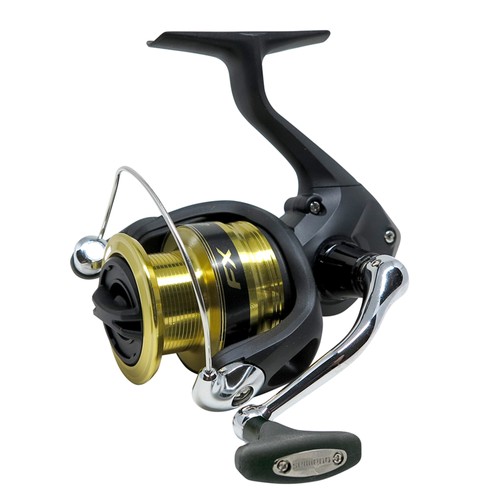 Spinning reel
 Baitcasting reel
 Saltwater spinning reel