Three circuit families, very different collector profiles
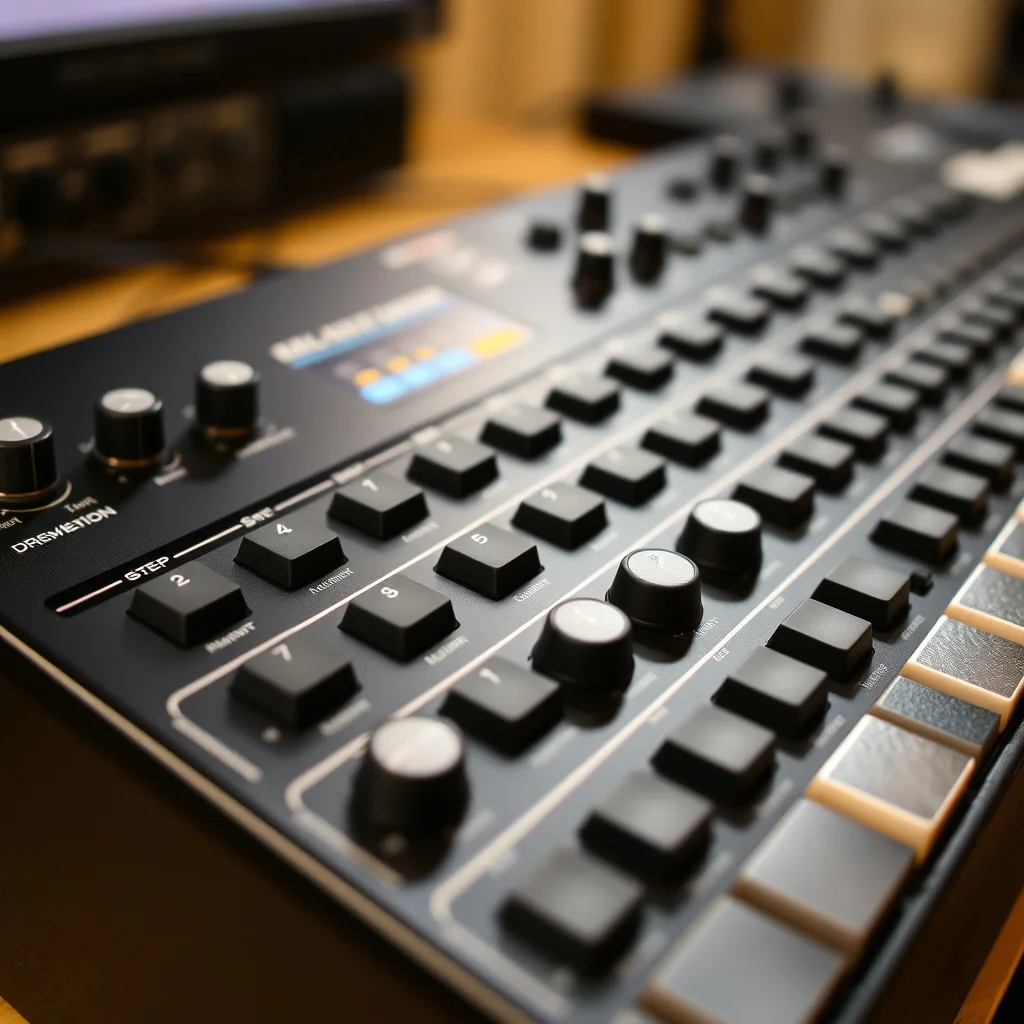
Vintage drum machines split into three design families that have completely different maintenance profiles, failure modes, and collector values. Getting this taxonomy right before you start buying prevents expensive mistakes.
Fully analog machines generate every sound through analog circuits — no recordings of real drums. The Roland CR-78 (1978), TR-808 (1980), and TR-606 (1981) work this way. These machines can sound wrong if capacitors drift with age or if the tuning circuits fall out of calibration, but they cannot lose their sounds because there are no samples to corrupt or lose.
Sample-based machines use recordings of real drums stored on ROM chips. The LinnDrum (1982) and Oberheim DMX (1981) are the canonical examples. The sounds are fixed at the factory — you cannot tune the bass drum the way you can on an 808 — but the chip architecture often allows for sound replacements if third-party chips are available.
Hybrid machines combine both approaches. The Roland TR-909 (1983) uses analog circuits for kick, snare, and toms, and PCM samples for hi-hats and cymbals. The Roland TR-707 (1984) is fully sample-based. Knowing which voices are analog and which are sampled matters for both sound expectations and repair.
Roland TR-808 (1980): the analog standard
The TR-808 is Roland's fully analog drum machine, produced from 1980 to 1983 with approximately 12,000 units made. Every sound — kick, snare, rimshot, handclap, cowbell, clave, maracas, hi-hats, cymbal — is generated by analog circuitry. The kick drum uses a tunable pitch envelope applied to a sine-ish waveform through a VCA, which is why it can be tuned from a short click to a long subsonic boom. That tuning range is not possible with a fixed sample.
The 808's sounds became iconic partly because producers discovered them at a time when they were considered toy-like substitutes for real drums. The bass drum in particular became foundational to hip-hop and later house, techno, and countless other genres.
808 condition priorities
- Battery compartment corrosion: The 808 uses an internal battery to retain pattern memory. Alkaline battery leakage is the single most common serious problem — it can corrode traces and sockets. Always ask sellers for a clear photograph of the battery compartment and surrounding board area.
- Elastomers (rubber contact strips): The step buttons use rubber contact strips that harden and crack with age. Replacement strips are available from specialist suppliers, but a unit with dead buttons needs them immediately. Test all 32 steps before buying.
- Voice calibration: Analog circuits can drift. The 808 has trim pots for tuning individual voices. A unit that sounds "off" on kick pitch or snare tone may just need calibration, not new parts — but verify the seller has confirmed all voices function.
- MIDI (if modified): Original 808s had no MIDI. Many units have been modified with MIDI retrofit kits (various manufacturers). Verify the modification is clean and documented. DIN sync is original; MIDI is aftermarket.
Roland TR-909 (1983): the hybrid that built house
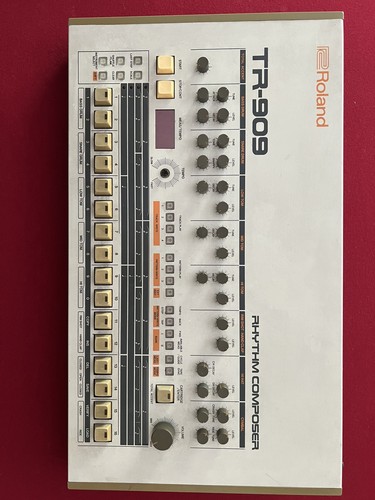
The TR-909 was Roland's first MIDI-equipped drum machine, introduced in 1983. Its design is hybrid: kick, snare, low/mid/high toms, and rimshot are fully analog; open and closed hi-hats, ride, and crash are PCM samples stored on onboard chips. Approximately 10,000 units were produced before Roland discontinued it in 1984.
The 909 arrived just as the electronic dance music underground was forming. Its kick drum — tunable analog, with a distinctive click attack from the analog envelope — and its snare became foundational sounds. The slightly gritty PCM hi-hats and cymbals, sampled at relatively low rates by modern standards, add to the characteristic sound rather than detracting from it.
909 condition priorities
- MIDI functionality: Test MIDI in and out. The MIDI implementation is complete for its era but test both input and output with a known-working device.
- All voice response: Play every voice through every step. Dead voices on the analog section are repairable but indicate board issues. PCM voice failures suggest chip or interface problems.
- Accent circuit: The 909 has an accent function that applies volume boost. Verify accent steps produce a louder hit — it's a distinctive feature of the machine's groove character.
- Cosmetic condition: The 909's panel labels are screen-printed and can wear. Heavy wear is common on machines used in studios for years. This affects appearance but not function.
Roland TR-606 (1981): the affordable sibling
The TR-606 Drumatix was designed as a companion to the TB-303 Bass Line, sharing its DIN sync connectivity. It is fully analog, smaller than the 808, and typically trades at significantly lower prices. The sounds are less complex — fewer voices, less parameter control — but the machine is genuinely analog and can be modified extensively. The 606 represents a lower barrier of entry for analog drum machines with a real collector and producer following.
LinnDrum (1982): the sample machine that went mainstream
Roger Linn designed the LinnDrum as the successor to his LM-1 (1980). Where the LM-1 was built as a limited production instrument, the LinnDrum was intended for wider commercial production. It uses 8-bit PCM samples stored on socketed EPROM chips — each voice (kick, snare, hi-hat, cymbal, etc.) has its own dedicated chip or chips.
The socketed chip architecture has made the LinnDrum a platform for modification and sound replacement. Third-party chip sets with alternative samples became available both during the machine's production life and subsequently. A LinnDrum with original chips sounds different from one with replacement chips — ask sellers what the chip complement is.
LinnDrum condition priorities
- Pad response: The LinnDrum has velocity-sensitive pads. All pads should respond across the velocity range. Dead or stuck pads are the most common functional problem.
- Chip complement: Verify all voice chips are present and seated. Missing chips mean missing voices. Original factory chips vs replacement sets affects sound authenticity for purists.
- Power supply: The LinnDrum's power supply is a known weak point on aged units. Capacitor replacement in the PSU is often required for reliable operation on machines that have not been recently serviced.
- Clock and sync: The LinnDrum's internal clock should be stable. Test patterns at various tempos and verify the timing feels consistent.
Oberheim DMX (1981): grit and character
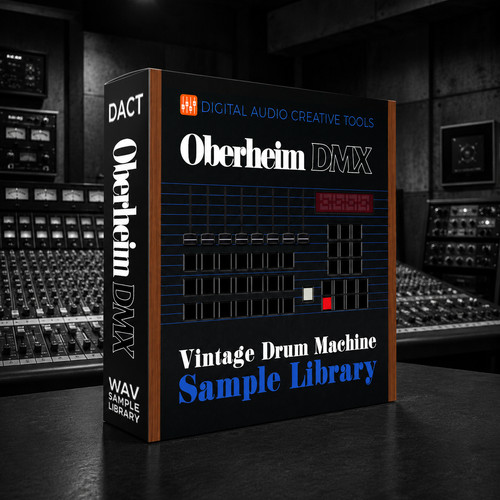
The Oberheim DMX preceded the LinnDrum and pioneered the sample-based drum machine market at a professional price point. Like the LinnDrum, it uses socketed sample chips — but the DMX's 8-bit samples have a characteristic grit and compression artifact that became valued in its own right, particularly in hip-hop production of the early-to-mid 1980s.
The DMX has 13 voices including kick, snare, hi-hats (open/closed), cymbal, clap, clave, cowbell, maracas, and cabasa. Programming is done through a membrane-button interface that is functional but less elegant than later designs. The display is a small LED readout that shows pattern numbers and tempo.
Shopping for vintage drum machines? Browse current eBay listings → (we earn a small commission; your price is unchanged).
DMX condition priorities
- All voice chips seated: Check that all chip sockets have their chips present and properly seated. Chips that have worked loose can cause voices to fail or behave erratically.
- Display readability: The LED display segments can fail individually. A machine with dead display segments is still functional but reduces usability for programming.
- Membrane buttons: The front panel membrane buttons can delaminate or lose responsiveness with age. Test every button for reliable input.
- Power supply capacitors: As with the LinnDrum, aged power supply capacitors are a common maintenance item on DMX units that have not been recently serviced.
Circuit type comparison at a glance
| Machine | Year | Circuit type | MIDI | Key condition check |
|---|---|---|---|---|
| Roland TR-808 | 1980–83 | Fully analog | No (DIN sync) | Battery corrosion, elastomers |
| Oberheim DMX | 1981–85 | Sample-based (8-bit PCM) | No (later retrofit) | Chip seating, display, membrane buttons |
| Roland TR-606 | 1981–84 | Fully analog | No (DIN sync) | Battery, step buttons |
| LinnDrum | 1982–85 | Sample-based (8-bit PCM) | Yes | Pad velocity, chip complement, PSU caps |
| Roland TR-909 | 1983–84 | Hybrid (analog + PCM) | Yes | All voices, MIDI in/out, accent circuit |
| Roland TR-707 | 1984–87 | Sample-based (PCM) | Yes | All pads, MIDI, pattern memory |
Battery corrosion: the silent killer
Many vintage drum machines use internal batteries — typically AA or CR2032 — to retain pattern memory when powered off. Alkaline batteries leak a potassium hydroxide residue that is both corrosive to metal traces and conductive in ways that cause circuit damage. This is not a theoretical risk; it is the most common cause of serious board damage on 808s and similar machines.
The damage is not always visible without disassembly. A seller listing "works fine" may not have opened the battery compartment in years. Ask for photos of the battery tray and the surrounding PCB area. Green corrosion on metal contacts is a warning sign. Actual PCB trace damage requires professional repair and can be expensive depending on extent.
When you receive any battery-backed vintage drum machine, replace the battery immediately with a fresh one of the correct type, and inspect the tray carefully. If there is corrosion present, address it before it spreads.
The sample chip question
For sample-based machines, the chips contain the entirety of the sounds. Factory original chips generally mean the machine sounds as it left the factory. Replacement chips from third-party manufacturers may offer different sounds — sometimes considered improvements, sometimes just different.
Third-party chip sets for the LinnDrum and DMX have included alternative drum samples, extended sample sets, and in some cases sounds from other machines. Whether original or replacement chips are "better" depends entirely on what you want the machine for. For historical accuracy and resale value to purists, original chips are preferable. For production use, the best-sounding chips for your application are the right ones.
Some chips are simply no longer available new, and period-correct replacements can only be sourced from donor machines or specialist suppliers. Verify chip availability for any machine you plan to use heavily before committing to it.
Buying on eBay: red flags and green flags
Green flags in a listing
- Seller has opened the unit and shows interior photos, including battery compartment
- All voices/pads tested individually with confirmation in the listing
- Documentation of any modifications or repairs with dates
- Pattern memory test (power cycle with a saved pattern to confirm battery-backed RAM)
- Recent service or capacitor replacement noted with receipts
Red flags in a listing
- "Sold as-is, untested" on a machine with no explanation of why it wasn't tested
- No interior photos when the machine is described as "powers on"
- Battery leakage visible in any photo
- "Some buttons don't respond" without specifying which or how many
- Listing photos show a stock image rather than the actual unit
Used drum machine prices on eBay can vary significantly based on cosmetic condition, documentation, and the seller's knowledge of what they have. A well-described unit with photos from a knowledgeable seller typically commands a premium over an estate-sale listing, but the well-described unit is almost always the safer purchase. The risk in chasing the cheaper price is that undiagnosed issues (battery damage, dead voices) can easily exceed the price difference in repair costs.
 Roland TR-808
 Roland TR-909
 LinnDrum
 Oberheim DMX