The three powerplant types: what actually differs
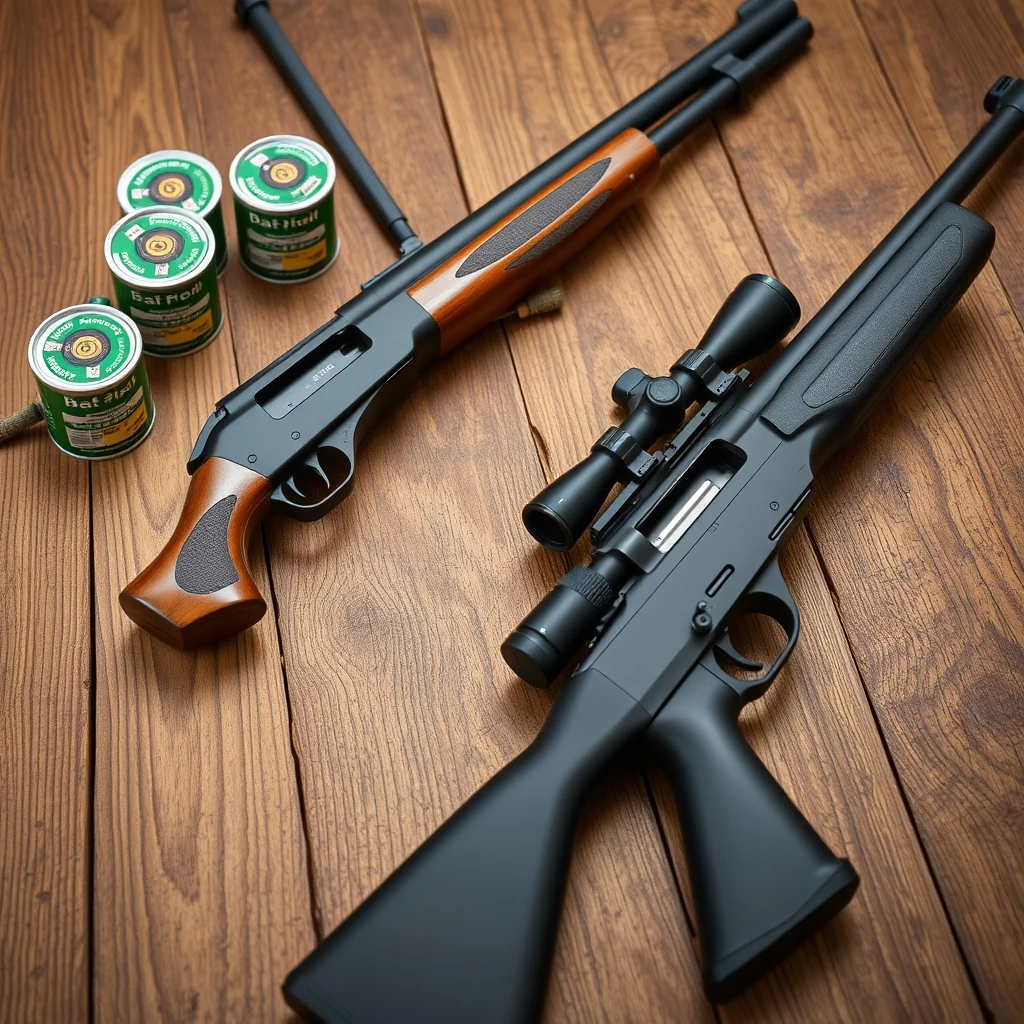
Every air rifle fits into one of three powerplant families — spring/gas-piston, pre-charged pneumatic (PCP), or CO2. These aren't just marketing categories; they describe fundamentally different mechanisms with different trade-offs for accuracy, maintenance, portability, and cost.
Spring and gas-piston (break-barrel, sidelever, underlever)
The spring powerplant is the oldest and most self-contained design. Cocking the rifle (typically by breaking the barrel down 90°) compresses a heavy coil spring behind a piston. When you pull the trigger, the spring releases, the piston slams forward, compresses a small chamber of air, and that burst of air propels the pellet. The entire process happens in milliseconds — and the piston actually bounces back slightly after the initial compression, creating a double-recoil signature unique to springers.
Gas-piston (sold under brand names like Nitro Piston, Nitro Mag, and Ram Air) replaces the steel spring with a sealed nitrogen-filled cylinder. The mechanism is identical, but the gas piston is smoother in operation, cycles faster, holds its charge indefinitely without set (unlike springs that can weaken when stored compressed), and is less affected by cold temperatures. Most modern break-barrel rifles in the $150–$350 range now use gas pistons.
The key trade-off: springers and gas-piston rifles require no external air source, making them completely self-contained. But the recoil pattern — a forward lunge followed by a rearward kick, both happening before the pellet exits the barrel — is more demanding on technique and genuinely destructive to scopes not rated for it.
Pre-charged pneumatic (PCP)
A PCP rifle stores compressed air in an onboard cylinder, typically filled to 200–300 bar (about 2,900–4,350 PSI depending on the model). Each shot releases a metered valve-controlled burst of that stored air. The result is no recoil to speak of, highly consistent shot-to-shot velocity, and the ability to fire multiple shots quickly from a rotary magazine.
PCPs are typically quieter than springers at comparable power levels because the air release is regulated rather than a sudden piston slam. Many higher-end PCPs include an on-board regulator that maintains consistent output pressure even as the cylinder depletes — regulated PCPs can maintain velocity within roughly 10–15 fps across 50+ shots per fill, depending on caliber and power level.
The key trade-off: you need a way to fill the rifle. Options include a dedicated high-pressure hand pump (tiring but inexpensive), a SCUBA tank adapter (large capacity, requires refills at a dive shop), or a dedicated PCP compressor (expensive upfront, most convenient). Budget an additional $80–$300+ for filling infrastructure when pricing a PCP setup.
CO2
CO2 rifles use 12-gram Powerlet cartridges or larger 88-gram cartridges to propel pellets. The mechanism is simple, the rifles are typically inexpensive, and the cartridge form factor is convenient for casual use. CO2 is the standard for pistol-format air guns and some repeating rifles.
The key trade-off: CO2 velocity and shot consistency are meaningfully affected by temperature. CO2 pressure drops as the cartridge cools — either from ambient cold or from the refrigeration effect of rapid fire. In cold weather (below roughly 50°F / 10°C), CO2 performance degrades noticeably. CO2 is best suited for informal target practice, not field use in variable temperatures or sustained accuracy work.
| Factor | Spring/Gas-Piston | PCP | CO2 |
|---|---|---|---|
| Self-contained | Yes — no external source | No — requires pump/tank | Partially — 12g cartridges widely available |
| Shot consistency | Good (varies by technique) | Excellent (regulated models: very high) | Moderate (temperature-dependent) |
| Recoil | Notable double-recoil | Virtually none | Minimal |
| Optics requirement | Airgun-rated scope required | Standard scope acceptable | Standard scope acceptable |
| Maintenance | Low — lubricate chamber as needed | Moderate — seals, fills, O-rings | Low — cartridge replacement |
| Typical entry price | $80–$300 | $250–$800+ | $50–$150 |
Caliber: .177, .22, and .25
Caliber choice is closely tied to intended use. The three common air rifle calibers carry different pellet weights, ballistics, and energy-transfer characteristics.
.177 caliber (4.5mm)
The .177 is the standard for 10-meter target shooting — it's the only caliber used in Olympic air rifle competition because its lighter pellets (typically 7–10.5 grains) achieve higher velocities, flatter trajectories at short range, and tight group consistency from accurate rifles. At 10 meters, a .177 pellet drops negligibly.
For pest control and informal plinking at 25–40 yards, .177 works but is unforgiving of pellet placement. The smaller diameter means less energy transfer and a smaller wound channel — ethical pest control at typical air rifle ranges generally favors .22 or larger.
.22 caliber (5.5mm)
The .22 is the general-purpose caliber for field use, pest control, and small game where local regulations permit. Pellets typically range from 14 to 25+ grains. A heavier pellet at the same velocity carries more kinetic energy and is less deflected by wind and minor obstructions like grass stems.
For most buyers shooting at 20–50 yard practical ranges at pest-control or informal targets, .22 is the right default. It's also forgiving of moderate barrel-to-barrel variation in velocity — a rifle producing 780 fps with a 14.3 grain pellet performs quite differently from one producing 780 fps in .177 with an 8.4 grain pellet.
.25 caliber (6.35mm)
The .25 is a hunting-oriented caliber, common in higher-powered PCPs designed for rabbits, squirrels, and similar quarry at ethical ranges. Pellets run 25–50+ grains, delivering substantial energy even when velocities are modest. The trade-off is a more curved trajectory at range and higher cost-per-shot vs .177 and .22. Most entry-level rifles aren't chambered in .25; it becomes relevant in the $400+ PCP category.
Shopping for air rifles? Browse current eBay listings → (we earn a small commission; your price is unchanged).
Velocity numbers and what they actually mean
Marketing velocity figures — often "up to 1,400 fps" or "1,200 fps" — are measured with the lightest possible alloy (non-lead) pellets, typically 5–7 grains in .177. These figures tell you roughly where a rifle sits in powerplant output, but they don't predict field performance. The number that matters is muzzle energy in foot-pounds, which is pellet weight × velocity² ÷ 450,240.
A 16 ft-lb rifle shooting .22 caliber at 820 fps with a 14.3 grain pellet is meaningfully different from one making that same 16 ft-lbs in .177 at 1,270 fps with an 8.4 grain pellet. The .22 will drop more at 40 yards but arrive with the same energy; the .177 will be flatter but more sensitive to crosswind.
Optics: what's different about airgun scopes
The springer's double-recoil is the main optical hazard. A standard rimfire scope is built to handle one direction of recoil — backward. A spring or gas-piston rifle sends the scope first forward (as the piston moves) then backward (as the spring rebounds). Standard scopes fail on springers — usually by having internal erector assemblies battered out of alignment within a few hundred shots.
Look for scopes explicitly marketed as "airgun rated," "springer rated," or "spring gun safe." These use reinforced erector systems. Well-regarded options in this category come from Hawke, UTG, Leapers, and BSA, typically in the $60–$200 range for practical 3–9×40 or 4–12×40 configurations adequate for pest control ranges.
Mounts also matter. Springer recoil causes scopes to creep forward in standard rings over time. Two-piece rings with a recoil stop or a one-piece mount with a built-in stop lug that engages the dovetail rail dramatically reduces scope creep. Air rifle dovetails are typically 11mm; check your rifle's rail spec before buying rings.
PCP and CO2 rifles don't have this problem. Standard rifle scopes in any quality bracket work correctly on PCPs — the only optical consideration is the parallax adjustment (parallax-free at 100 yards is useless for an air rifle; look for adjustable objective or side-focus models set for 10–50 yard ranges).
Safety, legality, and common sense
Air rifles are firearms in some jurisdictions and unrestricted in others. In the UK, sub-12 ft-lb rifles (in .177) require no license; above that threshold they are Section 1 firearms. In the US, federal law does not classify air rifles as firearms, but state and local regulations vary significantly — some cities prohibit air guns; some states have hunting regulations specifying minimum calibers. Check your local laws before buying, and treat any air rifle with the same four rules of firearms safety.
For pest control on private property, confirm whether the species you're targeting is legal to control — many birds are protected regardless of their pest status. Pellet guns do not automatically exempt you from local discharge ordinances.
What to look for when buying
- Powerplant for your use: casual backyard plinking → springer or CO2; consistent accuracy and multiple shots quickly → PCP; no infrastructure investment → springer
- Caliber: target shooting → .177; pest control/field use → .22; larger quarry where legal → .25
- Muzzle energy, not velocity: calculate ft-lbs for the pellet weight you'll actually use
- Optics compatibility: springer → airgun-rated scope + recoil-stop mounts; PCP → standard scope with adjustable parallax
- Fill method (PCP): budget for pump ($80–$120) or tank before committing to a PCP
- Trigger: two-stage triggers are the norm on quality rifles; adjustment range varies — check whether the specific model allows trigger weight adjustment
Shop on eBay
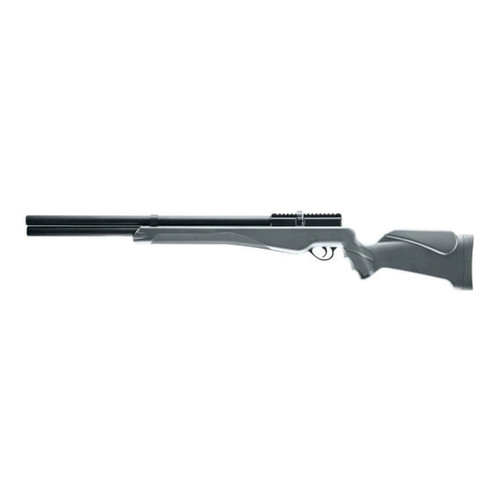 PCP Air Rifles
Multi-shot magazine, regulated and unregulated options
PCP Air Rifles
Multi-shot magazine, regulated and unregulated options
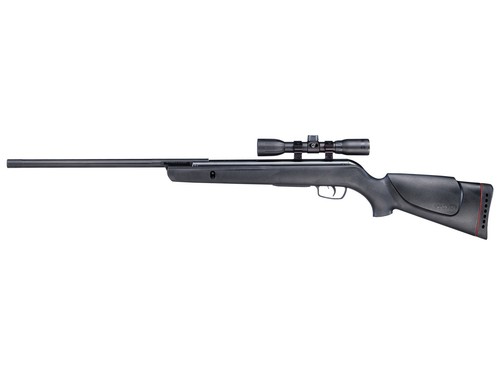 Break Barrel Springers
Self-contained, no fill equipment needed
Break Barrel Springers
Self-contained, no fill equipment needed
 .22 Caliber Air Rifles
General-purpose pest control and field caliber
PCP Hunting Rifles
.22 and .25 cal with serious muzzle energy
.22 Caliber Air Rifles
General-purpose pest control and field caliber
PCP Hunting Rifles
.22 and .25 cal with serious muzzle energy
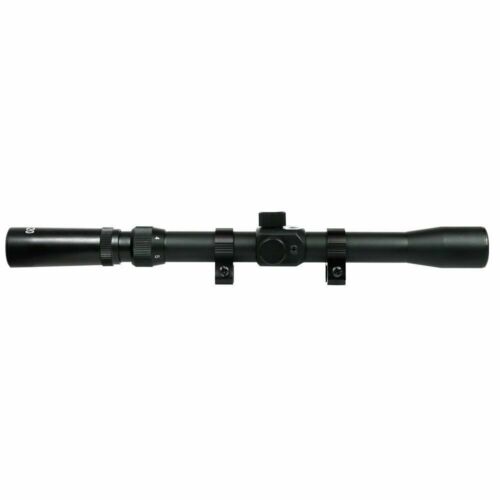 Airgun Scopes
Springer-rated and adjustable-parallax options
Airgun Scopes
Springer-rated and adjustable-parallax options