Guides
Practical violin buying content — sizing charts, solid vs laminate trade-offs, setup expectations, and what bow budget actually buys you.
Why this page exists
Most violin content either targets professional orchestral players or stops at "buy a beginner kit." Neither tells you how size affects learning speed, what solid spruce actually means for a student, or when spending more on a bow pays off faster than spending it on the instrument.
Getting a 3/4 violin when a 1/2 is correct, or skipping setup on a factory instrument, are the two mistakes that stop students from progressing. Both are avoidable with the right information upfront.
Violins worth searching on eBay
Student outfits, intermediate upgrades, bows, and cases. We earn a small commission on qualifying sales; your price is unchanged. Full disclosure.
 Violin 4/4 outfit
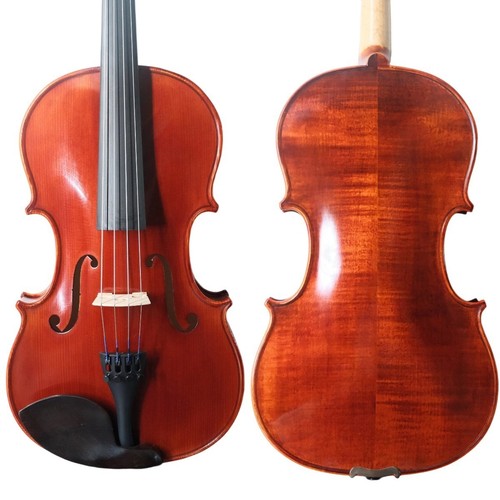
Full-size violin with bow and case — the standard adult and older-teen size. Look for outfits from established brands rather than generic marketplace listings; setup quality varies significantly.
View on eBay →
Violin 4/4 outfit
Full-size violin with bow and case — the standard adult and older-teen size. Look for outfits from established brands rather than generic marketplace listings; setup quality varies significantly.
View on eBay →
 Student violin
Entry-level outfits typically feature laminate tops (plywood spruce or maple), pre-set-up bridges, and synthetic strings. Price range matters: under $100 usually means unplayable out of the box without setup work.
View on eBay →
Student violin
Entry-level outfits typically feature laminate tops (plywood spruce or maple), pre-set-up bridges, and synthetic strings. Price range matters: under $100 usually means unplayable out of the box without setup work.
View on eBay →
 Intermediate violin
Solid spruce tops, properly fitted pegs and nut, better varnish, and finer string tolerances. The step-up matters most for players who practice daily and hear their own tone critically.
View on eBay →
Intermediate violin
Solid spruce tops, properly fitted pegs and nut, better varnish, and finer string tolerances. The step-up matters most for players who practice daily and hear their own tone critically.
View on eBay →
 Violin bow
Brazilwood bows are reliable at the student level; pernambuco is the professional benchmark. Carbon fiber bows in the $80–$200 range often outperform wood bows at the same price for consistency and durability.
View on eBay →
Violin bow
Brazilwood bows are reliable at the student level; pernambuco is the professional benchmark. Carbon fiber bows in the $80–$200 range often outperform wood bows at the same price for consistency and durability.
View on eBay →
 Violin case
Suspension cases protect the instrument from shock; oblong cases offer more bow pockets. For daily school transport, a hard-shell suspension case is worth spending on even if the violin is modest.
View on eBay →
Violin case
Suspension cases protect the instrument from shock; oblong cases offer more bow pockets. For daily school transport, a hard-shell suspension case is worth spending on even if the violin is modest.
View on eBay →