Guides
Vintage synth identification and buying guides. Circuit revisions, condition assessment, service history explained.
Why this page exists
Vintage synth listings describe cosmetics and claim "fully working." Neither tells you whether the voice chips are original, whether the filter has been retuned, or whether the capacitors are 40-year-old electrolytics waiting to fail.
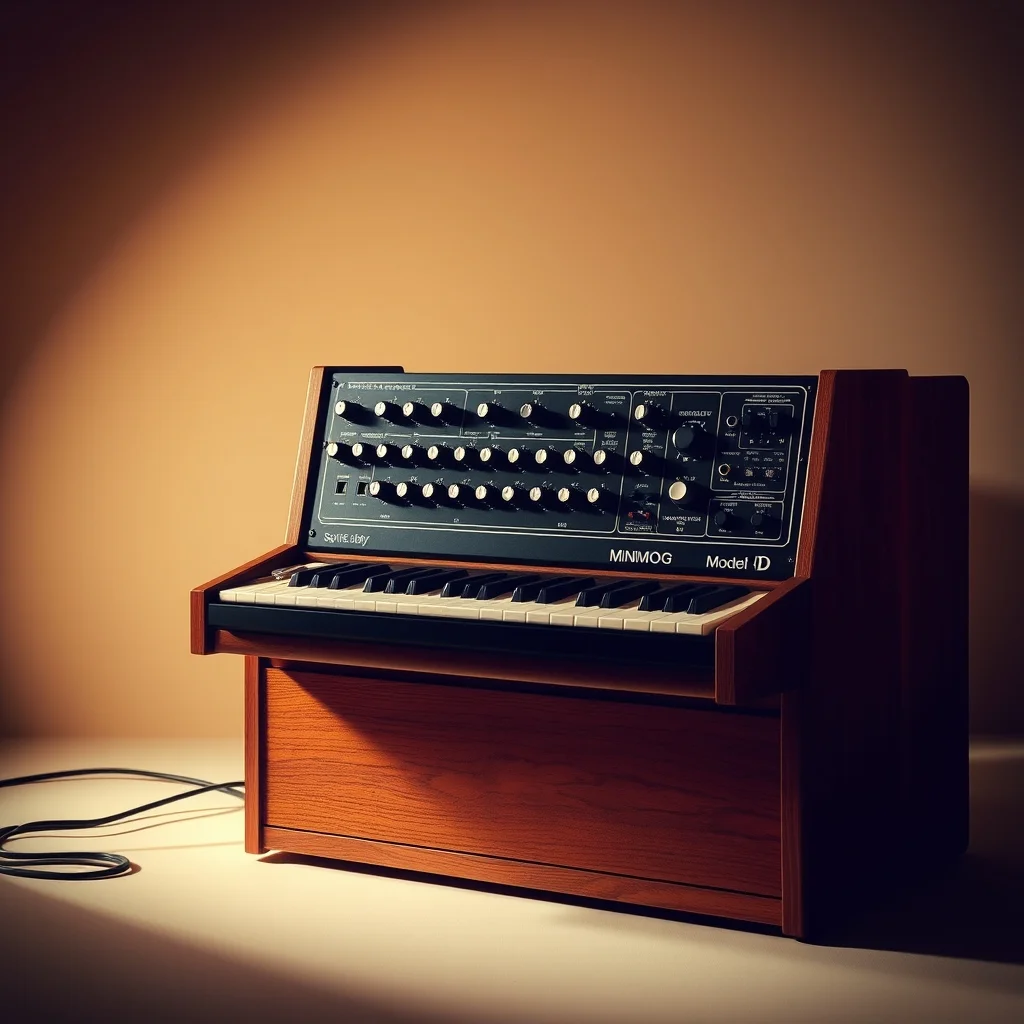
A Minimoog Model D in original condition with documented service history is a different purchase from one that has been "serviced" by someone who replaced components with modern substitutes and altered the calibration. This page explains what to ask.
Vintage synthesizers worth searching on eBay
Sought-after analog synthesizers with established collector and player markets. We earn a small commission on qualifying sales; your price is unchanged. Full disclosure.
 Roland Juno-60
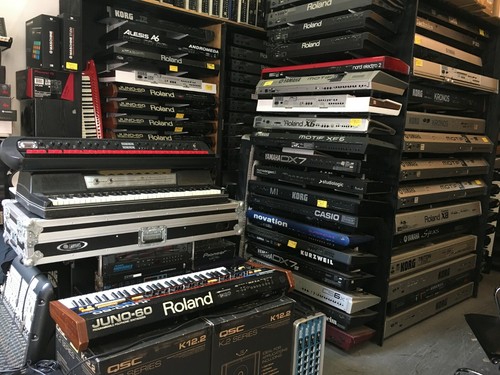
6-voice DCO-based polysynth (1982–1984). One of the most accessible vintage Roland polysynths. DCO (digitally controlled oscillator) provides better tuning stability than VCO designs at the cost of some pitch character. The chorus circuit is distinctive. Check the arpeggiator function and all voice outputs.
Roland Juno-60
6-voice DCO-based polysynth (1982–1984). One of the most accessible vintage Roland polysynths. DCO (digitally controlled oscillator) provides better tuning stability than VCO designs at the cost of some pitch character. The chorus circuit is distinctive. Check the arpeggiator function and all voice outputs.
 Sequential Prophet 5
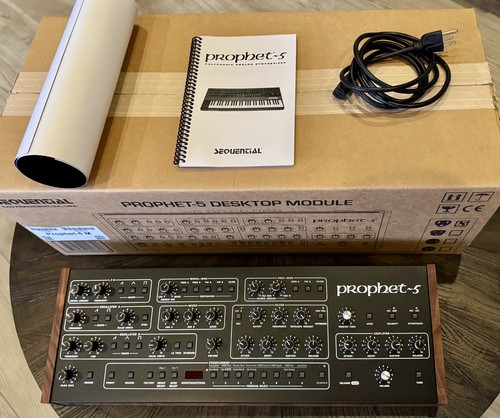
5-voice polyphonic with 40 patch memory. Rev 1/2 used SSM chips; Rev 3.3 switched to CEM chips for improved stability. The CEM3340 VCO and CEM3320 filter are critical components — verify they are present and functioning. Rev 2 with SSM chips are harder to service due to chip scarcity.
Sequential Prophet 5
5-voice polyphonic with 40 patch memory. Rev 1/2 used SSM chips; Rev 3.3 switched to CEM chips for improved stability. The CEM3340 VCO and CEM3320 filter are critical components — verify they are present and functioning. Rev 2 with SSM chips are harder to service due to chip scarcity.
![Vintage 1980s Roland Jupiter-8 [12-Bit] 61-Key Synthesizer](https://i.ebayimg.com/images/g/Y6cAAeSwa2BqDinO/s-l500.jpg) Roland Jupiter-8
8-voice flagship Roland polysynth (1981–1985). The Jupiter-8 uses Roland's own IR3109 filter chip and BA662 VCA — both are out of production and difficult to source. Verify all 8 voices are functioning equally. Membrane panel buttons require careful inspection; replacements exist but installation requires disassembly.
Roland Jupiter-8
8-voice flagship Roland polysynth (1981–1985). The Jupiter-8 uses Roland's own IR3109 filter chip and BA662 VCA — both are out of production and difficult to source. Verify all 8 voices are functioning equally. Membrane panel buttons require careful inspection; replacements exist but installation requires disassembly.
 Korg MS-20
Semi-modular monophonic with patch panel (1978–1983). Two distinct filter versions: early units use the Korg PS3100-based filter topology; later units (post ~1979) use the Korg 35 filter. These sound different. The MS-20 mini reissue (2013) uses a smaller keyboard and the later filter circuit — it is not a replica of the early original.
Korg MS-20
Semi-modular monophonic with patch panel (1978–1983). Two distinct filter versions: early units use the Korg PS3100-based filter topology; later units (post ~1979) use the Korg 35 filter. These sound different. The MS-20 mini reissue (2013) uses a smaller keyboard and the later filter circuit — it is not a replica of the early original.
 Yamaha DX7
The first commercially successful FM synthesis instrument (1983). 16-voice polyphony, 6-operator FM. Battery for patch memory must be checked — a dead battery loses all user patches. DX7s are mechanically reliable but benefit from keybed cleaning. The DX7 II (1987) added aftertouch and expanded memory.
Yamaha DX7
The first commercially successful FM synthesis instrument (1983). 16-voice polyphony, 6-operator FM. Battery for patch memory must be checked — a dead battery loses all user patches. DX7s are mechanically reliable but benefit from keybed cleaning. The DX7 II (1987) added aftertouch and expanded memory.