Capacity: gallon ratings vs usable volume
Tote capacity is listed in gallons, but the gallon number is typically the total internal volume — not the volume you can practically fill. Most totes taper toward the base for molding reasons, and the wall thickness, reinforcement ribs, and lid channel all eat into usable space. A 27-gallon tote often has roughly 20–22 gallons of practical filling space for irregular items.
For planning purposes, the exterior dimensions matter more than the gallon number when fitting totes onto shelves or stacking in a fixed space. Always check exterior dimensions (L × W × H) before buying and compare them against your shelving depth and ceiling height.
Common size categories and their practical uses:
- 6–12 gallon: Shoes, small seasonal items, individual sporting gear sets. Fits on 12-inch-deep shelves. Easy to handle full.
- 18–27 gallon: The general-purpose range. Holiday decorations, clothing, books. This is the most common garage storage size.
- 45–66 gallon: Bulk items, sleeping bags, large outdoor equipment. Heavy when full — factor in whether you'll need to lift them often.
Stacking: why brand consistency matters
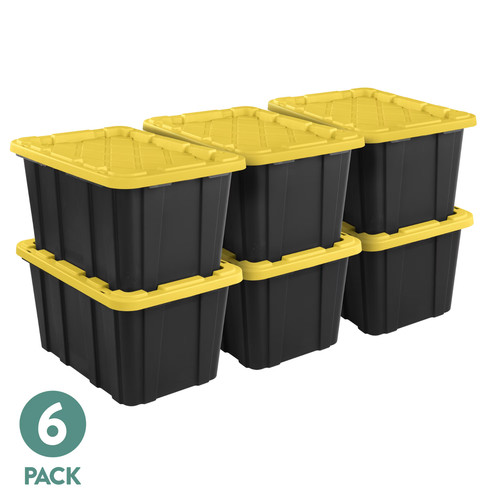
Totes stack reliably when the lid recess of one tote is sized to receive the base of the tote above it. This works consistently within a brand's product line — usually. It does not work reliably across brands, because lid and base dimensions vary enough that the tote above will shift or tip under any lateral force.
Also check the published stacking load rating. Many consumer totes specify a maximum weight on the stacked lid — typically 100–250 lbs for general-purpose totes. If you're stacking five full totes, the bottom tote's lid needs to handle the combined weight of the four above. Cheap totes often don't have a published stacking rating; that's worth paying attention to.
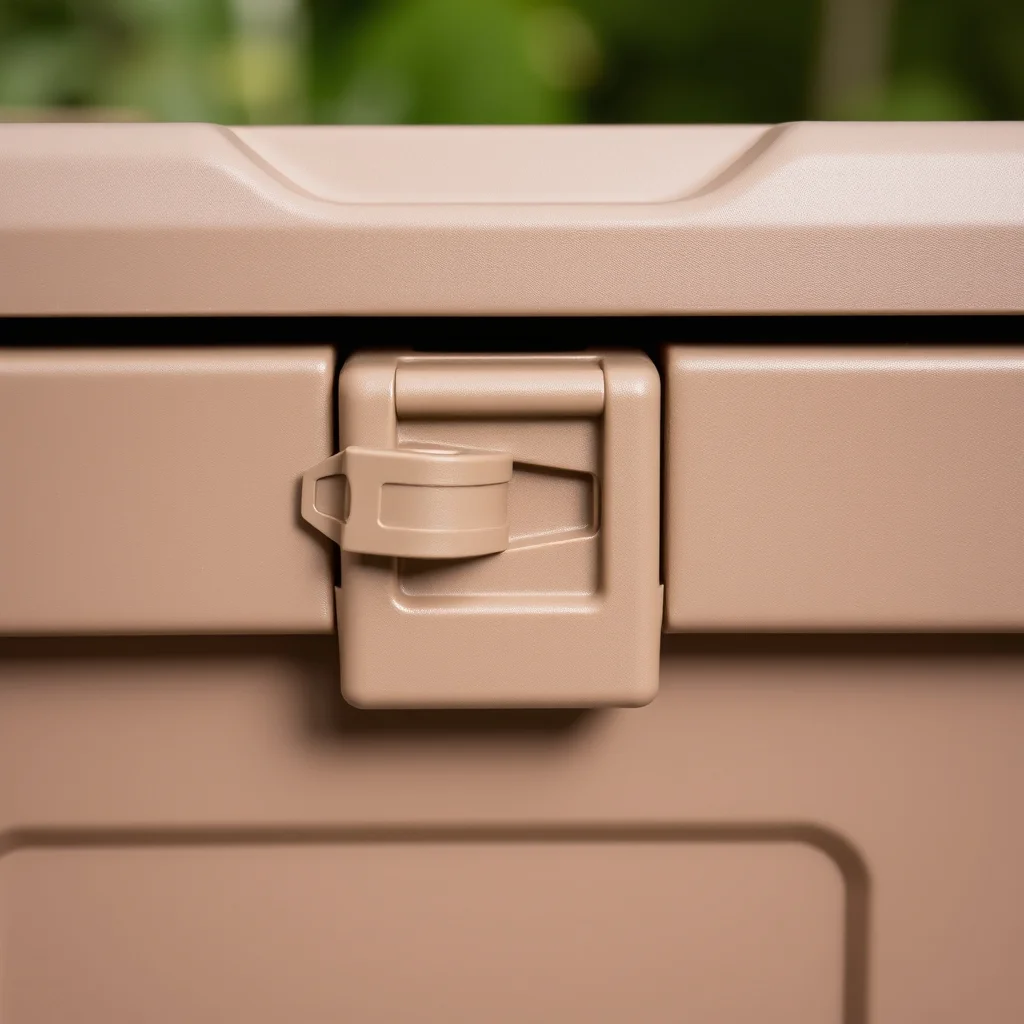
Lid latches: snap vs. latch vs. gasket latch
There are three lid retention systems in common use, and they are not interchangeable for moisture protection:
Snap lids
A snap lid has a lip that clicks over the tote rim. It holds the lid on against casual bumps but doesn't create a seal. Fine for dry indoor storage. Poor for anything where moisture matters. These are the least expensive option.
Latch lids (without gasket)
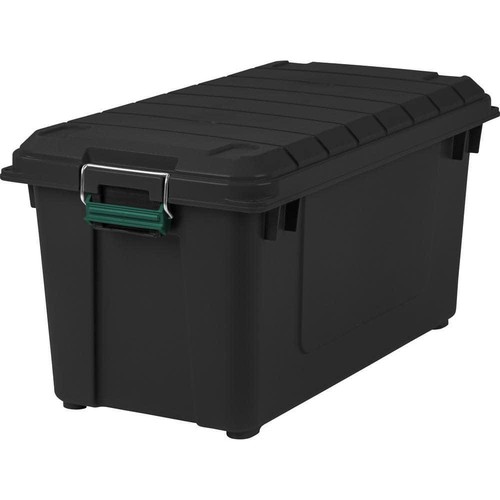
Buckle-style latches pull the lid down firmly against the rim. Better than snap lids for keeping pests and dust out. Still not a moisture barrier without a gasket — the lid contacts the rim at the latch points but not necessarily continuously around the perimeter. Described as "weather-resistant" by most manufacturers.
Gasketed latch lids
A rubber or foam gasket runs continuously around the lid's rim channel. When latched, the gasket compresses to form a seal. This is the standard for waterproof or weather-sealed storage. Look for "airtight" or "watertight" language with a positive IP or immersion rating if true waterproofing is required.
Shopping for storage totes? Browse current eBay listings → (we earn a small commission; your price is unchanged).
| Lid type | Seal quality | Best for |
|---|---|---|
| Snap lid | None | Dry indoor storage only |
| Latch lid (no gasket) | Dust and pest resistant | Garage seasonal storage, moderate exposure |
| Gasketed latch lid | Weather and moisture resistant | Outdoor, uninsulated garage, anything moisture-sensitive |
Clear vs opaque: the findability question
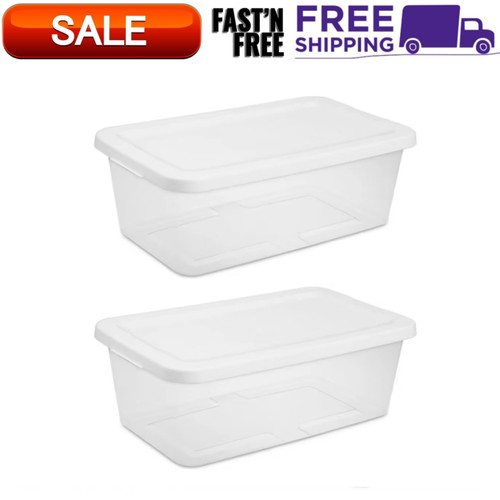
Clear totes let you see contents without opening, which sounds useful — and it is, up to a point. The practical issue is that clear polypropylene is typically translucent rather than truly clear, contents jumble together visually, and in a stack of five totes you still can't see the bottom three clearly. Labeling a color-coded opaque tote often creates a more functional system than relying on visual transparency.
Clear polycarbonate or PETG totes are genuinely transparent and more durable than polypropylene, but they cost more. If true visibility is important to you — for workshop parts, craft supplies, or anything you access frequently — it's worth paying for actually clear material rather than settling for the standard "clear" polypropylene.
For seasonal storage in a garage, opaque totes with labeled lids are often more practical than clear totes. They block UV (which degrades plastics and fades contents), stack more attractively, and are typically cheaper and more durable at equivalent price points.
Common mistakes
- Mixing brands in a tall stack. Incompatible lid and base profiles create unstable stacks. Stick to one line for any stack above two totes.
- Assuming "weather-resistant" means waterproof. It doesn't. Only a continuous gasket seal provides real moisture protection.
- Buying the largest size for everything. A 66-gallon tote full of books is too heavy to move safely. Size to use case — heavier items go in smaller totes.
- Ignoring exterior dimensions. Gallon numbers tell you volume; exterior L × W × H tells you whether it fits the shelf you have.
- Overloading totes for overhead rack storage. Totes going onto ceiling racks should be lighter than their maximum — overhead means you're lifting them above shoulder height, and a 50-lb tote is difficult to manage at that angle.
Buying checklist
- Measure shelving depth and available height before choosing tote dimensions.
- Decide on moisture exposure level — gasketed latch for any outdoor or damp environment.
- Buy within one product line if you plan to stack above two totes.
- Check the stacking load rating if you'll stack more than two full totes.
- Choose tote size based on content weight, not just volume — heavy items stay in smaller totes.
- Label all totes at purchase; don't rely on memory for seasonal storage.