Chamber size: cubic feet and what fits inside
Kiln chamber volume is measured in cubic feet. A 0.5 cu ft test kiln fires maybe half a dozen small mugs at once. A 1–1.5 cu ft kiln is a serious home-studio option for a solo potter producing regularly. A 7 cu ft kiln — typical of a community studio's workhorse model — can fire a full production run.
When evaluating listings, look for interior chamber dimensions alongside the cubic footage. Chamber shape matters: a kiln that's 18" in diameter and 18" deep can accept a 16" platter on a full shelf with clearance; a narrow, tall chamber can't. Interior diameter is the limiting factor for wide work; interior depth determines whether you can stack two layers of mugs with kiln posts.
| Chamber size | Typical use | Power requirement |
|---|---|---|
| Under 1 cu ft | Test tiles, small jewelry, small mugs | Often 120V |
| 1–3 cu ft | Home studio, regular small-batch production | Usually 240V |
| 3–7 cu ft | Serious studio, teaching, production | 240V, often 40–50A circuit |
| 7+ cu ft | Full production studio, community kilns | 240V, 60A+ circuit |
One frequently missed spec: lid type. Top-loading kilns dominate the home-studio market and are generally less expensive to purchase and maintain. Front-loading (clamshell) kilns are easier on your back for loading but cost more. If the listing doesn't specify, assume top-loading for smaller home kilns.
Cone ratings: the temperature system decoded
The "cone" system is a ceramic measurement of heat work — the combination of temperature reached and the rate at which you approached it. The numbering is not intuitive: it runs from cone 022 (the lowest, around 1087°F/586°C) up through cone 10 and cone 12 at the high end (around 2381°F/1305°C and higher). The numbering convention breaks: cone 06 is cooler than cone 6, which catches beginners every time.
| Cone range | Temperature (approx.) | Common use |
|---|---|---|
| Cone 06–04 | 1828–1945°F (998–1063°C) | Earthenware, low-fire glazes, overglazes |
| Cone 6 | 2232°F (1222°C) | Mid-fire stoneware, the most popular home-studio range |
| Cone 10 | 2381°F (1305°C) | High-fire stoneware, porcelain, reduction firing |
Your clay body and your glazes must all be rated for the same cone range. If your clay is rated cone 6 and your kiln only reaches cone 06, you'll get underfired clay that isn't vitrified — porous, weak, and not food-safe. The reverse — overfiring a cone 06 clay in a cone 10 kiln — can damage both the ware and the kiln elements.
Most electric home kilns are rated to cone 6 or cone 10. Cone 10 kilns can fire anything; cone 6 kilns cannot fire cone 10 clay, but they do handle low-fire ranges fine. If you're uncertain what range you'll work in, a cone 10-rated kiln gives you the most future flexibility.
120V vs 240V: the electrical question that changes the buying decision
This is the one spec that most often trips up home kiln buyers. A 120V kiln plugs into a standard US household outlet — no electrician required. The trade-off is maximum temperature and chamber size: very few kilns above ~1 cu ft can reach cone 6 on 120V.
A 240V kiln needs a dedicated circuit — the same type as a large dryer or range. If your garage or studio doesn't have one, you're looking at electrician cost to install it. In a typical US garage without existing 240V service, installation can run a few hundred dollars depending on panel capacity and distance — get a quote before buying the kiln.
Shopping for pottery kilns? Browse current eBay listings → (we earn a small commission; your price is unchanged).
Digital controllers vs manual switches
Manual kilns use a set of switches (low/medium/high) or infinite control knobs to set heating elements. You fire by turning switches up on a schedule — typically low for the first hour, medium for the next, then high until the kiln-sitter shuts it off. It works, but it requires attention and produces less consistent results than programmed firing.
Digital controllers — the Skutt KilnMaster, L&L Genesis, Bartlett V6-CF, and others — let you program ramp rates and hold times. This means the kiln fires itself: ramp to 200°F, hold 30 minutes (to dry ware), ramp to 1100°F at 100°F/hour, hold, then ramp to cone 6. The result is more consistent glaze outcomes, especially for glazes sensitive to the rate of temperature increase.
Digital controllers add $200–400 to the cost of a comparable manual kiln. On a used kiln without a controller, adding one later is feasible but adds installation complexity. If you're buying new and the budget allows, a controller is worth having from the start.
Kiln sitter vs digital shutoff
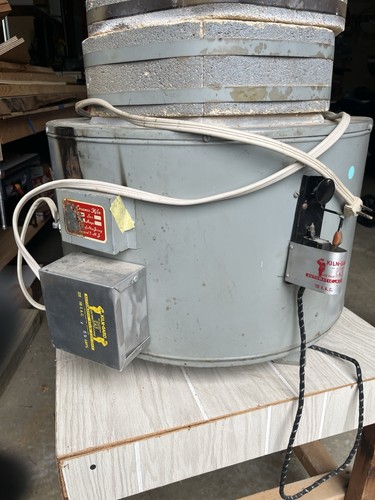
Older kilns use a kiln sitter — a mechanical device that holds a small ceramic cone. When the cone bends (indicating the target heat work has been reached), it releases a rod that cuts power to the kiln. Kiln sitters are reliable and require no programming, but they can fail if not properly maintained (bent trip rod, clogged tube). On a used kiln, test the kiln sitter or replace it.
Digital controllers have their own shutoff logic: they monitor thermocouple readings and cut power based on temperature, rate of rise, and programmed firing schedules. More precise and more auditable — you can log and review past firings.
Elements and bricks: what to check on a used kiln
Kiln elements — the coiled resistance wires inside the firing chamber — wear out over time and eventually burn through. Element replacement is a routine maintenance task (not a sign a kiln is broken), but element cost varies by kiln model. Before buying a used kiln, check: Are elements sagging out of their grooves? Are there any obvious burn points or breaks? A kiln with elements that need replacement soon should be priced to account for that cost.
Kiln bricks (the refractory insulation that lines the chamber) should show no crumbling, crack patterns that run through rather than across bricks, or large spalling. Small surface cracks are normal. Deep structural cracks or missing sections of brick are more serious and can affect temperature uniformity.
Ventilation: don't skip this
Electric kilns produce fumes during firing — from clay body off-gassing, glaze volatilization, and wax burnout. These need to be vented. Options include: downdraft vent systems designed for kilns (L&L Vent-Sure, Skutt EnviroVent) that draw air through the kiln and exhaust it outside; firing in a garage or studio with the door open; and hood ventilation positioned above the kiln. Never fire a kiln in an unventilated indoor space without a purpose-built vent system.
Common buying mistakes
- Buying a 120V kiln and then discovering it can't reach your target cone — check voltage and max cone rating before purchase, not after.
- Confusing cone 06 and cone 6 — these are different temperatures with different clay and glaze requirements.
- Ignoring chamber shape for wide work — interior diameter, not cubic footage, is the limiting factor for platters.
- Skipping the element inspection on used kilns — elements are consumable; price used kilns accordingly.
- No ventilation plan before firing indoors — glaze fumes are real; ventilation is not optional.