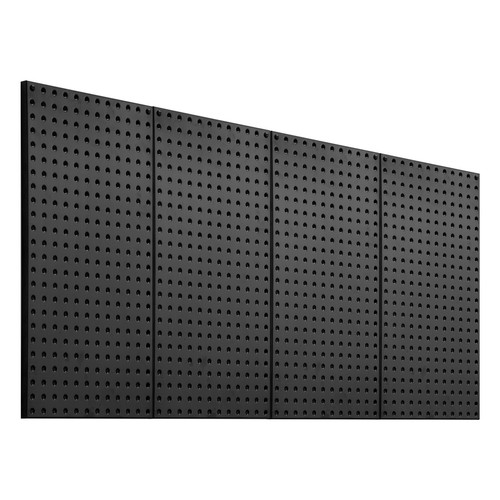
Metal vs hardboard: the garage humidity problem
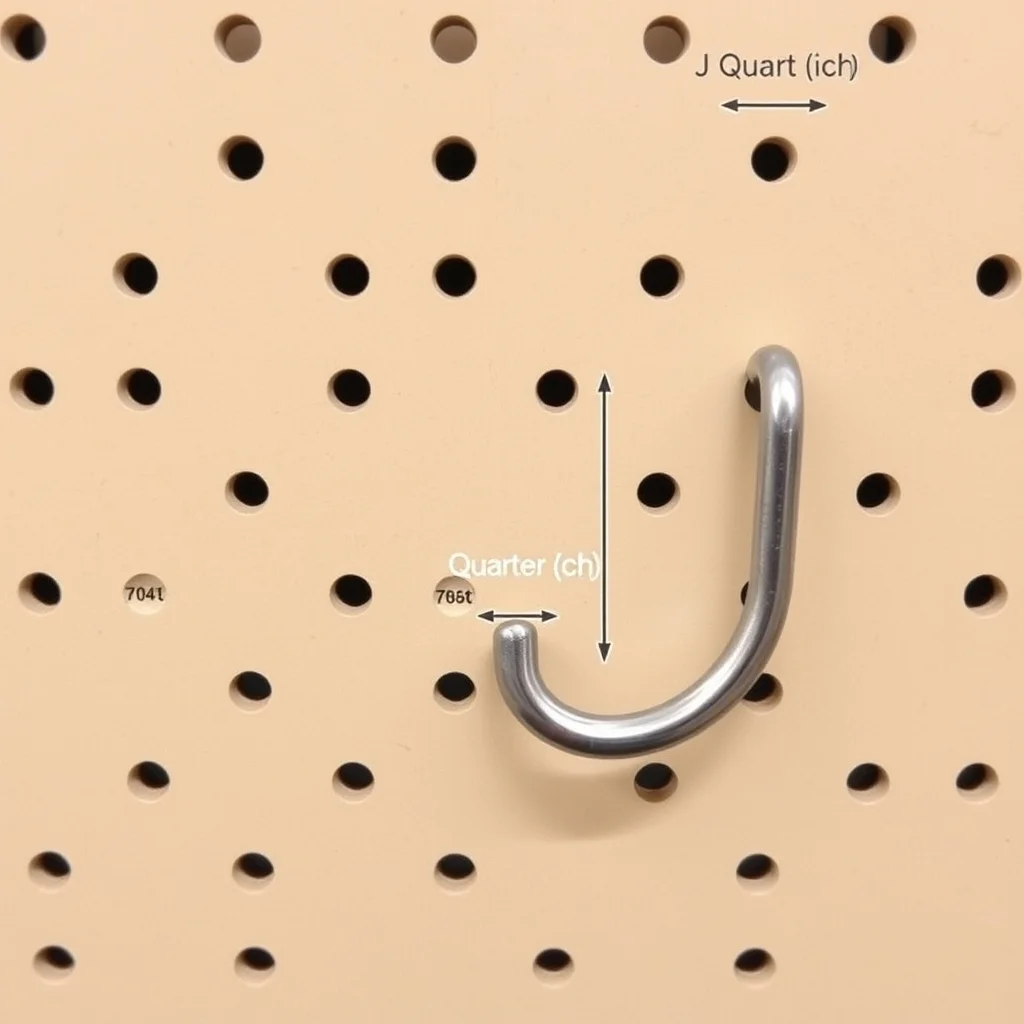
Traditional pegboard is made from tempered hardboard (sometimes called Masonite) — a dense fiberboard with ¼-inch holes on 1-inch centers. It's cheap and widely available. In a conditioned indoor environment, it works fine. In a garage that experiences seasonal humidity swings, temperature changes, or any moisture exposure, it swells, warps, and eventually the holes deform so hooks no longer seat properly.
Metal pegboard — typically 22–24 gauge steel with a powder-coat finish — solves the humidity problem completely. The holes stay round, the panel stays flat, and the hooks engage the same way they did on day one after years of garage exposure. Metal panels cost more, but in an uninsulated garage they're the more practical long-term choice.
There's also a third option: PVC or polypropylene pegboard. It's moisture-resistant like metal and lighter than steel. The hole pattern is typically compatible with standard ¼-inch hooks. The limitation is lower load capacity per hook compared to metal — it's fine for hand tools but less appropriate for heavy power tools hung directly.
| Material | Moisture resistance | Hook load capacity | Best environment |
|---|---|---|---|
| Hardboard | Poor | Moderate | Conditioned indoor workshops only |
| Steel (powder-coat) | Excellent | High | Garages, outdoor shops, humid environments |
| PVC/polypropylene | Excellent | Moderate | Garages with light to medium tool loads |
Hole spacing: the ¼-inch standard vs proprietary systems
The vast majority of pegboard hooks sold are designed for the standard ¼-inch hole on 1-inch centers. This is the original Masonite standard and is matched by most metal pegboard panels. If you buy a board and hooks in this standard, they work together, and you can buy additional hooks from virtually any hardware supplier without worrying about compatibility.
Some retail and brand-specific pegboard systems use proprietary slot patterns — slotted rails, larger hole sizes, or different spacing. These systems often look sleek and have purpose-designed accessories. The trade-off is that you're locked into that brand's hook ecosystem. If the line is discontinued or you want a specific hook type the brand doesn't make, you're stuck.
Standoffs: the clearance question
A pegboard must be mounted with standoffs — spacers that create a gap between the panel and the wall. Without this gap, hooks can't engage: the hook's back leg needs to slip behind the panel surface. The standard minimum standoff depth is about ½ inch, but deeper standoffs (¾–1 inch) give hooks a more secure purchase and allow larger accessories to mount properly.
Standoff hardware is typically included with metal pegboard panels sold for workshop use, but sometimes sold separately. When buying a panel that doesn't include mounting hardware, check what standoff depth is recommended and source compatible standoffs with the right thread size for your lag screws or wall anchors.
For mounting into studs, use lag screws through the standoff into wood. For concrete or masonry garage walls, use masonry anchors. Don't mount a fully loaded pegboard with adhesive standoffs — the shear load of hanging tools will eventually pull them free.
Hook types: covering the full range of tools
A useful garage pegboard needs hooks that cover at least these categories:
Shopping for pegboard supplies? Browse current eBay listings → (we earn a small commission; your price is unchanged).
- Single J-hooks — for hammers, pliers, chisels. The workhorse hook type. Get a range of sizes (3-inch through 6-inch) to match handle diameters.
- Double hooks — for saws, levels, and flat items that need two contact points to hang straight.
- Shelf brackets — flat brackets that create small shelves on the pegboard for drill batteries, spray cans, and small parts.
- Bin hooks — slotted cups or bins for fasteners, pencils, and small loose items. Look for locking tab versions that don't fall off when you reach in.
- Tool-specific holders — circular saw holders, drill holders, extension cord wraps. These are worth buying for tools you reach for daily.
When buying a large hook assortment, verify it matches your board's hole size before ordering. A 200-piece set designed for 3/16-inch holes won't engage properly in a ¼-inch board — the legs are too thin and the hooks will fall out.
Panel size: planning your layout
Start by measuring your available wall space and sketching a rough tool layout. Leave room between tools for access — a pegboard that's too densely packed becomes frustrating to use. A 4×4 ft panel suits a focused tool wall for hand tools and a few power tools. A 4×8 ft panel or a wall of multiple panels is for a serious workshop with a full toolkit.
Panel edges can be joined with connector brackets to create seamless multi-panel walls. If you're doing this, confirm that the hole grid aligns across panels — a break in the 1-inch center pattern at a seam means some hooks will span the join awkwardly.
Common mistakes
- Using hardboard in an uninsulated garage. It warps. Use metal or PVC for any garage application.
- Skipping standoffs or using inadequate depth. Hooks need clearance behind the panel to engage — ½ inch minimum, ¾–1 inch preferred.
- Buying a large hook assortment without checking hole size compatibility. Verify ¼-inch holes on 1-inch centers matches your board before ordering hooks.
- Mounting to drywall without hitting studs. A fully loaded tool pegboard is heavy. Hit studs, or use proper masonry anchors for concrete.
- Over-hanging heavy power tools on plastic hooks. Steel hooks rated for the load, or purpose-built tool holders, are more appropriate for drills, circular saws, and heavier items.
Buying checklist
- Choose metal or PVC for garage/workshop environments; hardboard only for conditioned indoors.
- Confirm ¼-inch holes on 1-inch centers for maximum hook compatibility.
- Include standoff hardware — minimum ½ inch depth, ¾–1 inch preferred.
- Plan your tool layout before buying hooks — know what hook types you actually need.
- Verify hook hole-size compatibility before ordering assortments.
- Mount into studs or masonry anchors — not drywall alone.