Guides
Practical paintball content — mechanical vs electronic markers, loader feed rates, HPA vs CO2, and mask thermal lenses explained. No fluff.
Why this page exists
Paintball gear content clusters around either beginner listicles or tournament-level deep dives. Neither explains the compatibility requirements between a marker's rate of fire and the loader's feed rate — or why your mask fogging is a lens problem, not a strap problem.
A $300 electronic marker paired with a gravity-fed loader will chop paint on every string of shots. This page explains how the four components interact so you buy a system that works, not just four separate products.
Paintball gear worth searching on eBay
Electronic markers, packages, loaders, HPA tanks, and thermal masks. We earn a small commission on qualifying sales; your price is unchanged. Full disclosure.
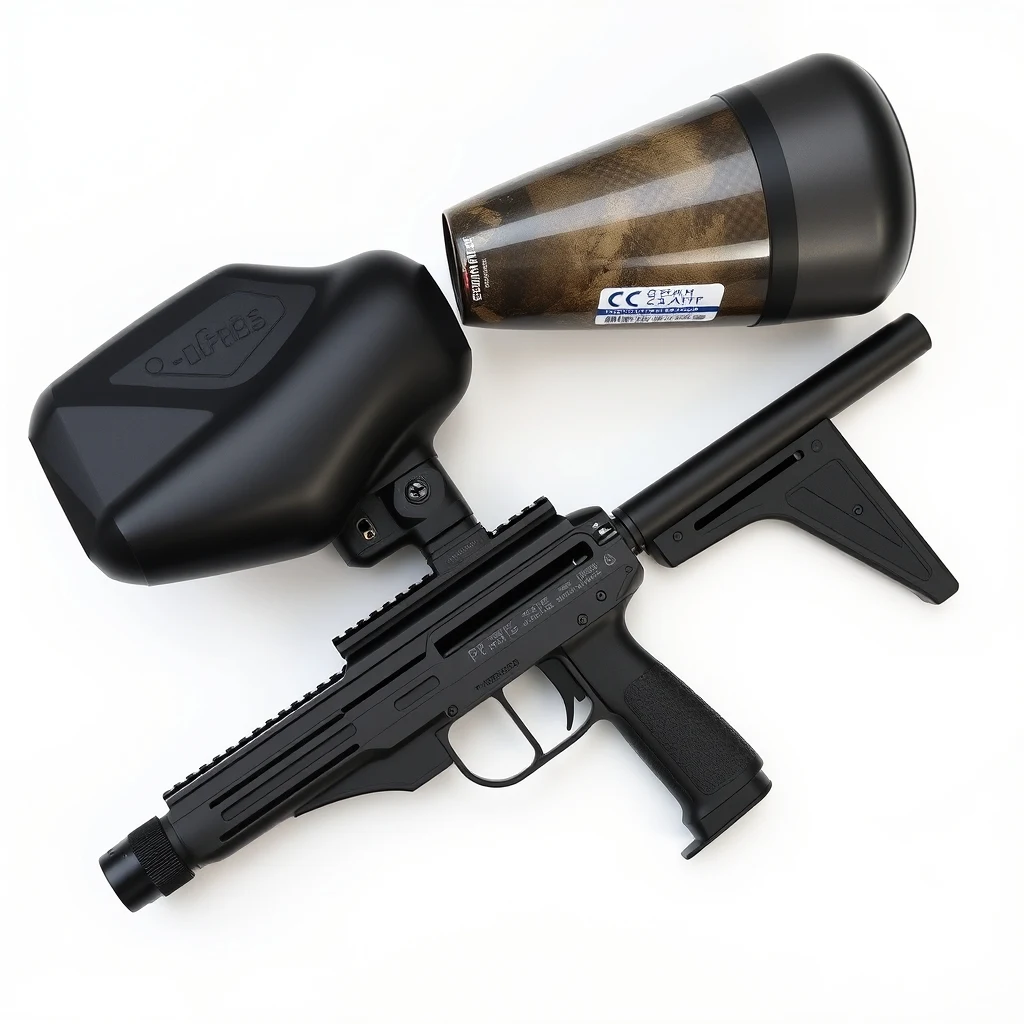
 Electronic Paintball Marker
Solenoid-driven firing, adjustable firing modes, rates of fire up to 15+ BPS. Requires a battery, HPA tank, and force-fed loader. Best for speedball and intermediate-to-advanced scenario play.
Electronic Paintball Marker
Solenoid-driven firing, adjustable firing modes, rates of fire up to 15+ BPS. Requires a battery, HPA tank, and force-fed loader. Best for speedball and intermediate-to-advanced scenario play.
 Paintball Gun Package
Complete starter kits include marker, mask, tank, and loader. Verify the loader included is a force-feed type if buying a package with an electronic marker — gravity loaders will cause paint chopping at higher BPS.
Paintball Gun Package
Complete starter kits include marker, mask, tank, and loader. Verify the loader included is a force-feed type if buying a package with an electronic marker — gravity loaders will cause paint chopping at higher BPS.
 Paintball Hopper / Loader
Force-feed loaders (Dye Rotor, Empire Halo Too, Virtue Spire) feed 15–50+ BPS and are required for electronic markers. Gravity-fed loaders (~8 BPS) pair only with mechanical or slow-firing markers.
Paintball Hopper / Loader
Force-feed loaders (Dye Rotor, Empire Halo Too, Virtue Spire) feed 15–50+ BPS and are required for electronic markers. Gravity-fed loaders (~8 BPS) pair only with mechanical or slow-firing markers.
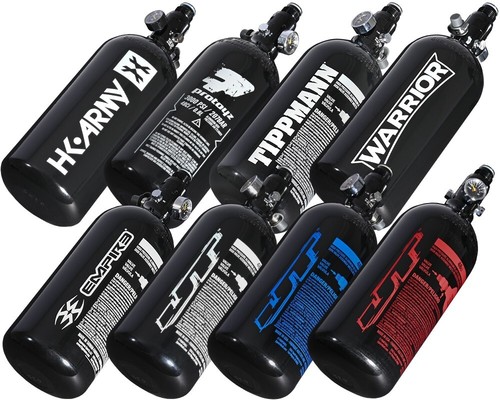 HPA Tank
High-pressure air (nitrogen/air) tanks at 3,000 or 4,500 PSI. Carbon fiber 68ci/4500 tanks are the sport standard — lighter and more shots per fill than steel. Required for most electronic markers.
HPA Tank
High-pressure air (nitrogen/air) tanks at 3,000 or 4,500 PSI. Carbon fiber 68ci/4500 tanks are the sport standard — lighter and more shots per fill than steel. Required for most electronic markers.
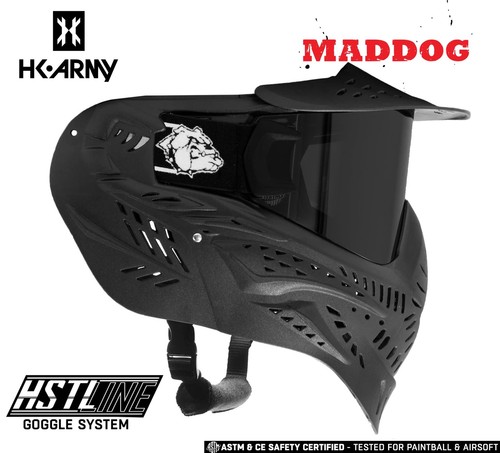 Thermal Paintball Mask
Thermal (dual-pane) lenses prevent fogging by creating an insulating air gap between the panes. Single-lens masks fog continuously during active play — thermal is not optional for field use.
Thermal Paintball Mask
Thermal (dual-pane) lenses prevent fogging by creating an insulating air gap between the panes. Single-lens masks fog continuously during active play — thermal is not optional for field use.