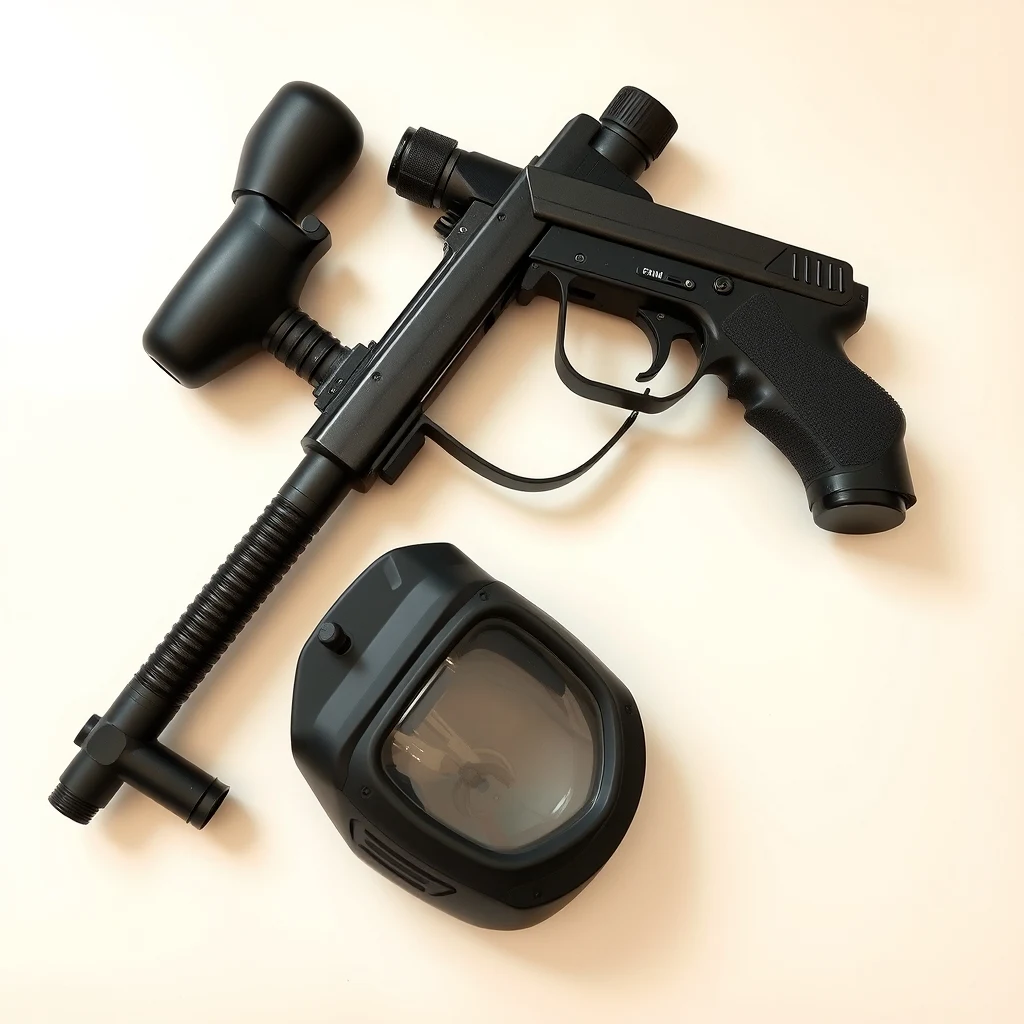
Mechanical vs electronic markers: the core decision
Paintball markers divide into two operating categories: mechanical (also called "mech") and electronic. The distinction affects everything downstream — loader compatibility, air source requirements, and the type of play the marker is suited for.
Mechanical markers
A mechanical marker uses a purely mechanical trigger and sear mechanism. Pulling the trigger directly drives a sear that releases the bolt. There are no electronics, no battery, and no circuit board to fail in the field. Mechanical markers typically fire in semi-auto only (one shot per trigger pull) at rates that match what a gravity-fed loader can supply — generally 6–10 balls per second (BPS).
Well-known mechanical platforms include the Tippmann 98 Custom and A-5 (blowback operating system, rugged, widely used in rental fleets), the Planet Eclipse EMEK (spool valve, extremely smooth and consistent), and various budget blowback options. Mechanical markers are the recommended starting point for new players, scenario/woodsball players, and anyone who values simplicity and low maintenance over maximum rate of fire.
Electronic markers
Electronic markers use a solenoid (an electromagnetic valve) driven by a circuit board to control firing. A microswitch in the trigger detects pulls and signals the board to fire. This decouples trigger pull speed from firing speed — the board can fire faster than a human trigger finger can cycle a mechanical sear, enabling rates of fire up to 15+ BPS in uncapped semi-auto or fully automatic modes (note: most competitive fields cap at 10–12.5 BPS).
Electronic markers require a battery (typically a 9V), generally require HPA rather than CO2 (CO2 pressure fluctuations interfere with solenoid timing), and absolutely require a force-feed loader to keep up with their potential firing rate. At a tournament level, the Planet Eclipse CS3, Luxe Ice, DLX Luxe, and Dye M3+ represent the high end; for intermediate players, the Planet Eclipse Etha3 and Dye Rize offer electronic performance at more accessible prices.
| Factor | Mechanical | Electronic |
|---|---|---|
| Rate of fire | 6–10 BPS (practical) | 10–25+ BPS (field-limited typically to 10–12.5) |
| Loader requirement | Gravity-fed or force-feed | Force-feed required |
| Air source | CO2 or HPA | HPA strongly preferred/required |
| Battery | Not required | 9V (or proprietary) |
| Maintenance | Low — o-rings, lubrication | Moderate — solenoid, board, eyes |
| Entry price range | $50–$200 | $200–$1,000+ |
Loaders: feed rate is the critical spec
The loader (hopper) sits on top of the marker and feeds paintballs into the breech. The critical specification is feed rate — how many balls per second the loader can reliably supply. If your marker can fire faster than the loader feeds, it will chop paint (a ball gets caught in the breech when the bolt closes) — a messy, accuracy-destroying, and potentially marker-damaging problem.
Gravity-fed loaders
Gravity-fed loaders have no motor. Paintballs fall into the feed neck by gravity, giving a maximum reliable feed rate of roughly 6–8 BPS depending on the angle you're holding the marker. They pair correctly with mechanical blowback markers and low-rate-of-fire electros but will chop paint on any marker used aggressively above 8 BPS. They hold 200 balls typically and cost $5–$20.
Force-feed (agitated/motorized) loaders
Force-feed loaders use a battery-powered impeller or drive mechanism to actively push balls into the feed neck. High-quality force-feed loaders (Dye Rotor, Empire Halo Too, Virtue Spire) achieve 30–50+ BPS feed rates — far beyond what any field-legal marker will fire. They run on AA batteries, hold 200+ balls, and cost $60–$200 new.
Shopping for paintball gear? Browse current eBay listings → (we earn a small commission; your price is unchanged).
CO2 vs HPA tanks
Both CO2 and compressed air (HPA, high-pressure air, also called nitrogen) propel paintballs by releasing pressurized gas through the marker's valve. The differences are in pressure consistency, temperature sensitivity, and marker compatibility.
CO2 tanks
CO2 tanks contain liquid carbon dioxide that vaporizes as it exits the tank. At a steady temperature and firing rate, CO2 provides adequate pressure for most mechanical markers. Problems arise when firing rapidly (liquid CO2 floods into the marker, causing velocity spikes and pressure damage) or in cold weather (CO2 pressure drops sharply below 50°F / 10°C). Most electronic markers explicitly discourage or prohibit CO2 use because pressure inconsistency interferes with solenoid timing and can damage internal components.
CO2 tanks are cheap ($15–$30 for common 20oz tanks) and widely available at sporting goods stores, but they require filling by weight and cannot be safely overfilled.
HPA tanks
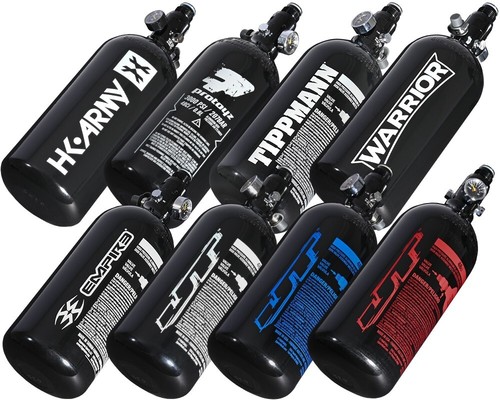
HPA tanks store dry compressed air at high pressure (3,000 or 4,500 PSI) and use an integrated regulator to output consistent operating pressure (typically 450–800 PSI) regardless of the tank's fill level. This consistency makes HPA compatible with all marker types, eliminates cold-weather issues, and prevents the liquid-flooding problem of CO2.
HPA tanks come in aluminum (heavier, 3,000 PSI) and carbon fiber (lighter, 4,500 PSI, more shots per fill). A 68 cubic inch carbon fiber 4,500 PSI tank is the competitive-play standard and provides roughly 1,200–1,400 shots per fill depending on operating pressure. HPA fills require an air compressor capable of filling to high pressure — most paintball fields offer free or cheap fills. Cost: $100–$200 for a quality carbon fiber tank.
Masks: thermal lenses are not optional
The paintball mask is the most safety-critical item in your kit. All fields require ASTM-rated paintball masks — not airsoft masks, not shooting glasses, not anything without a full-face goggle system with ASTM F1776 rating for paintball. This is non-negotiable for field access everywhere.
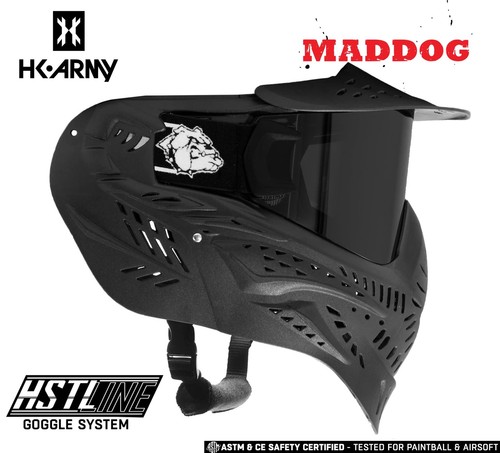
Within that requirement, the single most important upgrade from a budget mask is a thermal (dual-pane) lens. A thermal lens has two panes of polycarbonate with an air gap between them, creating insulation that prevents fogging. Single-pane lenses fog within minutes of active play as warm breath from your face meets cool outside air through the lens — you simply cannot see. Thermal lenses cost $10–$30 to replace/upgrade in many mask platforms, or choose a mask that includes thermal as standard.
Well-regarded mask platforms with thermal lenses available include the Dye i5 and i4, JT Proflex (flexible lower), Virtue VIO, and Empire EVS. Fit and field of view vary significantly by face shape — if possible, try masks in person before buying.
System-level buying guide
- New player, recreational field play: mechanical marker (Tippmann 98 or EMEK) + gravity-fed loader + CO2 20oz + ASTM thermal mask. Under $200 complete.
- Intermediate player, speedball/scenario: mid-range electronic marker (Etha3) + force-feed loader (Halo Too or Rotor) + HPA 68ci/4500 CF tank + thermal mask. $400–$600 complete.
- Competitive player: high-end electronic (CS3, Luxe, M3+) + top-tier loader (Spire IV, LTR) + 68/4500 CF HPA tank + premium mask. $800–$1,500+ complete.
 Electronic Markers
 Paintball Packages
 Force-Feed Loaders
 HPA Tanks
 Thermal Masks