What overhead storage does (and doesn't do)
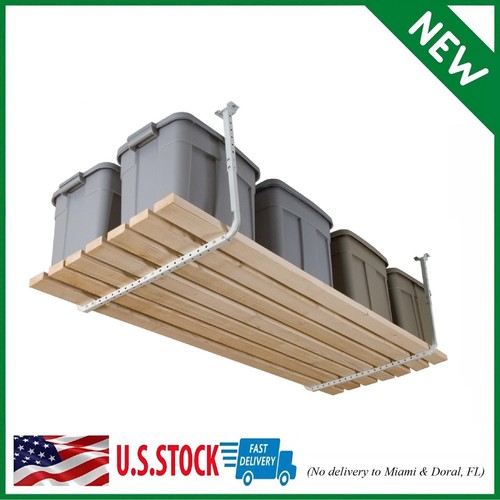
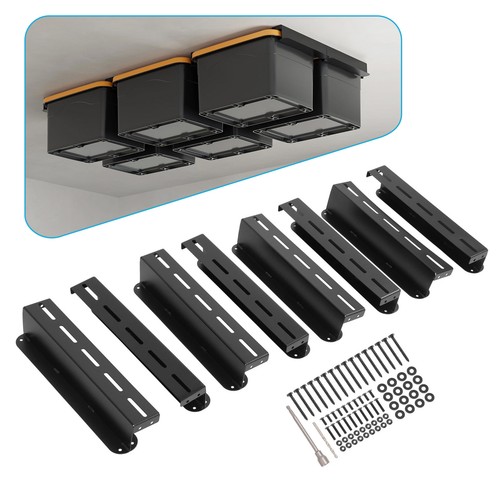
A ceiling-mounted storage rack stores items above the main garage footprint — typically 8–12 inches below the ceiling joists, held in place by steel straps or angle iron bolted through the ceiling into framing. It frees up floor and wall space for active use while keeping seasonal items accessible with a ladder.
What it doesn't do: replace active-use storage. You won't reach into an overhead rack daily. It's well-suited for holiday decorations, camping gear, luggage, off-season sports equipment, and bulky items used a few times per year. For anything you need regularly, floor-level or wall-mounted shelving is more practical.
Weight rating: what the spec actually means
Most overhead storage racks list a total capacity in the 400–600 lb range. This number assumes several things that vary in real garages: lag screws into solid dimensional lumber joists, joists on 16-inch or 24-inch centers, and load evenly distributed across the rack surface.
Before accepting a weight rating as safe for your installation, verify:
- Joist type: Engineered wood trusses (the triangulated structures common in newer construction) have specific fastening requirements that differ from solid lumber joists. Most ceiling rack installation instructions assume solid lumber — check whether yours qualifies or whether you need to consult a structural engineer or the truss manufacturer.
- Joist spacing: 16-inch spacing gives you more anchor points per unit of rack length than 24-inch spacing. The rack may require specific bracket placement that matches your joist layout.
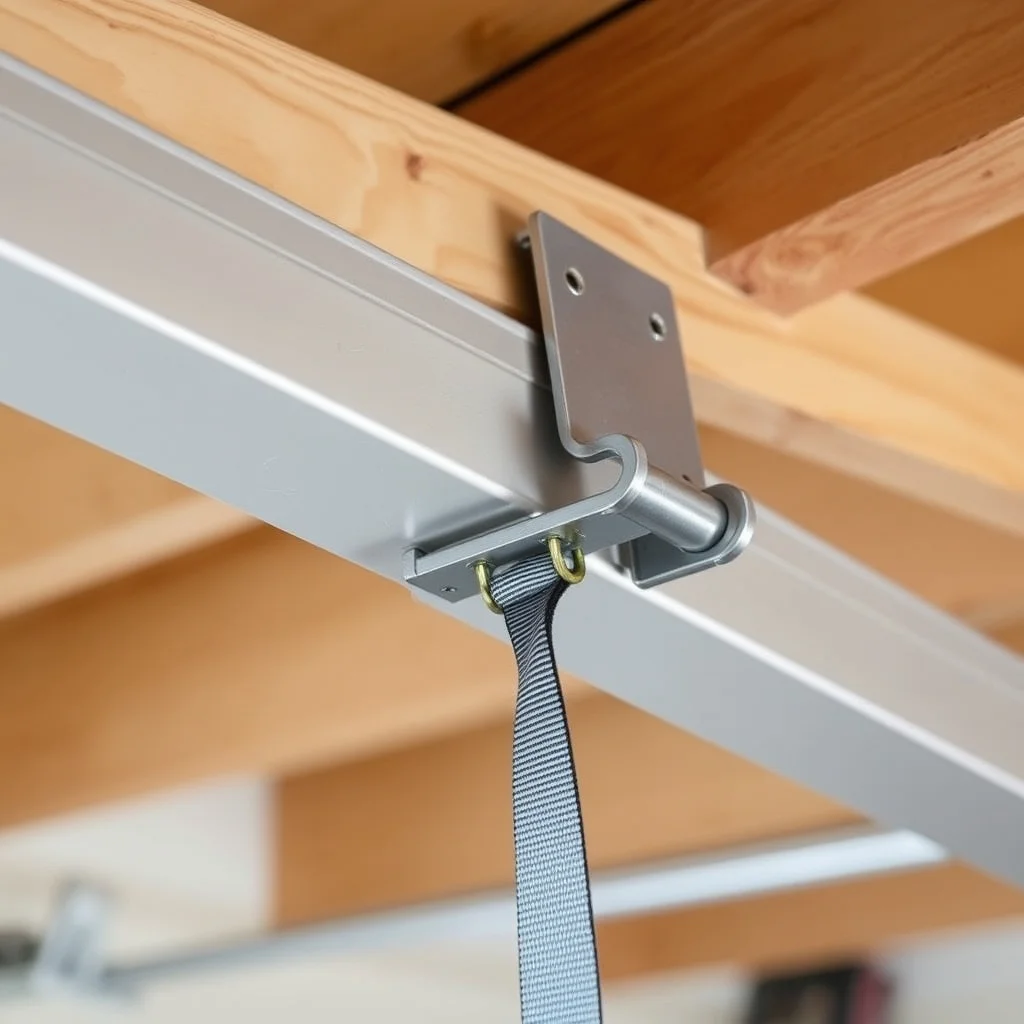
- Fastener type: Lag screws (typically ⅜-inch diameter, 2.5–3 inches long) into solid wood have much higher shear and withdrawal capacity than toggle bolts in drywall. Never use drywall anchors for overhead load-bearing applications.
Drop height: clearing your car and matching your use
Drop height refers to how far the rack platform hangs below the ceiling. Most adjustable overhead racks offer a range of roughly 22–45 inches below the ceiling surface. The right drop height depends on two constraints working in opposite directions: you need enough clearance below the rack for your tallest vehicle, and enough room between the ceiling and the rack to load items without struggling.
Typical clearance calculations: if your garage ceiling is 9 feet (108 inches) and your SUV roof is 72 inches (6 feet), you have 36 inches to work with. A rack set at 22 inches below the ceiling occupies the rack platform at 86 inches (7'2") — fine for clearing a 72-inch vehicle with 14 inches of margin. The tighter your vehicle-to-ceiling clearance, the less drop height you have available.
For garage ceilings under 8 feet, overhead rack installation may not leave adequate vehicle clearance for common vehicles, and the loading/unloading clearance above the rack becomes very small. Measure your ceiling height, vehicle height, and intended drop height before buying.
Shopping for overhead garage storage? Browse current eBay listings → (we earn a small commission; your price is unchanged).
Motorized lifts: when they're worth it
Motorized platform lifts (or pulley-based hoists) lower the stored platform to a comfortable loading height and raise it back to ceiling level via an electric motor or hand crank. They're more expensive — typically 2–3× the cost of a fixed-position rack — and require electrical access at the installation point for motorized versions.
They make sense when: you have limited mobility or don't want to use a ladder for every access, you're storing items you use monthly rather than annually, or you're storing heavy items that are awkward to lift overhead manually (kayaks, large camping equipment).
They're overkill when: you're storing seasonal items you'll touch twice a year and you're comfortable on a 6-foot ladder. The simpler fixed-height rack covers most residential overhead storage use cases reliably.
Rack size and what fits
Standard overhead racks come in 4×8 ft configurations, with 4×4 ft half-size options common for smaller garages. A 4×8 rack will typically hold 8–12 standard storage totes, a few large bins, or a couple of folded camping chairs plus holiday boxes.
Check the clearance height between the rack platform and the rack's support frame or ceiling. If you're storing tall items (rolled sleeping bags in tall stuff sacks, folding chairs), this headroom determines whether they fit properly or get jammed.
| Ceiling height | Vehicle clearance | Usable drop range | Notes |
|---|---|---|---|
| 8 ft | ~72 in (SUV) | Very limited — verify carefully | May not suit taller vehicles; measure first |
| 9 ft | ~72 in (SUV) | ~24–36 in practical range | Standard configuration works for most vehicles |
| 10+ ft | ~80 in (tall truck) | Full 22–45 in range available | Maximum flexibility; suits taller vehicles |
Common mistakes
- Fastening into drywall without hitting joists. The ceiling drywall provides no structural support. Every anchor must go through drywall and into framing.
- Ignoring joist type. Engineered trusses require manufacturer-specific guidance on fastening — don't assume what works for lumber joists applies here.
- Buying for total capacity rather than checking the vehicle clearance math. A 600 lb rack is useless if the drop height doesn't clear your car.
- Overloading with point loads. Heavy, compact items stacked in one corner concentrate stress. Distribute weight across the platform surface.
- Installing alone. Holding a ceiling rack in position while driving lag screws is a two-person job. Don't attempt solo installation of heavy racks.
Buying checklist
- Measure garage ceiling height and your tallest vehicle roof height — confirm drop height math works.
- Locate ceiling joists and verify type (lumber vs engineered truss) before selecting a rack.
- Confirm rack bracket spacing aligns with your joist spacing (16 in vs 24 in).
- Check weight rating footnotes for the anchor type they assume — match to your fasteners.
- Decide fixed vs motorized based on frequency of use and physical access needs.
- Have a second person available for installation — this is not a solo project.