Guides
Practical hockey gear buying content — stick flex, skate fit, protective sizing. The numbers that actually determine performance and safety.
Why this page exists
Most hockey gear guides either regurgitate manufacturer specs or recommend the most expensive option. What beginners and returning players need is the flex number calculation, the fit criteria that actually matter for skates, and the certification marks that separate safe helmets from unsafe ones.
An adult beginner buying their first setup will often overbuy on stick (too stiff) and underbuy on skate fit guidance. Both make learning harder. The right gear at the right spec is what accelerates skill development.
Hockey gear worth searching on eBay
Skates, sticks, helmets, shoulder pads, and gloves for ice hockey players. We earn a small commission on qualifying sales; your price is unchanged. Full disclosure.
 Hockey skates senior
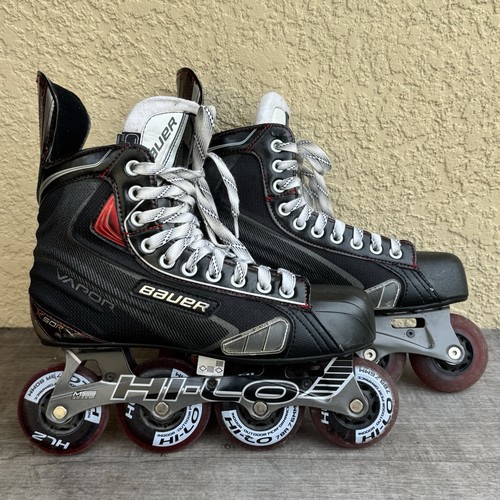
Senior skates for players 14+ / shoe size 6+. Fit 1–1.5 sizes down from street shoe size. Try on in the afternoon (feet swell); heel should not lift when you skate. Heat-bake for custom fit.
Hockey skates senior
Senior skates for players 14+ / shoe size 6+. Fit 1–1.5 sizes down from street shoe size. Try on in the afternoon (feet swell); heel should not lift when you skate. Heat-bake for custom fit.
 Hockey stick senior
Senior sticks 77–102+ flex. Rule of thumb: flex ≈ half your body weight in lbs (varies by position and shooting style). Defensemen often go stiffer; beginners generally go softer.
Hockey stick senior
Senior sticks 77–102+ flex. Rule of thumb: flex ≈ half your body weight in lbs (varies by position and shooting style). Defensemen often go stiffer; beginners generally go softer.
 Hockey helmet
Look for CSA, HECC, or CE certification marks. Helmets have expiry dates (typically 6.5 years from manufacture) — check the stamp inside. MIPS or similar rotational protection is available in newer models.
Hockey helmet
Look for CSA, HECC, or CE certification marks. Helmets have expiry dates (typically 6.5 years from manufacture) — check the stamp inside. MIPS or similar rotational protection is available in newer models.
 Hockey shoulder pads
Caps should sit at the shoulder point, not on the collar. Arms should move freely. Higher-contact play warrants more rigid caps and clavicle protection; recreational play prioritizes mobility.
Hockey shoulder pads
Caps should sit at the shoulder point, not on the collar. Arms should move freely. Higher-contact play warrants more rigid caps and clavicle protection; recreational play prioritizes mobility.
 Hockey gloves
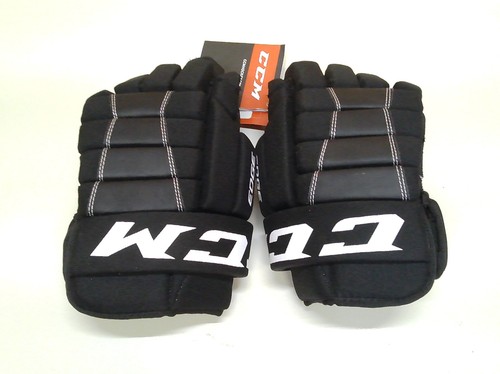
13" for most adults; 14–15" for larger hands or defensive play. No gap between glove cuff and elbow pad sleeve. Try stickhandling motion before buying — some glove designs limit wrist flex.
Hockey gloves
13" for most adults; 14–15" for larger hands or defensive play. No gap between glove cuff and elbow pad sleeve. Try stickhandling motion before buying — some glove designs limit wrist flex.