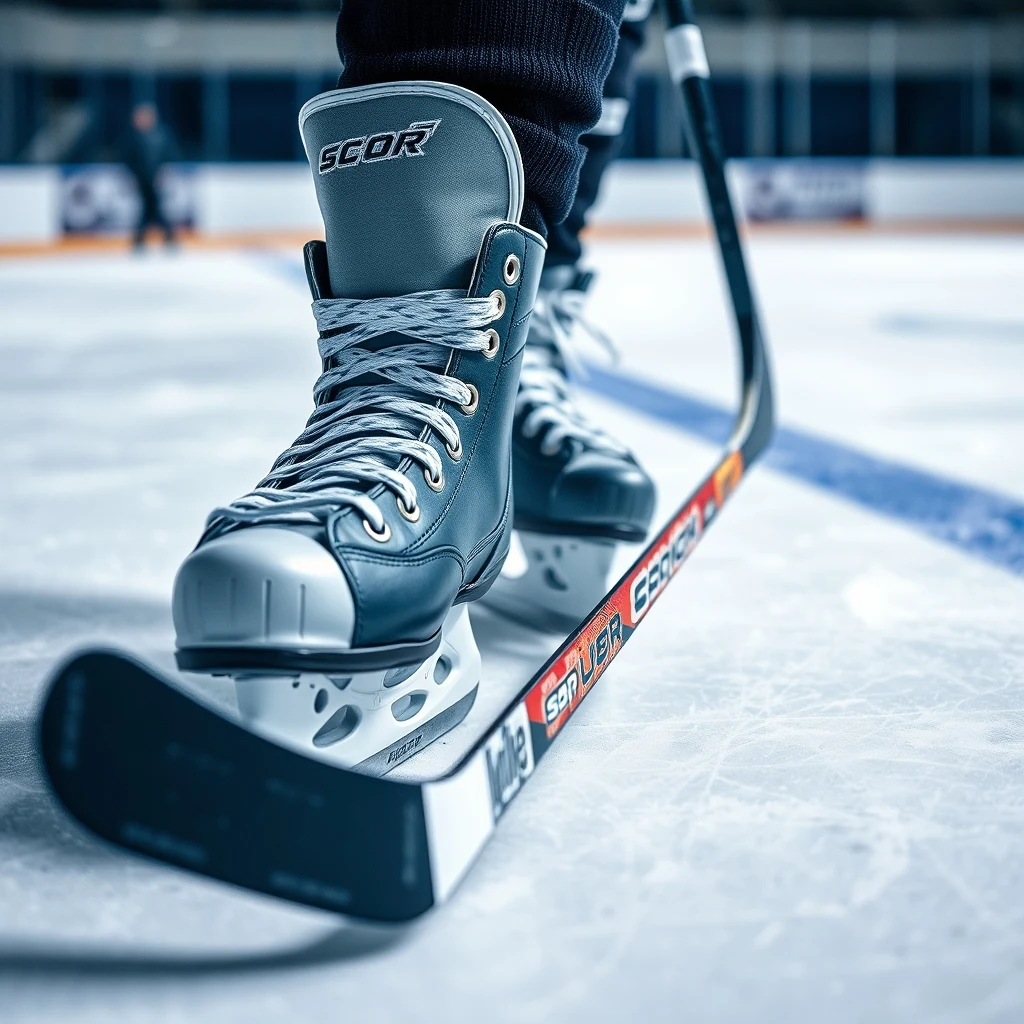
Sticks: flex, curve, and length
The stick is the piece of equipment that most directly affects shooting mechanics. Getting the flex wrong means you are either fighting the stick or not loading it at all. Getting the curve wrong affects puck handling, passing accuracy, and shot trajectory.
Flex rating
Flex is measured as the number of pounds of force required to deflect the shaft one inch. A 75 flex stick deflects one inch under 75 lbs of force. The common starting point is flex = half your body weight in pounds. A 160 lb player typically starts around 75–80 flex.
This is a starting point, not a rule. Adjust based on position and shooting style:
- Defensemen with hard slapshots often prefer stiffer sticks (85–102 flex)
- Forwards with quick wrist and snap shots often prefer softer (65–80 flex)
- Players who grip lower on the shaft should go softer — gripping 2" lower than the top of the stick adds approximately 10 flex points of effective stiffness
Curve and lie
The blade curve affects shooting angle and puck handling. A toe-heavy curve lifts the puck on wrist shots. A mid-curve is versatile. A heel curve is less common and tends to favor backhand passes. Most recreational players do well with a mid-curve in a moderate opening (facing the heel at roughly 45°).
Lie refers to the angle of the blade when the stick is on the ice. Lower lie numbers (4–5) suit players with a more upright skating stance; higher lie numbers (6–7) suit players with a bent-knee, lower stance. The wrong lie results in either toe-up or heel-up blade contact with the ice.
Length
Without skates, the stick should reach between your chin and nose. On skates, it typically reaches chin height. Defenders often prefer longer sticks for reach; forwards often prefer shorter for puck control. Cut the stick only after you've skated with it — it's easier to cut than to extend.
| Stick sizing | Senior | Intermediate | Junior |
|---|---|---|---|
| Typical player age | 14+ adult | 11–14 or lighter adults | Under 11 |
| Flex range | 77–102+ | 55–75 | 30–50 |
| Shaft dimensions | Full adult grip | Slightly narrower | Narrower, shorter |
Skates: fit is the most important variable
Hockey skates typically fit 1 to 1.5 sizes smaller than your street shoe size. This is not a hard rule — it varies by manufacturer and skate model — but it is the starting point. The goal is a snug fit with the heel firmly seated in the heel pocket and minimal heel lift when you push.
The fit test
Put on the skate with a hockey sock. Tie it firmly. Stand with bent knees (hockey stance). Your toes should barely brush the toe cap — not curl. When you push your foot forward in the boot, your heel should not slide back more than about 1/4". Heel lift while skating is the biggest performance thief in beginner skaters and signals either too-large skates or insufficient tying.
Boot stiffness
Higher-end skates have stiffer boots, which provide better power transfer during edge changes and crossovers. Stiffer boots also require more time to break in and can be uncomfortable initially. Beginner and recreational skaters typically benefit from slightly softer boots — the ankle support is adequate and they are more comfortable for learning. Advanced skaters prefer the responsiveness of stiffer constructions.
Heat molding
Most modern hockey skates can be heat-baked to custom-mold to your foot shape. Many skate shops offer this service at point of purchase. It reduces break-in time significantly and improves fit for feet that don't match the stock last. Follow manufacturer temperature and timing guidelines — overbaking damages the boot.
Shopping for hockey gear? Browse current eBay listings → (we earn a small commission; your price is unchanged).
Helmets: certification is non-negotiable
A hockey helmet must carry one of the recognized certification marks: CSA (Canadian Standards Association), HECC (Hockey Equipment Certification Council), or CE (European standard). An uncertified helmet has not been tested to any impact protection standard and should not be used in play.
Helmets have a stamped manufacture date and an expiry date (typically 6.5 years from manufacture per CSA/HECC guidelines). Helmets degrade with use and time — the foam liner breaks down, reducing its ability to absorb impact. Check the interior stamp on any used helmet before purchasing.
Fit
The helmet should sit level on the head, with about two finger-widths above the eyebrows. When you push up on the front, it should not tilt back. Adjust the fit system (most modern helmets have a dial or ratchet system) until the helmet is snug without pressure points. A helmet that shifts during play does not protect correctly.
Cage vs visor
Full cage is required for youth hockey in most leagues and strongly recommended for recreational adult play. Visors protect eyes but leave the lower face exposed — most recreational leagues now require at least a visor for adult players, and some require full cage. Check your league rules. For anyone returning to hockey after time away, a full cage is the practical choice.
Shoulder pads and other protective
Shoulder pad fit: the shoulder cap should sit at the shoulder point, covering the AC joint. The clavicle guard (front strap) should cover the clavicle without restricting arm movement. The bicep/elbow extensions should overlap with elbow pads. Pads that ride up or down during play are the wrong size.
Elbow pads: should fit snugly on the elbow joint with the cup centered on the elbow point. Neither too loose (rotates during play) nor so tight as to restrict blood flow. Shin guards: measure from just above the knee to the top of the skate boot — that determines the pad length. The kneecap should sit in the knee cup, and the shin pad should not gap at the top or ankle.
Senior vs intermediate vs junior sizing
The senior/intermediate/junior breakdown applies to nearly all hockey equipment (sticks, skates, pads, helmets, gloves). The division is primarily by age and body size rather than skill level.
| Category | Typical age | Notes |
|---|---|---|
| Junior (JR) | Under 11 / small kids | Smaller boot lasts, shorter shafts, lighter materials |
| Intermediate (INT) | 11–14 / smaller adults | Gap between junior and senior; also used by lighter adult women |
| Senior (SR) | 14+ / adults | Standard adult sizing; widths vary by brand (D, EE, EEE for skates) |
A smaller adult player (under 130 lbs, smaller hands) may fit better in intermediate equipment than senior despite being over 14. Try both before deciding — the junior/intermediate/senior categories are guidelines, not rules.
Search eBay for ice hockey gear
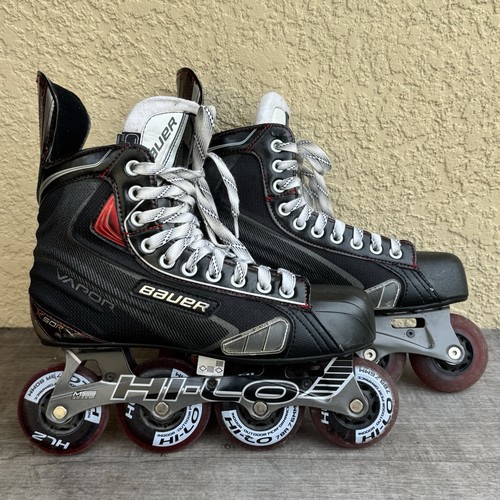 Hockey skates senior
Fit 1–1.5 sizes down from street shoe. Check heel pocket fit; consider heat-baking.
Hockey skates senior
Fit 1–1.5 sizes down from street shoe. Check heel pocket fit; consider heat-baking.
 Hockey stick senior
Flex ≈ half body weight in lbs as starting point. Beginners go softer, not stiffer.
Hockey stick senior
Flex ≈ half body weight in lbs as starting point. Beginners go softer, not stiffer.
 Hockey helmet
Verify CSA/HECC/CE certification mark and expiry date before use.
Hockey helmet
Verify CSA/HECC/CE certification mark and expiry date before use.
 Hockey shoulder pads
Caps at shoulder point; arms move freely. Higher contact = more rigid caps.
Hockey shoulder pads
Caps at shoulder point; arms move freely. Higher contact = more rigid caps.
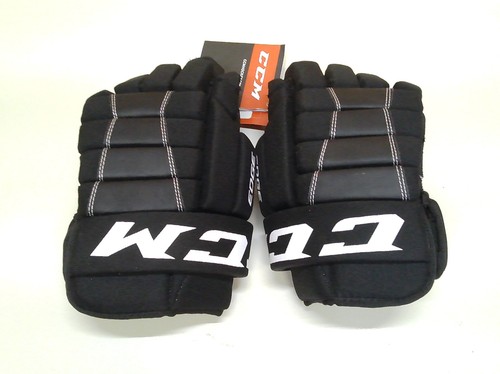 Hockey gloves
13" fits most adults. No gap between cuff and elbow pad. Test stickhandling motion.
Hockey gloves
13" fits most adults. No gap between cuff and elbow pad. Test stickhandling motion.