The load rating problem: unit vs per-shelf
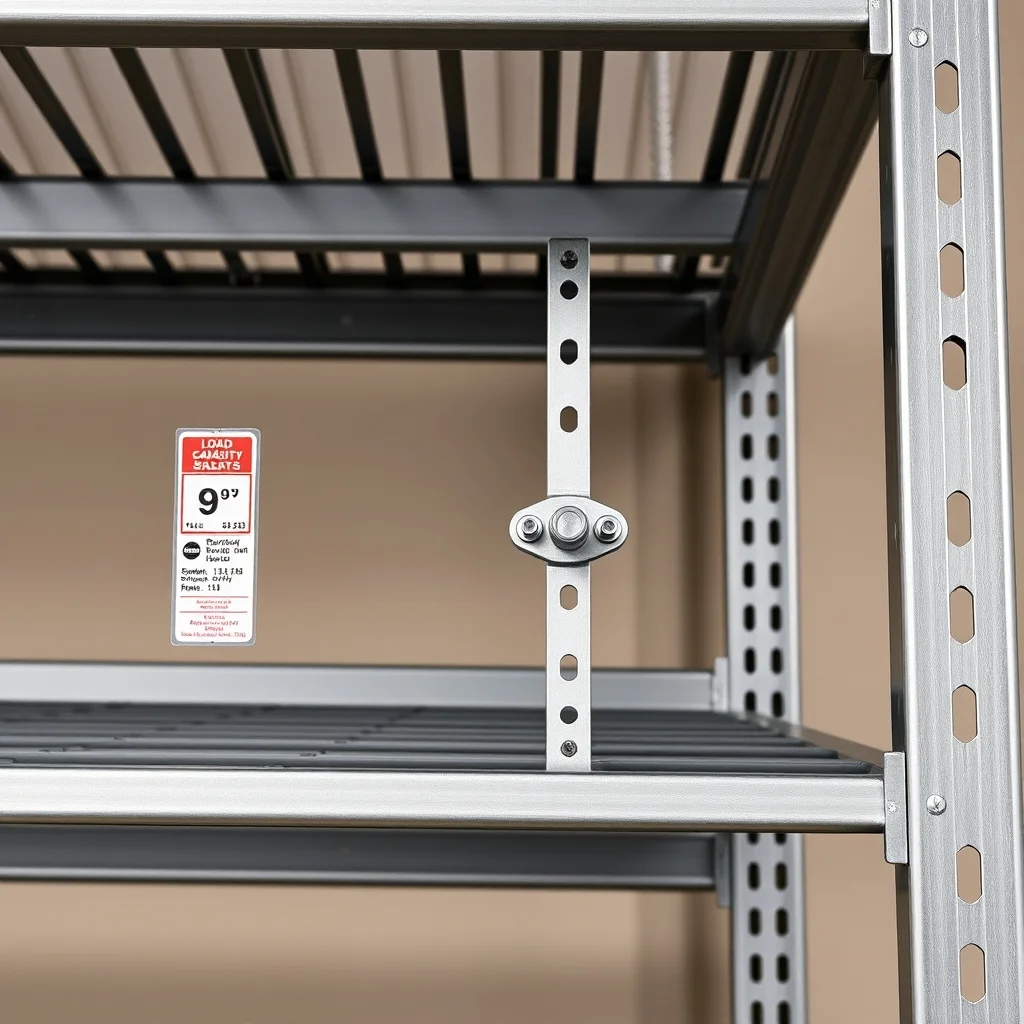
The most common mistake in buying garage shelving is reading the headline capacity number — "2,000 lb capacity!" — without checking the per-shelf rating. A unit can carry 2,000 lbs total while each individual shelf is only rated for 200 lbs. That's fine for light storage spread across ten shelves, but it fails immediately if you stack 300 lbs of automotive fluids on one shelf.
Per-shelf ratings are typically listed in the detailed specs, not the headline. Before buying, find this number explicitly. For general garage use, I'd treat 250 lbs per shelf as a useful floor. If you're storing engine blocks, batteries, or anything heavy and dense, look for shelves rated 400–500 lbs per shelf or more.
Load ratings are typically measured with the weight evenly distributed across the entire shelf surface. Point loading — a car battery sitting in one corner — can stress a shelf more than its rating suggests. If you're placing heavy, compact items, mentally apply a margin and don't fill a shelf rated at 250 lbs with 240 lbs of car parts stacked in the center.
Material comparison: steel, resin, and wire
Three materials dominate the garage shelving market. Each has genuine strengths; the right choice depends on your load requirements, environment, and budget.
Steel
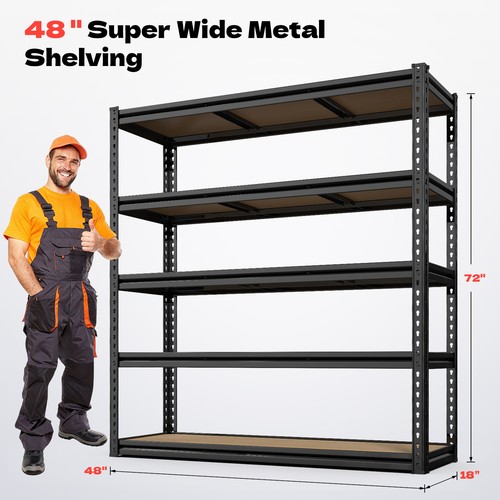
Steel shelving is the workhorse for heavy-duty garage applications. It carries the highest load ratings of any common shelving material and is available in boltless (rivet-style) and bolt-together configurations. Gauge matters: 18-gauge steel is common at the budget end, while 14- or 16-gauge steel handles serious loads without deflection. Surface finish is also worth checking — powder-coated steel resists rust better than painted or bare steel in humid or seasonally wet garages.
Boltless steel units (also called rivet-style or clip-style) assemble without tools and allow per-inch or per-2-inch shelf height adjustment. The trade-off is that the connections are only as strong as the rivet tabs, which can deform over time under high point loads if the unit isn't properly leveled.
Resin / polypropylene
Resin shelving is rust-proof, which makes it genuinely useful in garages that get wet or in coastal environments. It's typically rated for moderate loads — 200–400 lbs per shelf is typical depending on the shelf thickness and rib design. Resin units are often lighter and easier to move than steel equivalents at the same price.
The limitation is capacity ceiling: you won't find resin shelves rated at 600 lbs/shelf. For tools, sporting equipment, and household overflow storage, resin is fine. For automotive parts, power equipment, or dense material storage, steel is more appropriate.
Wire
Wire shelving — open grid chrome or epoxy-coated steel wire — is common in utility applications. It allows airflow, which helps with damp conditions and makes it easier to see what's stored. The open grid also means small items need a liner or they'll tip or fall through.
Wire shelves typically carry less weight per shelf than solid steel of equivalent cost. They're well-suited for lighter items like bins, sports gear, and boxes, but they're the wrong choice for dense or heavy loads unless you're buying commercial-grade wire shelving with substantial wire gauge and close spacing.
| Material | Typical load/shelf | Rust resistance | Best for |
|---|---|---|---|
| Steel (powder coat) | 250–600+ lbs | Good (coated) | Heavy tools, automotive parts, equipment |
| Resin/polypropylene | 150–400 lbs | Excellent | Wet/coastal garages, light to medium loads |
| Wire (epoxy-coated) | 100–350 lbs | Good (coated) | Bins, boxes, sporting equipment, visibility |
Freestanding vs wall-mounted
Freestanding units are movable and require no drilling. They're the right choice if you rent, if your garage layout will change, or if your walls aren't suitable for anchoring (some garage walls are thin or lack adequate stud spacing for the load). They do take up floor footprint — typically 12–24 inches deep plus clearance — and can tip if loaded unevenly or bumped by a vehicle.
Wall-mounted shelving uses brackets fastened to studs or masonry. It frees up floor space beneath the shelves (useful for parking, large equipment, or cleaning), keeps shelves at a fixed height, and is generally more resistant to vibration and accidental impact. The constraint is that capacity depends on wall construction: 16-inch stud spacing with lag screws into solid wood is a very different anchor than toggle bolts into drywall over concrete.
Shopping for garage shelving? Browse current eBay listings → (we earn a small commission; your price is unchanged).
For wall-mounted systems, the bracket is the structural element — not the shelf surface. Bracket spacing, fastener type, and stud/masonry quality determine capacity. Most residential wall-mount shelf systems are appropriate for 50–150 lbs per shelf when properly anchored into studs. Heavy-duty industrial wall tracks can go higher, but installation quality is everything.
Depth: the dimension most buyers ignore
Standard garage shelves run 18–24 inches deep. This accommodates most bins, boxes, and equipment. But depth affects more than what fits — it also determines whether you can reach the back of a shelf without a step stool and whether the shelving fits in the available wall run without blocking doors or clearances.
For shelves above shoulder height, shallower is better: a 12–16 inch shelf is much easier to access overhead than a 24-inch shelf. For floor-level or waist-height shelves, full 24-inch depth maximizes storage for large items.
Also check the depth against what you're actually storing. Most 27-gallon storage totes are 17–18 inches wide when oriented with the handle facing forward. A 16-inch-deep shelf won't hold them properly. Measure your most common storage items before committing to a depth.
Assembly and adjustability
Boltless systems (rivet-style) typically assemble in 20–40 minutes per unit with one person. Bolt-together systems take longer but are often more rigid and better at maintaining squareness over time. Both styles offer adjustable shelf height — confirm the adjustment increment before buying if vertical clearance matters.
One practical tip: regardless of design, level the unit properly during assembly. Unlevel shelving puts uneven stress on joints and is more likely to tip under load. Most units include adjustable feet for this reason — use them.
Common mistakes
- Buying on unit capacity alone. Check per-shelf rating explicitly.
- Ignoring post gauge for heavy loads. 18-gauge posts are fine for light storage; 14–16 gauge is better for sustained heavy loads.
- Installing wall-mounted shelves without hitting studs. Drywall anchors alone are not adequate for loaded garage shelves. Use lag screws into studs or masonry anchors into concrete.
- Choosing 24-inch depth for all shelves regardless of height. Overhead shelves should be shallower for safe access.
- Skipping anti-tip hardware. Freestanding units in garages with vehicles should be secured to the wall at the top — most include a wall anchor kit for this purpose.
Buying checklist
- Identify your heaviest use case and check per-shelf rating covers it with margin.
- Choose material based on environment: steel for heavy loads, resin for wet conditions.
- Decide freestanding vs wall-mount based on floor space, rental status, and wall construction.
- Confirm depth against your storage items — measure before buying.
- Verify shelf adjustment increment if you'll store items of varying heights.
- Check whether anti-tip anchoring hardware is included or needs to be purchased separately.