Guides
Practical composting guides — bin type selection, what to compost, and how to get finished compost faster.
Why this page exists
Most composting bin content is either beginner-vague ("just throw stuff in!") or focused entirely on the process of composting rather than helping you choose the right equipment for your situation. The bin type determines your workflow, your composting speed, and your pest exposure.
This page focuses on the trade-offs between bin types so you can match the container to your actual use — urban balcony, small suburban yard, or larger garden — before you buy anything.
Plain note about money. Links below go to eBay searches with an affiliate tag. If you buy through one, a small commission comes to this site. Your price is identical either way.
Composting gear worth searching on eBay
Tumblers, outdoor bins, dual-chamber units, and kitchen caddies. We earn a small commission on qualifying sales; your price is unchanged. Full disclosure.
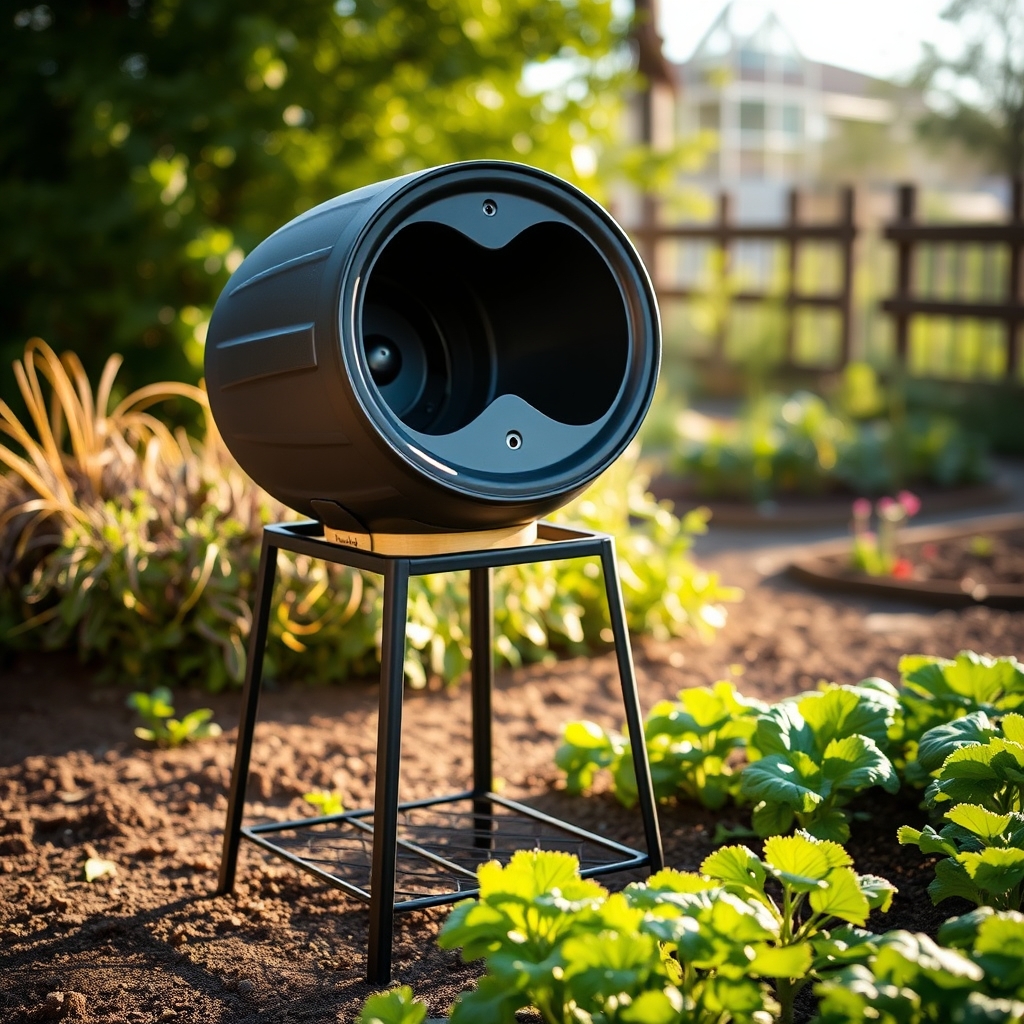
 Compost tumbler
Rotating drum on a stand; turns the pile with a spin rather than manual forking. Faster decomposition, better pest exclusion. Typical capacity 37–65 gallons. Look for UV-resistant HDPE and a frame rated for the drum's loaded weight.
Compost tumbler
Rotating drum on a stand; turns the pile with a spin rather than manual forking. Faster decomposition, better pest exclusion. Typical capacity 37–65 gallons. Look for UV-resistant HDPE and a frame rated for the drum's loaded weight.
 Compost bin outdoor
Static open-bottom bins placed directly on soil. Worms and microbes access from below; aeration through side vents. High volume capacity (80–130 gallons) at lower cost. Best for large gardens with steady organic material input.
Compost bin outdoor
Static open-bottom bins placed directly on soil. Worms and microbes access from below; aeration through side vents. High volume capacity (80–130 gallons) at lower cost. Best for large gardens with steady organic material input.
 Dual chamber composter
Two separate chambers in one tumbler unit: one actively composting while the other cures. The most practical tumbler design for continuous use — you're not stuck waiting for one batch to finish before adding new material.
Dual chamber composter
Two separate chambers in one tumbler unit: one actively composting while the other cures. The most practical tumbler design for continuous use — you're not stuck waiting for one batch to finish before adding new material.
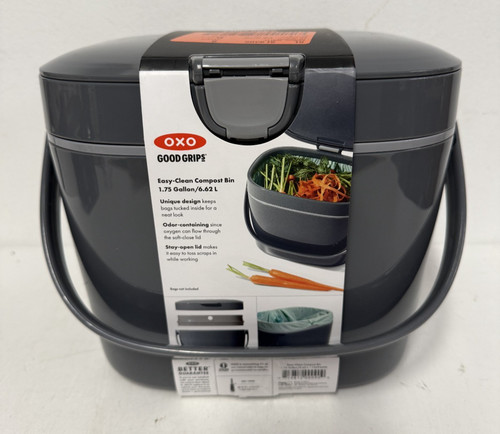 Kitchen compost bin
Countertop caddy for collecting food scraps before transfer to outdoor bin. Charcoal filter lid models reduce odor. Stainless steel is easiest to clean; ceramic doesn't stain. 1-gallon capacity suits most 2–4 person households.
Kitchen compost bin
Countertop caddy for collecting food scraps before transfer to outdoor bin. Charcoal filter lid models reduce odor. Stainless steel is easiest to clean; ceramic doesn't stain. 1-gallon capacity suits most 2–4 person households.
 Compost aerator tool
Corkscrew-style tool for introducing air into static bins without fully turning the pile. More practical than a pitchfork in small, enclosed bins. The folding-tine models penetrate better than rigid paddle versions.
Compost aerator tool
Corkscrew-style tool for introducing air into static bins without fully turning the pile. More practical than a pitchfork in small, enclosed bins. The folding-tine models penetrate better than rigid paddle versions.