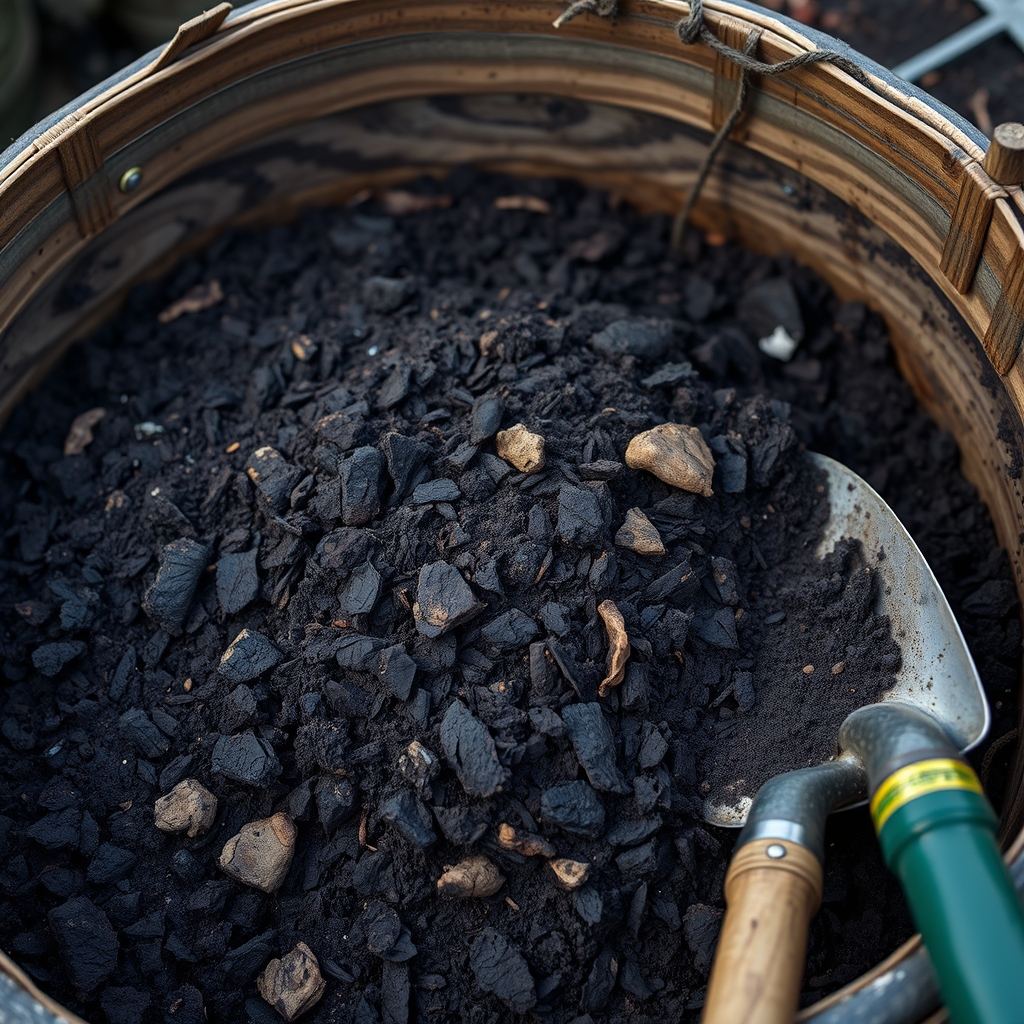
The three bin types: what each does differently
Compost bins exist to contain organic material while it decomposes. The differences between types are about how aeration happens, how you add material, how you extract finished compost, and how well the design excludes pests.
Tumbler bins
A tumbler is a sealed drum on a raised frame that you rotate by hand. Turning the drum mixes the material, introduces air, and accelerates decomposition by maintaining aerobic conditions throughout the pile. Well-managed tumblers can produce finished compost in 4–8 weeks under good conditions (warm weather, correct green/brown ratio, adequate moisture). In cold weather or with poor inputs, they slow significantly.
The sealed drum design effectively excludes rodents and most flying insects from accessing food scraps — a real advantage in urban and suburban areas where pest pressure is a concern. The trade-off is capacity: most tumblers hold 37–65 gallons, which limits how much material you can process at once. Once full, you're waiting for that batch to finish before adding new material — unless you use a dual-chamber design.
Static bins (open-bottom)
Static bins sit directly on soil with an open bottom. Worms and beneficial insects enter from below; aeration happens through vent holes in the sides. You add material from the top and extract finished compost from a hatch at the bottom or by lifting the bin. This design handles much higher volumes (80–130 gallons is common) and requires less active management — you can add material continuously.
The limitation is speed: without regular turning, decomposition is slower (6–18 months is realistic). Static bins also have lower pest resistance, particularly against rodents, which can burrow under the open bottom. Adding meat, fish, or dairy to a static bin increases rodent attraction significantly; most composters using static bins restrict inputs to plant matter and fruit/vegetable scraps.
Continuous flow / worm bins (vermicomposters)
Vermicomposting uses red wiggler worms (Eisenia fetida) rather than heat to process organic matter. Worm bins work in a layered stack design: new material goes on top, worms migrate upward to fresh food, and finished "castings" (worm manure — a high-quality soil amendment) collect at the bottom. This produces a different product from thermal composting: finer-textured, more nutrient-dense castings rather than bulk compost.
Vermicomposting is particularly suitable for indoor use or small spaces — the process doesn't generate significant heat and produces little odor when properly maintained. Worm bins are not suitable for processing yard waste in volume; they're best for kitchen scraps. They require maintaining appropriate moisture levels and avoiding citrus, onions, and alliums in quantity, which inhibit worm activity.
| Factor | Tumbler | Static bin | Worm bin |
|---|---|---|---|
| Decomposition speed | Fast (4–8 weeks, managed) | Slow (6–18 months) | Moderate (2–6 months) |
| Typical capacity | 37–65 gallons | 80–130 gallons | 5–20 gallons |
| Labor input | Moderate (rotate 2–3×/week) | Low (add material, wait) | Low (feed regularly, harvest castings) |
| Pest resistance | Excellent (sealed drum) | Moderate (vent holes, open bottom) | Good (enclosed) |
| Suitable for yard waste | Yes, but limited by capacity | Yes, high volume | No (kitchen scraps only) |
| Cold climate performance | Slows below 55°F | Slows but continues | Worms die below 40°F — bring inside |
Capacity: what the numbers actually mean
Compost bin capacity is listed in gallons or cubic feet. A cubic foot is roughly 7.5 gallons. But the number to focus on isn't total capacity — it's usable capacity after the material you add reduces in volume during decomposition.
Fresh organic material (kitchen scraps, green garden trimmings) reduces to roughly 30–90% of its original volume by the time it becomes finished compost. A 65-gallon tumbler filled with fresh material will yield perhaps 25–30 gallons of finished compost. That's enough to top-dress one or two 4×8 raised beds with an inch of compost — useful but not overwhelming for a home garden.
A household of four typically generates 5–10 pounds of food scraps per week. Combined with garden material, this adds up to roughly 30–50 gallons of raw material per month during the growing season. A single 65-gallon tumbler can process one month's worth of material in a full batch, though you'll need to let it cure before adding more (unless it's a dual-chamber unit).
Shopping for compost bins? Browse current eBay listings → (we earn a small commission; your price is unchanged).
Aeration: why it determines decomposition speed
Aerobic decomposition (with oxygen) is roughly 6–15 times faster than anaerobic decomposition (without oxygen) and produces no methane. The goal of aeration in composting is maintaining oxygen availability throughout the pile so aerobic microbes can work efficiently.
In a tumbler, rotating the drum mixes and aerates simultaneously — every turn introduces fresh oxygen. Rotating every 2–3 days is the recommended frequency; more frequent turning doesn't significantly speed up decomposition and can actually cool the pile before it reaches temperature, but less frequent turning lets the pile go anaerobic in the center.
In static bins, aeration comes from the vent holes and from the pile's own structure. Coarse brown material (wood chips, shredded cardboard, dry leaves) creates air pockets throughout the pile; wet, fine-textured green material compresses and cuts off airflow. Maintaining a 2:1 or 3:1 ratio of browns to greens by volume helps keep static bins aerobic without turning.
The green/brown ratio: the actual key to fast composting
The carbon-to-nitrogen ratio is the underlying factor; "greens and browns" is a practical shorthand. Greens (high nitrogen): kitchen scraps, fresh grass clippings, coffee grounds, fresh garden trimmings. Browns (high carbon): dry leaves, cardboard, straw, wood chips, paper.
The target C:N ratio for active composting is roughly 25–30:1 carbon to nitrogen. In practice, a 2:1 or 3:1 ratio of browns to greens by volume gets you approximately there. Too many greens produces a wet, smelly, slimy pile. Too many browns produces a dry pile that composts very slowly.
Materials to avoid
The following materials cause problems in home compost systems and are generally not worth including:
- Meat, fish, dairy, and cooked food: Attract rodents aggressively in open-bottom static bins; appropriate only in well-sealed tumblers or Bokashi systems.
- Diseased plant material: Diseases may survive if the pile doesn't reach 140–160°F throughout. Thermal composting at high temperatures kills pathogens, but most home piles don't consistently reach these temperatures.
- Dog or cat waste: May contain pathogens not reliably killed in home compost systems. Compost from pet waste should not be used on food crops.
- Treated wood or glossy paper: May contain chemicals that are better excluded from garden compost.
- Invasive plants gone to seed: Seeds may survive composting if temperatures aren't adequate and germinate in your garden beds.
Kitchen caddies: what they actually do
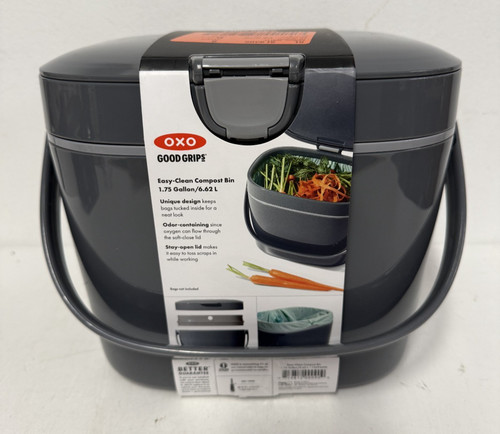
A kitchen caddy (countertop compost bin) is not a composter — it's a collection point. It holds 3–10 days of food scraps in the kitchen before you transfer them to the outdoor bin. The practical value is eliminating the friction of multiple daily trips to the outdoor bin during meal prep.
Odor control is the main design variable. Charcoal filter lids absorb odors but need replacing every 3–6 months. Tight-sealing lids without filters work as long as the caddy is emptied frequently — scraps left for more than a few days in a warm kitchen will smell regardless of the lid design. Stainless steel cleans up more easily than plastic and doesn't absorb odors over time.
A 1-gallon capacity caddy typically handles 3–4 days of scraps for a 2-4 person household before needing emptying. Larger households may want a 1.5–2 gallon unit. There's no particular benefit to larger kitchen caddies — emptying less often isn't a goal worth pursuing since older scraps smell more.
Search eBay for composting equipment
 Compost tumbler
Single and dual-chamber models. Check frame stability ratings — heavy batches can strain inadequate stands.
Compost tumbler
Single and dual-chamber models. Check frame stability ratings — heavy batches can strain inadequate stands.
 Dual chamber composter
Continuous input while first chamber cures. The most practical tumbler design for ongoing composting.
Dual chamber composter
Continuous input while first chamber cures. The most practical tumbler design for ongoing composting.
 Kitchen compost bin
1-gallon stainless steel with charcoal filter. Empty every 3–4 days to prevent odor buildup.
Kitchen compost bin
1-gallon stainless steel with charcoal filter. Empty every 3–4 days to prevent odor buildup.