Guides
Practical buying guidance — grinder types, grind settings, and common mistakes. No affiliate-driven hype.
Why this page exists
Coffee grinder content splits into two camps: beginner explainers that stop at "burr grinders are better than blade" without explaining why, and retailer pages that want you to buy the most expensive model on the shelf. Neither tells you which specs actually correspond to cup quality.
The difference between a $40 blade grinder and a $120 conical burr grinder is measurable and real — it shows up in grind consistency, extraction evenness, and the ability to dial in your brew method. This page explains what to look for and why.
Coffee grinders worth searching on eBay
Burr and blade grinders across price points and brewing methods. We earn a small commission on qualifying sales; your price is unchanged. Full disclosure.
 Conical burr coffee grinder
Conical burrs produce low heat and consistent particle size. The standard choice for espresso and filter brewing. Look for stepless or stepped adjustment.
Conical burr coffee grinder
Conical burrs produce low heat and consistent particle size. The standard choice for espresso and filter brewing. Look for stepless or stepped adjustment.
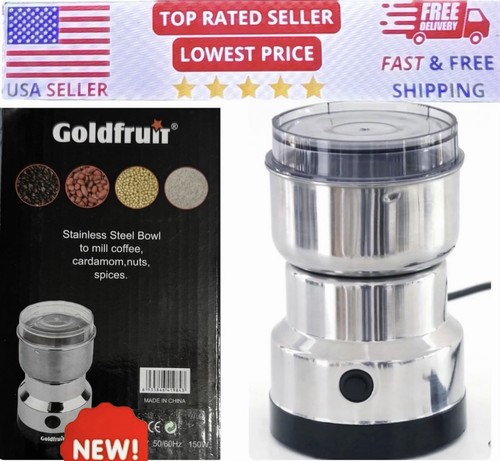 Electric coffee grinder
Electric burr grinders handle daily volume without fatigue. Key specs: RPM (lower is cooler), hopper capacity, and dosing timer or weight-based dosing.
Electric coffee grinder
Electric burr grinders handle daily volume without fatigue. Key specs: RPM (lower is cooler), hopper capacity, and dosing timer or weight-based dosing.
 Manual coffee grinder
Hand grinders offer excellent burr quality at lower cost since there's no motor. Ideal for travel or single-dose use. Grinding time: 1–3 minutes per dose.
Manual coffee grinder
Hand grinders offer excellent burr quality at lower cost since there's no motor. Ideal for travel or single-dose use. Grinding time: 1–3 minutes per dose.
 Espresso grinder
Espresso requires fine, consistent grinds with minimal fines. Stepless adjustment and low retention are critical — even 0.5g of stale grounds affects a 9g shot.
Espresso grinder
Espresso requires fine, consistent grinds with minimal fines. Stepless adjustment and low retention are critical — even 0.5g of stale grounds affects a 9g shot.
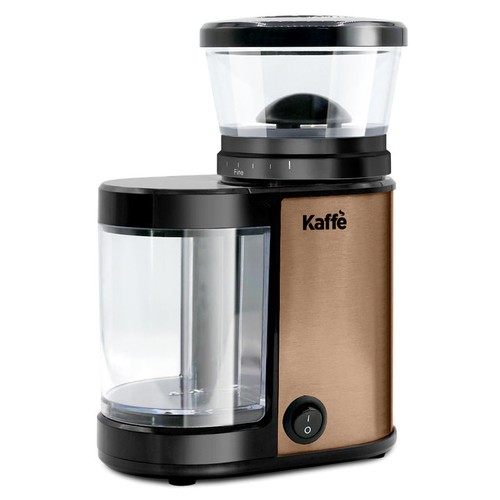 Burr grinder adjustable
Wide-range adjustable burr grinders let you move between espresso and coarse French press without buying two grinders. Check that the adjustment covers the full range.
Burr grinder adjustable
Wide-range adjustable burr grinders let you move between espresso and coarse French press without buying two grinders. Check that the adjustment covers the full range.