Why testing matters before buying a filter
Water filters are designed to address specific contaminants. A pitcher filter certified for lead reduction does nothing for nitrates. An activated carbon system removes chlorine but doesn't touch dissolved metals like arsenic. An RO system handles the broadest range of contaminants but costs more and produces wastewater.
Without knowing what's actually in your water, you're matching a solution to a problem you haven't diagnosed. The cost of a decent water test ($20–150 depending on scope) is a fraction of the cost of buying the wrong filter system and replacing it.
Strip kits: what they do well and where they fall short
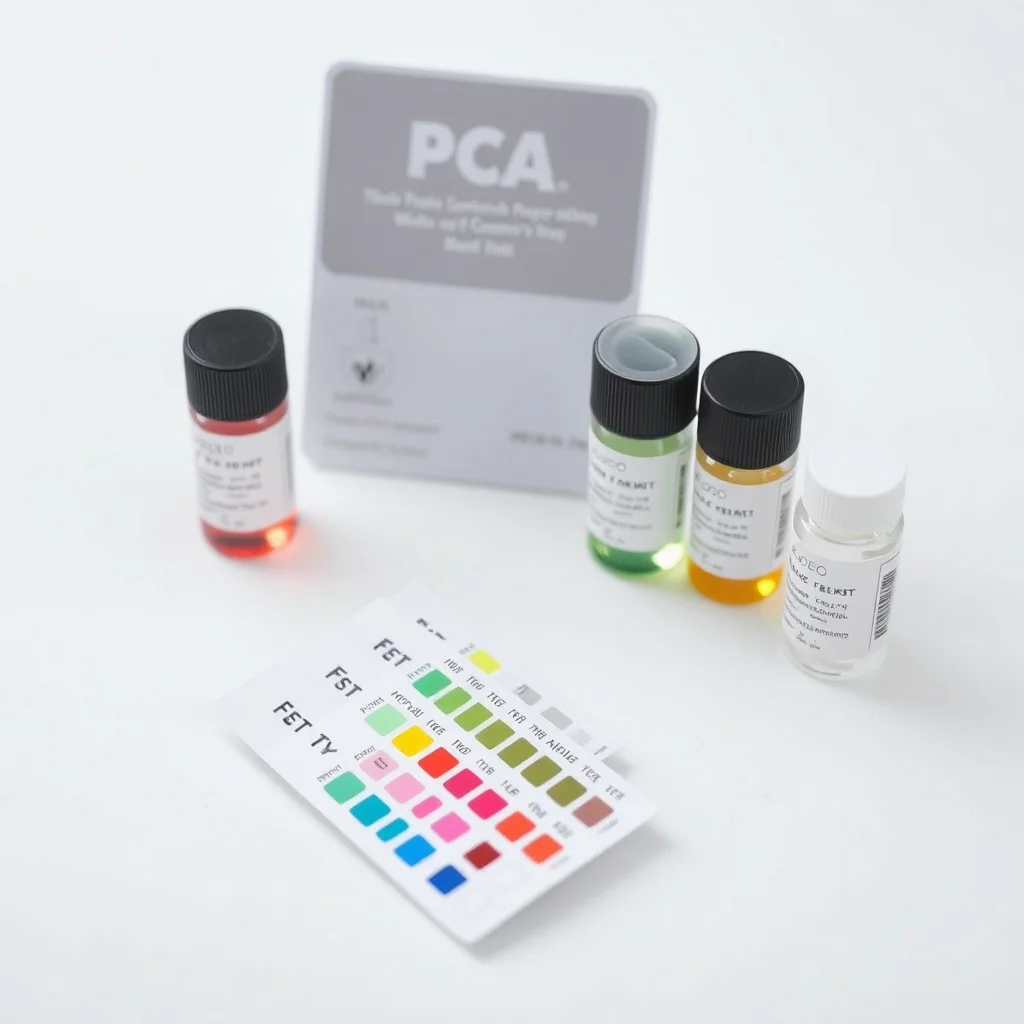
Strip kits are small paper or plastic strips with reactive pads that change color when exposed to specific contaminants or parameters in water. You dip the strip, wait a few seconds, and compare the color to a reference chart.
Strip kits are genuinely useful for:
- Hardness (calcium and magnesium): Strips are accurate enough for practical purposes — you can distinguish soft (<60 mg/L), moderately hard (60–120 mg/L), hard (120–180 mg/L), and very hard (>180 mg/L) water reliably
- pH: A reasonable indicator of acidic vs alkaline water; sufficient for monitoring if you've already done a baseline lab test
- Chlorine and chloramine: Strips can detect the presence and approximate level of free chlorine; useful for confirming your current filter is working
- Iron: Multi-parameter strip kits often include iron; useful for identifying obvious iron presence in well water
Strip kits fall short for any contaminant where quantitative concentration matters — particularly lead, nitrates, arsenic, bacteria, and PFAS. A strip test might tell you "lead detected" or "lead not detected" at a threshold level, but it won't tell you whether you're at 5 ppb or 25 ppb (the EPA action level is 15 ppb for lead). For health-relevant contaminants, qualitative detection isn't sufficient for decision-making.
Send-to-lab kits: what they provide
Lab-based tests provide quantitative results — actual concentration numbers measured in parts per million (ppm) or parts per billion (ppb) — from accredited laboratories. You collect a water sample following the kit's instructions, ship it to the lab, and receive a report (typically within 5–10 business days) with numerical contaminant levels compared against EPA drinking water standards.
Lab tests are required when you need to know:
- Whether lead is present and at what concentration (critical for homes built before 1986)
- Whether coliform or E. coli bacteria are present (essential for all well water users)
- Nitrate concentration (important near agricultural areas; the EPA MCL is 10 mg/L; critical for infants under 6 months)
- Arsenic level (varies widely by region and geology; EPA MCL is 10 ppb)
- PFAS/PFOA/PFOS levels (emerging contaminants requiring specialized lab testing)
Some lab kit providers offer panels specifically designed for different situations: a "city water basic" panel might cover lead, pH, hardness, chlorine, and nitrate; a "well water comprehensive" panel might cover 30+ parameters including bacteria, metals, and pesticides.
| Test type | Best for | Not suitable for | Cost | Turnaround |
|---|---|---|---|---|
| Strip kit | Hardness, pH, chlorine, quick iron check | Lead, bacteria, nitrate, arsenic, PFAS | $10–30 | Immediate |
| Send-to-lab kit | Full contaminant panel with quantitative results | — | $30–200+ | 5–10 days |
What to test: city water vs well water
City (municipal) water
Municipal water utilities test and report water quality regularly — your local Consumer Confidence Report (CCR, also called a Water Quality Report) is published annually and available from your utility. This tells you what contaminants are in the water leaving the treatment plant. It does not tell you what gets added between the plant and your tap.
For city water users, the most important home test is usually lead, because lead comes from pipes and solder — not the source water. If your home was built before 1986 (when lead solder was banned in plumbing) or has lead service lines (still common in older cities), a lab-certified lead test at your tap is worth doing regardless of what the utility reports.
Other useful city water tests: hardness (affects appliance scale and soap performance) and chlorine/chloramine (to determine whether a carbon filter would improve taste).
Well water
Well water users have no utility to test or regulate their supply. Testing frequency and scope should reflect the vulnerability of your specific well and the agricultural, geological, or industrial context around it.
At a minimum, well water should be tested annually for:
- Total coliform and E. coli bacteria
- Nitrate
- pH
- Total dissolved solids (TDS)
- Hardness
Additional tests to consider based on location or symptoms:
- Iron and manganese (if staining on fixtures or laundry)
- Arsenic (higher risk in certain regions — check USGS maps for your area)
- Radon (especially in granite-heavy geology)
- Volatile organic compounds (VOCs) if near industrial activity
- Pesticides/herbicides if near agricultural land
Shopping for water test kits? Browse current eBay listings → (we earn a small commission; your price is unchanged).
Connecting test results to filter decisions
A water test is only useful if you know what to do with the results. Here's a straightforward mapping of common test findings to filter solutions:
| Finding | Appropriate filter solution | What won't work |
|---|---|---|
| High chlorine / taste and odor | Activated carbon (pitcher, countertop, under-sink, or whole-house carbon) | Sediment filter alone |
| Lead above EPA action level (15 ppb) | NSF 53 certified filter for lead reduction; or RO system | Basic carbon filter without NSF 53 lead claim |
| Nitrates above MCL (10 mg/L) | Reverse osmosis; or ion exchange (specific to nitrate) | Carbon filtration; UV; sediment |
| Bacteria / coliform present | UV disinfection; chlorination; absolute-rated ceramic filter (1 micron) | Carbon alone; pitcher filter alone |
| High hardness (scaling) | Water softener (ion exchange); anti-scale media | Carbon alone; RO (partly — RO does reduce hardness but wastes water) |
| Iron (rust, orange staining) | Oxidizing filter or iron-specific media; water softener (for ferrous iron) | Carbon alone; standard sediment |
| Arsenic above MCL (10 ppb) | RO system; arsenic-specific media (e.g., iron oxide) | Carbon; standard pitcher filter |
How to collect a water sample correctly
Lab test results are only as accurate as the sample collection. Common mistakes that affect results:
- Flushing the line before sampling for lead: If you're testing for lead from pipes or solder, do NOT flush the tap first. Collect first-draw water (the water that's been sitting in the pipes overnight) — this is when lead concentration is highest and most relevant. Flushed samples can show falsely low lead levels.
- Using the wrong container: Lab kits include specific sample containers, often pre-treated. Do not substitute other bottles. Contaminants in the container itself can skew results.
- Delaying shipment: Bacteria testing in particular requires the sample to reach the lab quickly. Ship on a Monday or Tuesday to avoid samples sitting in transit over a weekend.
- Testing after recent plumbing work: New pipes or solder changes your baseline temporarily. Test again after 6 months if you've recently had plumbing replaced.
Shop water test kits on eBay
We earn a small commission on qualifying sales; your price is unchanged. Full disclosure.
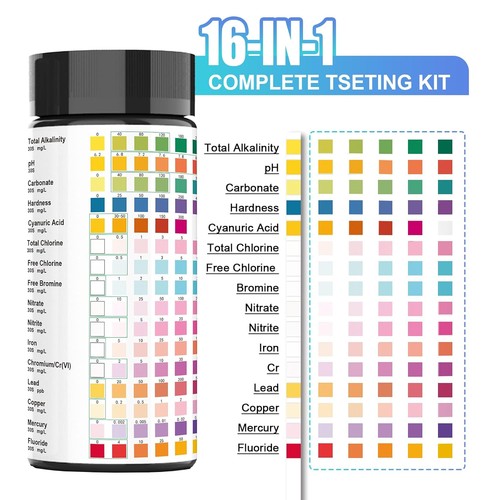 Water test kit
General search. Compare parameters covered and whether results are quantitative or qualitative. View on eBay →
Water test kit
General search. Compare parameters covered and whether results are quantitative or qualitative. View on eBay →
 Well water test kit
Comprehensive panels for private wells. Must include bacteria, nitrate, lead, iron, hardness. View on eBay →
Well water test kit
Comprehensive panels for private wells. Must include bacteria, nitrate, lead, iron, hardness. View on eBay →
 Drinking water test kit
Certified lab results for drinking water contaminants. Good starting point for both city and well water users. View on eBay →
Drinking water test kit
Certified lab results for drinking water contaminants. Good starting point for both city and well water users. View on eBay →
 Water hardness test strips
Fast hardness check. Read under good lighting within the time window. Accurate enough for softener sizing decisions. View on eBay →
Water hardness test strips
Fast hardness check. Read under good lighting within the time window. Accurate enough for softener sizing decisions. View on eBay →
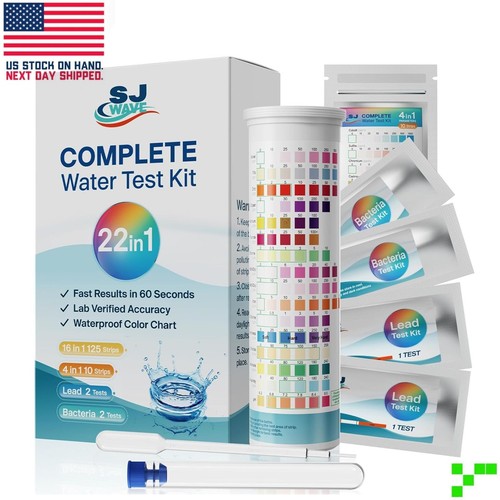 Lead water test kit
Pre-1986 homes or unknown pipe history. Collect first-draw sample — do not flush first. View on eBay →
Lead water test kit
Pre-1986 homes or unknown pipe history. Collect first-draw sample — do not flush first. View on eBay →