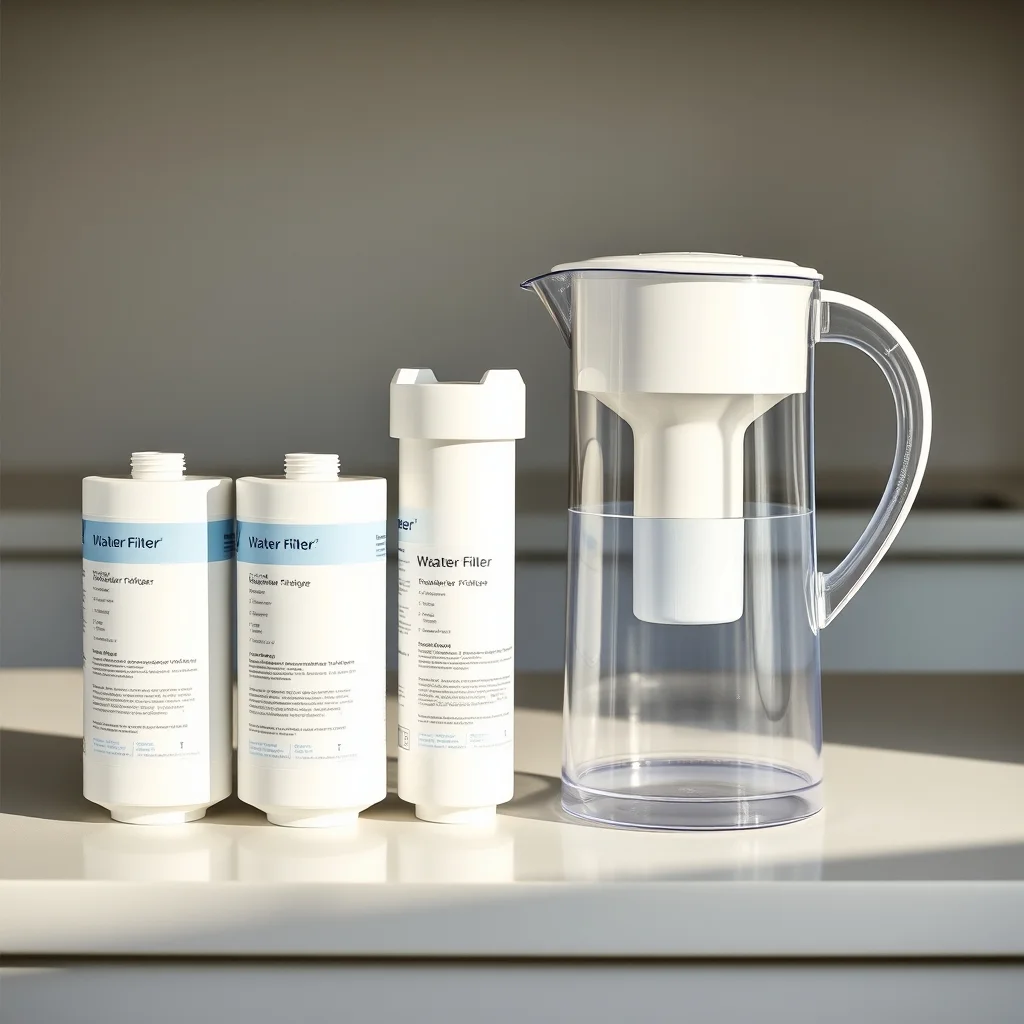
Why capacity matters more than people think
Most households underestimate how much filtered water they actually consume in a day. Drinking alone accounts for roughly half a gallon per person; add cooking, rinsing fruit, making coffee, and filling a pet bowl, and a family of four can easily run through 1.5–2 gallons daily.
A 5-cup pitcher holds about 40 oz — just over a quarter of a gallon. That's adequate for a single person who doesn't cook with filtered water, but it means refilling three or four times a day for a family. A 10-cup or 18-cup pitcher (80–144 oz) changes the refill cadence entirely.
The other capacity constraint people miss is refrigerator fit. Many large pitchers won't fit upright in a standard fridge door shelf. Measure your door shelf height before buying anything over 10 cups. Brita, ZeroWater, and several other brands list pitcher dimensions on their product pages; verify before ordering.
Reservoir vs total capacity
Manufacturers sometimes list "total capacity" (reservoir + filtered section) rather than ready-to-drink filtered capacity. A pitcher labeled "12 cups total" might only deliver 8 cups of filtered water before you need to wait for more to drip through. When the spec isn't clear, look for user reviews that call out actual ready-volume — it's a common frustration with budget models.
Filter life and the real cost per gallon
The filter replacement cost is where most pitcher purchases go wrong. A $25 pitcher with $15 replacement filters that last 40 gallons costs more per gallon filtered over two years than a $50 pitcher with $20 filters that last 150 gallons.
Do the math before you buy. If you use 1.5 gallons per day:
- 40-gallon filter: ~27 days per filter, roughly 13–14 replacements per year
- 100-gallon filter: ~67 days per filter, roughly 5–6 replacements per year
- 150-gallon filter: ~100 days per filter, roughly 3–4 replacements per year
Multiply by replacement price to get annual filter cost. Many households are shocked to discover they're spending $80–120/year on a pitcher they thought was cheap to own.
NSF certifications: what they actually mean
NSF International certifies water filters against specific contaminant reduction claims. Knowing which standard a pitcher is certified to — and which it isn't — tells you what you're actually getting.
| NSF Standard | What it covers | Common contaminants |
|---|---|---|
| NSF 42 | Aesthetic (taste/odor/chlorine) | Chlorine, chloramines, sediment — things that affect how water tastes and smells |
| NSF 53 | Health effects (contaminants with health risk) | Lead, cysts (Giardia/Cryptosporidium), VOCs, some heavy metals |
| NSF 58 | Reverse osmosis systems | Not applicable to pitchers — this is the RO system standard |
| NSF 401 | Emerging contaminants | Pharmaceuticals, pesticides, PFOA/PFOS (some models) |
Most mainstream pitchers (Brita Standard, for example) are certified only to NSF 42, which covers taste and odor. If you have concerns about lead — especially in older homes with lead solder or lead service lines — you need NSF 53 certification specifically for lead reduction. Don't assume "certified filter" means lead removal unless the NSF 53 lead claim is listed explicitly.
Alkaline pitchers: what's real and what's marketing
Alkaline water pitchers use a mineral-media stage (often containing magnesium and tourmaline) to raise water pH above 7, typically to around 8–9.5. Whether alkaline water provides health benefits is a genuinely contested area — the body tightly regulates blood pH regardless of what you drink, and most mainstream nutritional science doesn't support the health claims made by alkaline water brands.
What is real about alkaline pitchers: many combine the mineral stage with activated carbon filtration, which does reduce chlorine, taste, and odor. If you want both the carbon filtration and the alkaline pH, these pitchers deliver both. If you're only buying for the alkaline pH claim, the science is thin.
The practical trade-off: alkaline media exhausts faster than standard carbon, so replacement cost and frequency tend to be higher. Verify replacement filter availability and cost before buying — some alkaline pitchers use proprietary cartridges that are expensive and hard to find.
Gravity-fed flow rate
All pitcher filters work by gravity — water drips through the filter media slowly. Typical flow rates range from about 0.1 to 0.3 gallons per minute depending on media type and how saturated the filter is. A brand-new filter typically flows faster; an aging filter near the end of its life flows noticeably slower.
Filters with denser media (such as ion exchange resin for lead removal, or ZeroWater's 5-stage system) flow significantly slower than basic activated carbon models. ZeroWater is a common example: it can take 10–15 minutes to filter a full pitcher because the ion exchange stage is thorough but slow. If you need water immediately and often, a slower pitcher can become a daily annoyance.
Shopping for water filter pitchers? Browse current eBay listings → (we earn a small commission; your price is unchanged).
Pitcher fit: fridge door vs shelf vs countertop
A pitcher you have to store on the main shelf rather than the door is one you're more likely to abandon. Measure your fridge door shelf before ordering anything. Standard door shelves are typically 5–6 inches deep and 10–14 inches tall — but this varies significantly by model. Many large-capacity pitchers (18 cups and up) are designed to lay flat on a shelf rather than stand upright; verify the intended orientation before buying.
Countertop pitchers exist but are less common — these typically sit on the counter with a spigot for dispensing. They're more convenient for high-volume use but take up counter space permanently. Some households find this a good compromise, especially in small apartments where fridge door space is at a premium.
Common mistakes when buying a pitcher filter
- Ignoring the certification scope. "Certified" on the box can mean NSF 42 (taste only) or NSF 53 (health effects) — these are very different claims. Read the actual certification, not just the marketing language.
- Not calculating filter life cost. The annual replacement cost often exceeds the purchase price of the pitcher within the first year. Run the numbers before buying.
- Buying for a problem you don't have. If your water is municipal tap with no lead concerns, a basic NSF 42 filter that costs $5 to replace is probably the right call. You don't need a 5-stage ion exchange system to remove chlorine taste.
- Forgetting to check filter availability. Budget-brand pitchers sometimes have proprietary cartridges that go out of stock or are discontinued. Verify that replacement filters are readily available before committing.
What to do before buying
If you have specific contaminant concerns — lead, nitrates, hardness — get a water test first. A basic strip test kit from a hardware store can tell you hardness and a few other parameters quickly. For lead or more complex concerns, certified lab testing (send-to-lab kits) gives you actual contaminant levels to match against filter certifications. Buying a pitcher without knowing what's in your water is guessing at the solution.
Once you know what you're filtering, match the NSF certification to the contaminant. If lead is the concern, NSF 53 certified for lead removal is the only claim worth trusting from a pitcher. If it's just chlorine taste and odor, any NSF 42 certified filter solves the problem at the lowest cost.
Shop water filter pitchers on eBay
We earn a small commission on qualifying sales; your price is unchanged. Full disclosure.
 Water filter pitcher
Standard pitcher format. Compare NSF certifications and replacement filter cost. View on eBay →
Water filter pitcher
Standard pitcher format. Compare NSF certifications and replacement filter cost. View on eBay →
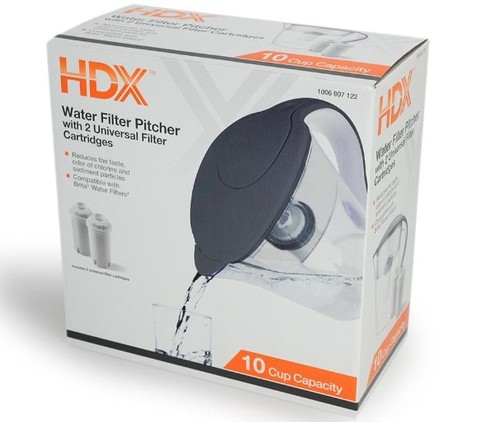 Large water filter pitcher
10+ cups for families. Verify fridge door fit before ordering. View on eBay →
Large water filter pitcher
10+ cups for families. Verify fridge door fit before ordering. View on eBay →
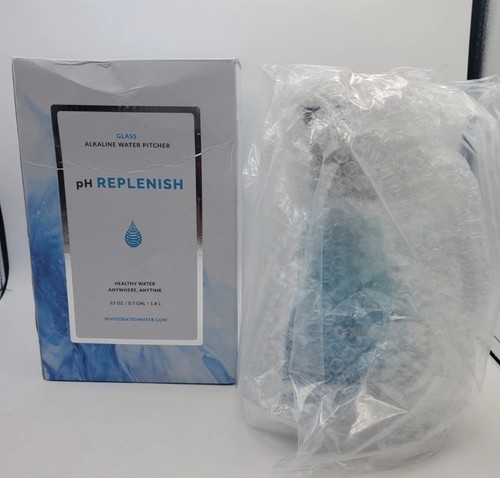 Alkaline water pitcher
Raises pH with mineral media stage. Look for models with carbon block combined. View on eBay →
Alkaline water pitcher
Raises pH with mineral media stage. Look for models with carbon block combined. View on eBay →
 Pitcher filter replacement
Verify compatibility before buying. Replacement cost is the real long-term expense. View on eBay →
10-cup water filter pitcher
Sweet spot for households of 2–4. ~80 oz ready-filtered at a time. View on eBay →
Pitcher filter replacement
Verify compatibility before buying. Replacement cost is the real long-term expense. View on eBay →
10-cup water filter pitcher
Sweet spot for households of 2–4. ~80 oz ready-filtered at a time. View on eBay →