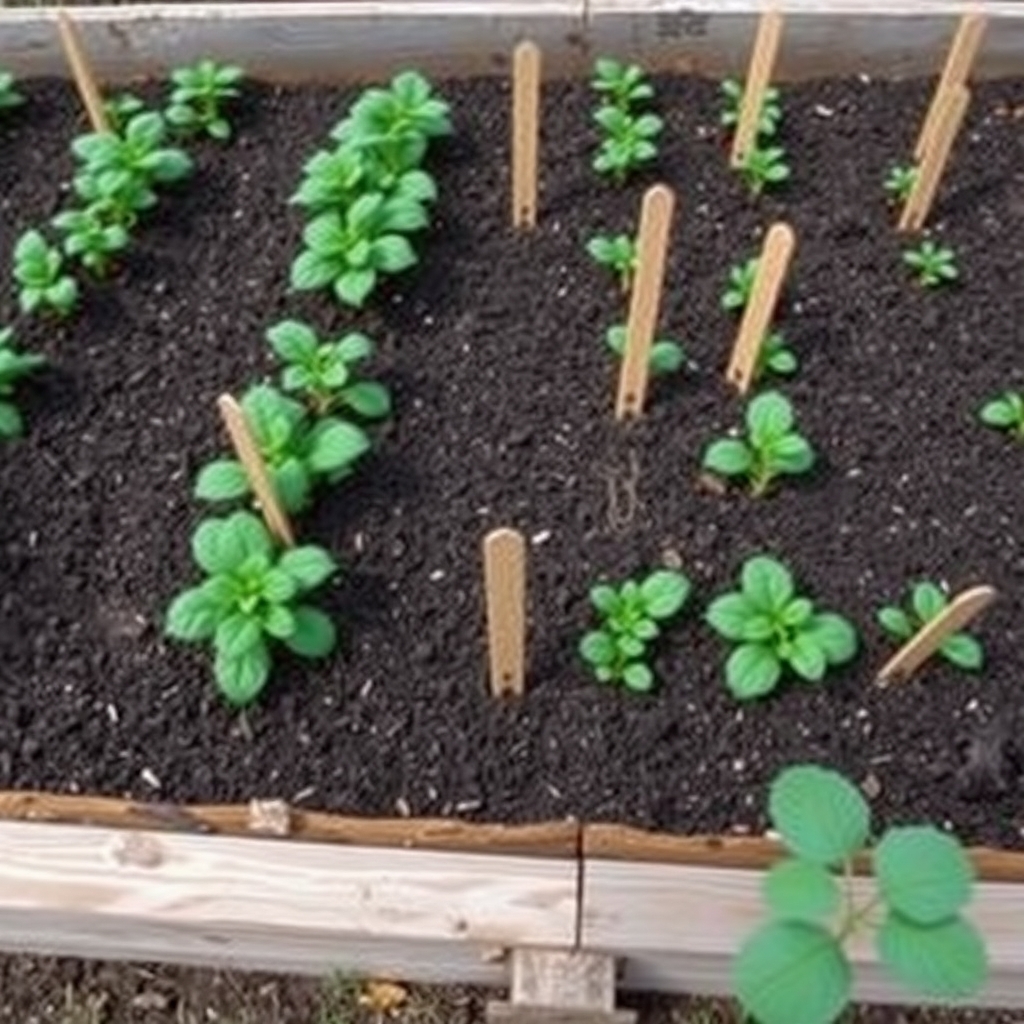
Siting the garden: sun, access, and water
Vegetables need direct sunlight. Most fruiting crops — tomatoes, peppers, squash, cucumbers — need at least six to eight hours of direct sun per day, and they'll underperform in anything less. Leafy greens and herbs are more tolerant of partial shade (four to six hours), but they still grow faster and taste better with more light.
Pick the sunniest spot you have before worrying about anything else. Once you've found it, check the water access: dragging hoses more than 50 feet to a bed is a friction point that causes gardens to get neglected. Proximity to a hose bib or a downspout you can route water from is worth more than you'd expect in terms of whether you'll actually maintain the garden.
Avoid low spots that collect standing water after rain. Root vegetables and most brassicas will rot in waterlogged soil. Also check for tree roots — they'll compete aggressively with vegetables and may limit what you can grow even in otherwise good conditions.
In-ground beds vs raised beds: the real trade-offs
The choice between in-ground planting and raised beds comes down to your existing soil quality, your budget, and how long you want to wait before seeing results.
In-ground beds
If you have decent native soil — loamy, well-draining, not compacted — in-ground planting is the cheapest route. You amend what's already there rather than importing soil. The limitations: clay-heavy soil takes years to fully improve, rocky soil may need excavation, and weed pressure from the surrounding ground is higher. In-ground beds also require more initial tillage unless you're using a no-dig approach with cardboard suppression.
Raised beds
Raised beds are a controlled environment. You fill them with a known soil mix, which means you can start with good drainage and fertility from day one. Beds that are 8 to 12 inches deep suit most crops; root vegetables like carrots and parsnips need 12 to 18 inches. Common materials are untreated cedar (naturally rot-resistant, typically lasts 10–20 years), galvanized steel (durable but can get hot in full sun), and composite lumber (longest lifespan, higher upfront cost).
A 4-foot width is standard because you can reach the center of the bed from either side without stepping in and compacting the soil. Length doesn't matter much in principle — 8 feet and 12 feet are common. If you're on a slope, level each bed individually; unleveled beds drain unevenly.
| Factor | In-ground | Raised bed |
|---|---|---|
| Startup cost | Low (amendments only) | Moderate to high (structure + fill soil) |
| Drainage control | Depends on native soil | Excellent (you choose the mix) |
| Soil warming in spring | Slower | Faster (elevated, exposed sides) |
| Weed pressure | Higher | Lower, especially first few years |
| Watering frequency | Less frequent | More frequent (dries faster) |
| Soil compaction risk | Higher (foot traffic temptation) | Lower (no need to step in) |
Soil preparation and amendments
Whether you're planting in-ground or filling a raised bed, the target is the same: loose, well-draining soil with adequate organic matter. Most vegetable crops prefer a pH of 6.0 to 7.0; outside that range, nutrients become chemically unavailable even if they're present in the soil.
Testing your soil
A basic soil test (pH, nitrogen, phosphorus, potassium) from your local cooperative extension service typically costs $15–30 and is worth doing before you invest in amendments. Without it, you're guessing. Home test kits give pH readings quickly but are less accurate for nutrient levels.
Common amendments
- Compost: The universal amendment. Adds organic matter, improves drainage in clay, improves water retention in sand, and adds slow-release nutrients. Add 2–4 inches of compost and work it into the top 8–12 inches of soil before planting each season.
- Perlite: Volcanic glass that improves drainage and prevents compaction. Useful in raised beds and containers, where compaction is otherwise a common problem.
- Lime (agricultural lime): Raises soil pH. If your soil tests below 6.0 (acidic), lime is typically the fix. Work it in several weeks before planting, not at the last minute.
- Sulfur: Lowers soil pH. If your native soil is alkaline (above 7.5), elemental sulfur can bring it down over a season or two. Slow-acting compared to other amendments.
- Balanced granular fertilizer: A 10-10-10 or similar balanced NPK (nitrogen-phosphorus-potassium) fertilizer at planting time gives crops a start, especially in soil that hasn't had much compost worked in yet.
Shopping for vegetable gardening gear? Browse current eBay listings → (we earn a small commission; your price is unchanged).
Spacing and succession planting
Spacing affects airflow, light penetration, and competition for water and nutrients. Crowded plants yield less, not more, and are more prone to fungal disease because air can't circulate. Seed packets and transplant labels include recommended spacing — treat these as minimums, not suggestions.
Spacing guidelines by crop family
| Crop | In-row spacing | Row spacing | Notes |
|---|---|---|---|
| Tomatoes | 18–36 inches | 36–48 inches | Indeterminate varieties need more room; cage or stake |
| Peppers | 18–24 inches | 24–36 inches | Compact growers; tolerate slightly closer spacing |
| Cucumbers | 12 inches (trellised) | 36–60 inches (bush) | Trellising reduces ground footprint significantly |
| Zucchini / squash | 24–36 inches | 48–72 inches | These need more space than beginners expect |
| Lettuce (leaf) | 6–8 inches | 12–18 inches | Can cut-and-come-again; dense planting works for baby leaf |
| Carrots | 2–3 inches (after thinning) | 12–18 inches | Sow densely, thin to final spacing — critical for root size |
| Beans (bush) | 4–6 inches | 18–24 inches | Sow direct; no transplanting; multiple successions |
| Kale / chard | 12–18 inches | 18–24 inches | Harvest outer leaves continuously; inner keeps growing |
Succession planting
Succession planting means sowing a new batch of the same crop every 2–3 weeks rather than all at once. It prevents the feast-or-famine harvest pattern that causes most beginner gardeners to get overwhelmed in August and under-supplied in June and September.
Fast-maturing crops are the best candidates: radishes (25–30 days), lettuce (45–65 days), beans (50–65 days), and cilantro (which bolts quickly in heat, so successive sowings keep it in supply). Tomatoes, peppers, and squash have long growing seasons and are typically planted once per year in most climates.
The six hand tools worth buying
The hand tool market is cluttered with items that sound useful and aren't. Here are the six that actually earn their keep in a vegetable garden:
1. Trowel (transplanting)
A narrow-bladed transplanting trowel with depth markings is used for every seedling you put in the ground. Forged steel blades outlast stamped versions — check that the head is one piece with the collar, not stamped sheet metal crimped to a ferrule. Fiskars, DeWit, and Corona make serviceable versions at different price points.
2. Hand cultivator (three-prong)
Used for breaking surface crust, aerating soil between plants, and knocking small weeds loose before they establish. The prongs should be forged steel, not cast — cast prongs snap under lateral pressure. This is the tool you reach for most often when maintaining established beds.
3. Hoe (stirrup or oscillating)
A stirrup hoe (also called a hula hoe or action hoe) cuts weeds on both the push and pull stroke at soil level, making weeding fast. Far more effective than a standard flat-bladed hoe for row crop maintenance. The blade should be kept sharp — a dull stirrup hoe tears soil rather than cutting cleanly.
4. Garden fork (border fork)
A four-tine border fork (smaller than a full-sized digging fork) is used for working compost into beds, loosening compacted patches, and lifting root vegetables at harvest. The shorter handle is more maneuverable in raised beds. Steel tines and a solid socket connection are the specs to look for.
5. Soil knife (hori-hori)
A Japanese soil knife with a serrated edge on one side and a straight edge on the other. Used for dividing perennials, digging taproots, transplanting seedlings, and cutting open soil amendments bags. Once you have one, you'll reach for it constantly. A good one weighs around 300g and has a full-tang blade.
6. Garden scissors or pruning snips
For harvesting leafy greens, cutting back leggy seedlings, and removing spent flowers and diseased leaves. A clean cut is better than tearing, which leaves ragged tissue that's more prone to disease. Bypass (scissor-action) cuts are cleaner than anvil (crushing-action) cuts for green material.
Watering: deep and infrequent beats light and daily
Shallow daily watering encourages shallow root development and makes plants more drought-sensitive. The better pattern for established vegetables is deep watering — soaking the root zone to 6–8 inches depth — on a less frequent schedule (typically every 2–4 days depending on weather and soil type). This trains roots to grow downward where moisture is more stable.
How to check: push a finger or a wooden skewer 2 inches into the soil. If it comes out damp, hold off. If it comes out dry, water. A simple moisture meter takes the guesswork out of this for beginners.
Drip irrigation and soaker hoses are more efficient than overhead watering because they deliver water to the root zone without wetting foliage. Wet foliage — especially on tomatoes, squash, and cucumbers — is a consistent risk factor for fungal disease.
Mulching to reduce water loss and suppress weeds
A 2–3 inch layer of organic mulch (straw, wood chips, shredded leaves) placed around — not against — plant stems dramatically reduces evaporation from the soil surface. It also suppresses weed germination by blocking light. Wood chips are suitable for pathways and permanent perennial beds; straw is lighter and easier to work into vegetable beds at season's end.
Avoid piling mulch directly against plant stems — it traps moisture against the stem and invites rot and fungal problems. Leave a 2-inch gap around each plant.
Common first-year mistakes and how to avoid them
- Starting too big. A 4×8 foot raised bed is enough for a first season. Every square foot is meaningful labor; new gardeners consistently underestimate the time commitment of a larger plot.
- Planting too early. Warm-season crops (tomatoes, peppers, cucumbers, squash, beans) planted before the last frost date and before soil has warmed to at least 60°F will stall. They don't grow in cold soil — they just sit there accumulating stress.
- Skipping thinning. Carrots, beets, and lettuce direct-sown from seed must be thinned to proper spacing. Plants that aren't thinned compete so severely that you get poor yields from all of them rather than good yields from fewer.
- Overwatering. More plants are killed by overwatering than underwatering in the first season. Check soil moisture before watering, don't water on a fixed daily schedule regardless of conditions.
- No plan for vertical space. Indeterminate tomatoes will sprawl unless caged or staked. Cucumbers and beans on a trellis take a fraction of the ground space they need if left to sprawl. Plan vertical support before planting, not after the plants have already established.
Search eBay for vegetable gardening gear
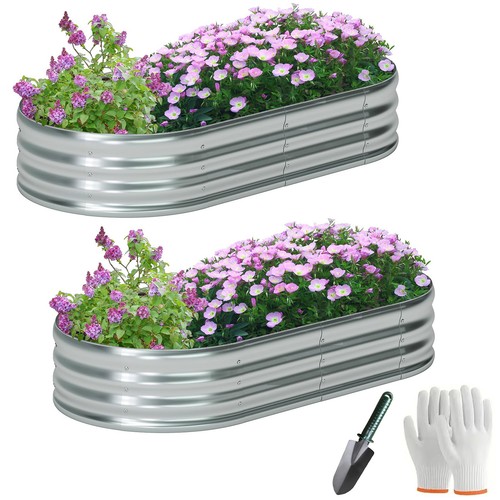 Raised garden bed kit
Cedar and galvanized steel. Verify assembled dimensions — label sizes often describe the lumber lengths, not the interior growing area.
Raised garden bed kit
Cedar and galvanized steel. Verify assembled dimensions — label sizes often describe the lumber lengths, not the interior growing area.
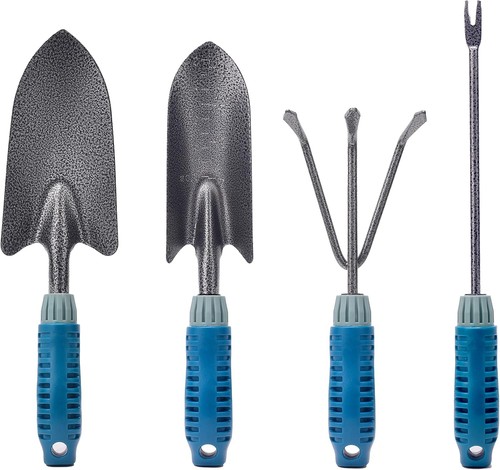 Garden hand tool set
Trowel, cultivator, transplanter sets. Look for forged steel heads; avoid stamped sheet-metal versions that bend under pressure.
Garden hand tool set
Trowel, cultivator, transplanter sets. Look for forged steel heads; avoid stamped sheet-metal versions that bend under pressure.
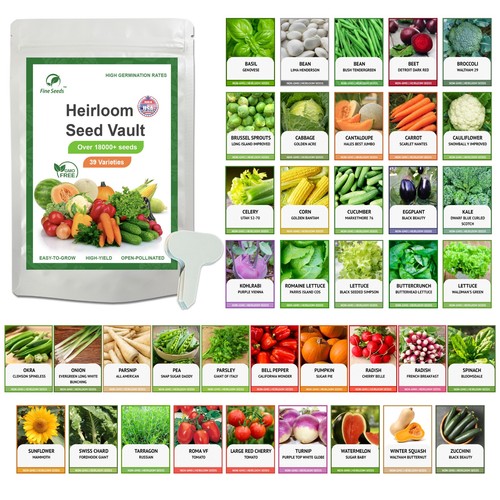 Vegetable garden seeds
Variety packs and heirloom collections. Check days-to-maturity against your frost dates before buying.
Vegetable garden seeds
Variety packs and heirloom collections. Check days-to-maturity against your frost dates before buying.