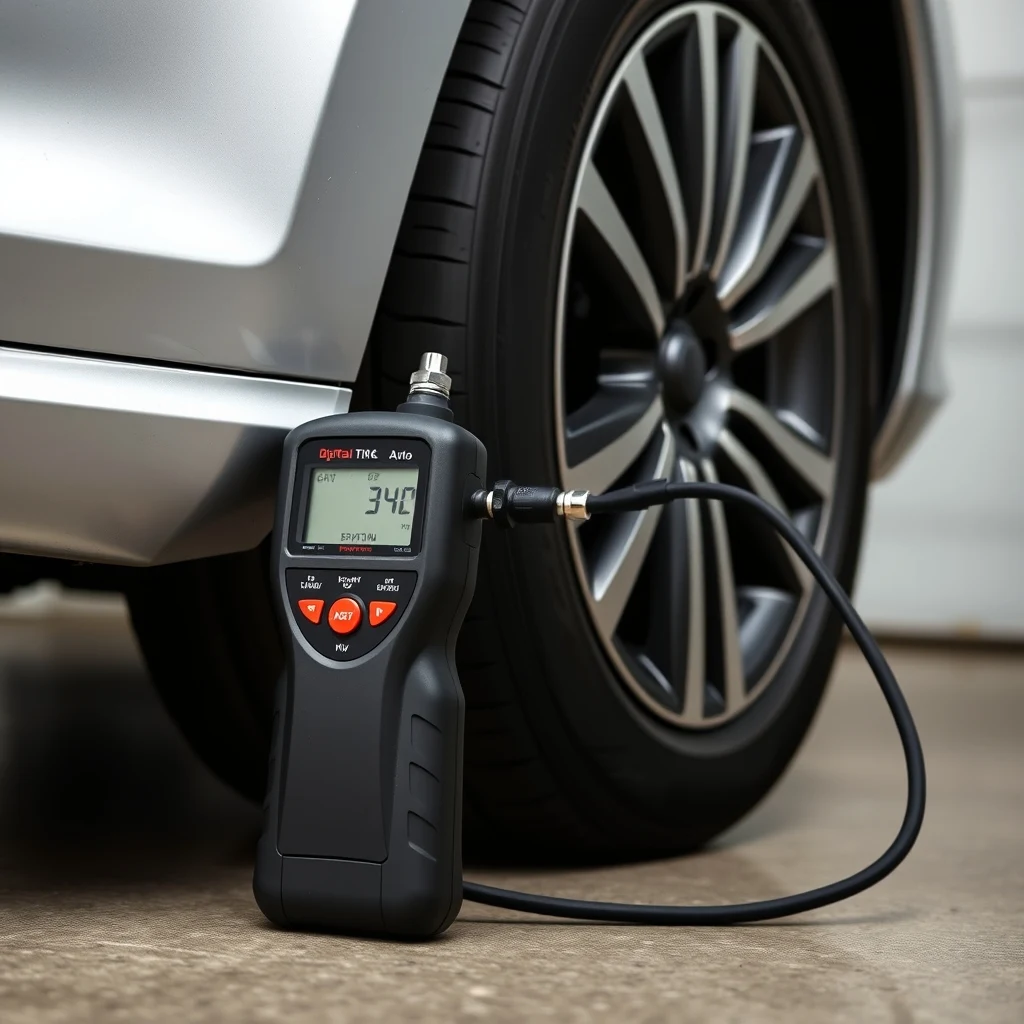
CFM: what fill rate actually means
CFM (cubic feet per minute) measures how much air volume the inflator can move. More CFM means a faster fill for the same tire volume, but the relationship isn't linear because tire pressure also matters — filling a nearly-flat tire is faster than topping off from 28 to 32 PSI because you're moving more volume per pressure increase in the former case.
For passenger car tires in the 175–225 mm section width range, a 0.5–1.0 CFM inflator adds roughly 4–8 PSI per minute starting from significantly low pressure. A faster 1.5–2.0 CFM unit does the same job noticeably quicker and handles larger-volume tires (truck, SUV, van) without struggling.
The practical guide: for passenger cars only, 0.5–1.0 CFM is fine. For trucks, SUVs, and vans with larger tire volumes, 1.0 CFM minimum is more comfortable. For off-road recovery where you're reinflating from near-zero after airing down on a trail, 2.0+ CFM makes a real difference in how long you're waiting.
Max PSI: matching the inflator to your tires
Most passenger car tires run 32–36 PSI. Most compact and mid-range tire inflators max out at 100–120 PSI — more than enough margin. The PSI rating only becomes a constraint with:
- LT-rated truck tires — light truck (LT) tires frequently run 50–80 PSI, sometimes higher when loaded. Many entry-level inflators struggle above 60–70 PSI and slow down significantly near their max rating.
- Bicycle tires — road bike clincher tires can run 90–120 PSI; tubeless mountain bike tires may need 30 PSI but high-flow to seat the bead. Max PSI is less relevant than CFM for bicycle use.
- RV and trailer tires — can run 80–100+ PSI; verify the inflator's max operating pressure and whether it can reach that pressure, not just attempt to reach it.
For passenger cars, PSI is almost never the constraint. For trucks, verify the inflator handles your tire's maximum recommended pressure with some margin.
Gauge accuracy: the spec everyone ignores
Most tire inflator spec sheets claim "±1 PSI" accuracy. That sounds precise until you realize many don't specify the conditions under which this accuracy was measured, and real-world gauge readings frequently drift with heat — which builds up during continuous use.
A gauge that reads 2–3 PSI high means your auto shut-off stops at 30 PSI when you think it's stopping at 32–33 PSI. Running tires 2–3 PSI underinflated increases rolling resistance, heats the tire more, accelerates shoulder wear, and reduces handling response. It's not catastrophic in small amounts, but it defeats the purpose of having an accurate inflator.
The most reliable way to verify gauge accuracy is to cross-check with a separate quality gauge (a dedicated stick or dial gauge, not another inflator) after inflation. If there's consistent offset, you account for it. If the reading drifts based on how hot the inflator is, accuracy is more situational.
Digital gauges are generally more accurate and consistent than analog gauges at a given price point. The best affordable inflators typically come from power tool brands that also make digital multimeters and other precision tools — their quality standards for electronic measurement tend to carry over.
Shopping for tire inflators? Browse current eBay listings → (we earn a small commission; your price is unchanged).
Corded 12V vs cordless: which power source?
12V corded inflators draw power directly from your car's 12V outlet (cigarette lighter socket) or battery clamps. They have unlimited runtime — fill as many tires as needed without worrying about a battery dying. The cord length is the constraint; typical 12V cords reach 10–12 feet, which comfortably reaches all four tires from one position if the cord goes to the battery.
Cordless battery-powered inflators use either dedicated built-in batteries or interchangeable power tool batteries (18V/20V from Milwaukee, DeWalt, Ryobi, etc.). They're genuinely convenient for quick top-offs — pull the inflator from your bag, hit the tire, done, no plugging in. The constraint is runtime: most built-in-battery models handle 3–5 passenger tires from low pressure before needing a recharge. Power-tool-battery models with large-capacity packs (5–9Ah) do better.
For emergency roadside use: a cordless inflator stored in the car is more convenient to use quickly. For garage use where you're inflating all four tires routinely: corded is simpler because you never have to worry about the battery state.
Auto shut-off: useful but not foolproof
Auto shut-off stops the inflator when it reaches the preset target PSI, so you don't have to stand there monitoring it. It's genuinely useful — you set the target, attach the inflator, and walk around to check the other tires while it fills.
The caveat is that auto shut-off is only as precise as the gauge. If the gauge reads 2 PSI high and you set a target of 35 PSI, the inflator stops at 33 PSI actual. The convenience is real; just don't assume the target PSI is exactly what you're getting without verifying against a known-accurate gauge a few times when you first use the inflator.
Also note: auto shut-off should stop the motor, not just light a warning light. Cheaper units flash a light but keep the motor running, which means the tire continues to fill past the target. Verify in reviews whether the motor actually stops.
Heat management and duty cycle
Small electric motors generate heat during operation, and tire inflators — particularly compact ones — can overheat during extended use. Manufacturers specify a duty cycle: "10 minutes on, 30 minutes off" is common for budget inflators. Exceeding the duty cycle trips a thermal cutoff and the motor shuts down until it cools.
For routine passenger car maintenance (4 tires, usually needing only a few PSI each), duty cycle is rarely an issue. The fills are short. For post-trail reinflation of truck or off-road tires, or for inflating large-volume tires from very low pressure, duty cycle matters — look for continuous-duty or higher-rated duty cycle models.
Shop tire inflators on eBay
Current listings across cordless, 12V, and digital models. We earn a small commission on qualifying sales; your price is the same. Full disclosure.
 Portable tire inflator
12V corded. Unlimited runtime, reaches all four tires from one position.
Portable tire inflator
12V corded. Unlimited runtime, reaches all four tires from one position.
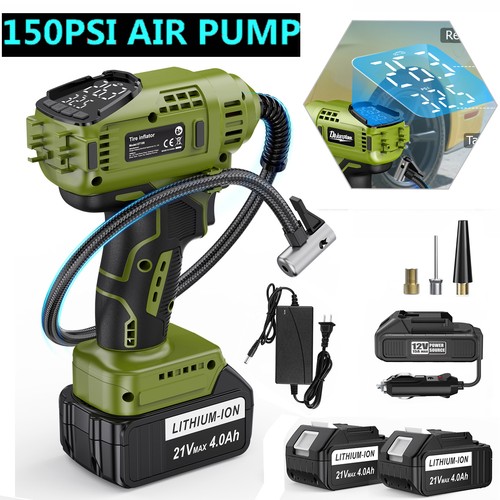 Cordless tire inflator
Battery-powered. Convenient for quick top-offs. Check runtime per charge.
Cordless tire inflator
Battery-powered. Convenient for quick top-offs. Check runtime per charge.
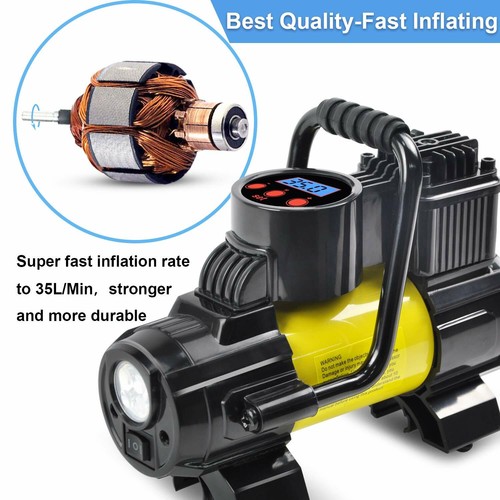 12V air compressor
Higher CFM for truck tires, air mattresses, continuous use. Check duty cycle.
12V air compressor
Higher CFM for truck tires, air mattresses, continuous use. Check duty cycle.
 Digital tire inflator
With auto shut-off. Verify gauge accuracy in reviews, not just spec sheets.
Digital tire inflator
With auto shut-off. Verify gauge accuracy in reviews, not just spec sheets.
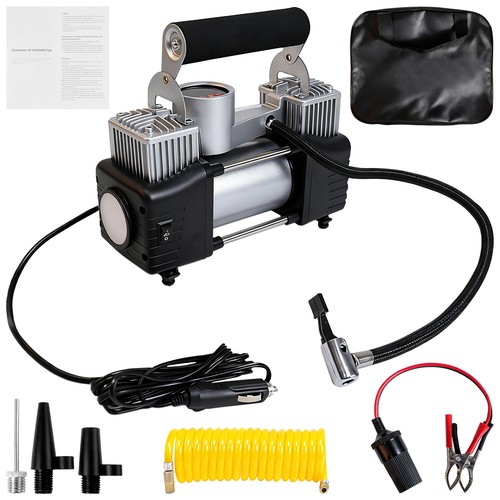 Portable car air compressor
Mid-range portables balancing CFM, PSI, and size for regular garage use.
Portable car air compressor
Mid-range portables balancing CFM, PSI, and size for regular garage use.