The first decision: mechanical or computerized
A mechanical sewing machine selects stitches using physical dials and cams — rotating discs that physically move the needle bar to create different stitch patterns. A computerized machine uses an electronic control board and stepper motors to achieve the same result. This distinction determines repairability, longevity ceiling, and what goes wrong when something breaks.
Mechanical machines fail in predictable, fixable ways: worn gears, stretched timing belts, loose tension discs. A competent technician — or in many cases the sewist themselves — can identify and replace the faulty part. Vintage Singer and Kenmore mechanicals are routinely serviced 40 or 50 years after manufacture because every component is available and the tolerance stack isn't tight.
Computerized machines fail when the control board fails. Boards are manufacturer-specific, often not available after a model is discontinued, and rarely economical to repair relative to machine cost. A five-year-old computerized machine with a dead board may be effectively unrepairable. This isn't a reason to avoid computerized machines — they offer genuine advantages — but it is a reason to factor service availability into the purchase decision.
| Factor | Mechanical | Computerized |
|---|---|---|
| Stitch selection | Physical dials and cams | Electronic panel or LCD touchscreen |
| Tension control | Manual dial | Automatic or semi-automatic |
| Speed control | Foot pedal pressure only | Foot pedal + electronic speed limiter |
| Built-in embroidery | Rarely (some utility decorative stitches) | Common; dedicated embroidery models available |
| Repairability | High — most parts are generic or available | Depends on board/part availability |
| Power interruption sensitivity | No memory to lose; resumes normally | May lose settings; need surge protection |
| Typical price range | $80–$600 (new); wide used market | $150–$2,000+ depending on features |
Internal frame: the decision that actually predicts longevity
The internal frame of a sewing machine — the structural skeleton to which all mechanical components attach — is the single best predictor of how long a machine will hold its timing and stitching quality. Manufacturers rarely call this out in marketing because "metal internal frame" doesn't sound exciting next to "800 built-in stitches."
An all-metal frame (typically cast aluminum or die-cast zinc alloy) holds the hook, bobbin case, needle bar, and presser foot mechanism in fixed spatial relationships. When you sew through multiple fabric layers, the forces are significant; a rigid frame keeps everything aligned. Misalignment causes skipped stitches, tension inconsistency, and eventually timing problems that require professional calibration.
A plastic-bodied machine uses a plastic housing with internal plastic supports. Under repeated use, particularly at high speed or through thick fabrics, the plastic flexes slightly. Over time this flexing causes the mechanical components to drift out of alignment. Budget machines with plastic frames aren't worthless — for light use on thin to medium fabrics they can last years — but they have a lower ceiling.
How to identify frame construction before buying
Manufacturers do sometimes disclose frame materials in specs ("metal frame" or "die-cast aluminum construction"). When they don't, weight is a proxy: an all-metal machine in the same size class will be noticeably heavier. A 1 oz buttonhole machine that weighs 8 pounds is probably plastic-dominant internally. The same functional machine with a metal frame might weigh 14–18 pounds.
Stitch count: what it means and what it doesn't
Stitch count — the number of built-in stitches a machine advertises — is the spec most prominent in marketing and the least relevant for most purchasing decisions. Here is why.
The practical stitch repertoire of an active home sewist is roughly six to ten stitches: straight stitch, zigzag, a few widths of each, buttonhole, and perhaps a stretch stitch for knits. A quilter might add a few decorative stitches. Even intermediate sewists who use their machines heavily rarely exceed 20 stitches regularly.
A machine advertising 800 built-in stitches provides 790 stitches that most buyers will never use — and the cost of engineering that ROM is part of what you pay. A 35-stitch mechanical machine with a metal frame and a high-torque motor will outperform a 600-stitch plastic-frame computerized machine for everyday sewing.
Stitch count matters for one specific use case: dedicated embroidery work. If you intend to do machine embroidery — stitching designs onto fabric using the machine's built-in patterns rather than just utility sewing — then a large stitch library has real value. For general sewing, prioritize frame and motor over stitch count.
Motor and speed: what heavy-duty actually means
A machine marketed as "heavy duty" should have three things: a higher-torque motor (typically 1.0 amp or above vs 0.5–0.7 amp on standard machines), a metal internal frame, and a heavier-gauge needle bar mechanism designed to push through multiple thick layers without deflecting.
Stitches per minute (SPM) is a common speed spec: standard machines typically run 600–800 SPM maximum; heavy-duty machines 1,000–1,100 SPM. Higher maximum SPM doesn't mean you sew faster necessarily — foot pedal pressure controls speed in real use — but it indicates a motor with more headroom before it strains. A motor running near its limit through denim or canvas will run hotter and fail sooner than one with meaningful overhead.
Fabric compatibility as a buying frame
Think about the heaviest material you'll routinely sew, not just occasionally. If you primarily sew quilting cotton, any mid-range machine handles it. If you regularly sew:
- Denim (8+ oz): You need a heavy-duty motor and a sharp, heavy-gauge needle (size 90/14 or 100/16). Most standard machines struggle above 4 layers of denim.
- Canvas or upholstery fabric: True heavy-duty machine or an industrial class machine. Home machines typically handle 2–3 layers of 10 oz canvas; more than that strains the feed mechanism.
- Leather: Specialized needle (wedge or chisel point), Teflon presser foot, and a slow-speed motor. Leather can be sewn on some home machines but damages the standard feed dogs if done repeatedly.
- Knit fabrics: A standard machine handles knits fine with a ballpoint needle, but a walking foot helps prevent stretch. Knits are generally not a heavy-duty requirement — they're a technique requirement.
Shopping for sewing machines? Browse current eBay listings → (we earn a small commission; your price is unchanged).
Feed dogs and fabric control
Feed dogs are the metal teeth below the presser foot that grip fabric and advance it through the machine with each stitch. Standard machines have a 4-segment or 7-segment feed dog arrangement. More segments provide better grip distribution — important for thick layers, multiple seam allowances stacked at intersections, or quilted sandwiches.
A walking foot (sometimes called an even-feed foot) is an accessory presser foot that adds a top-feeding mechanism, so the top layer of fabric moves at the same rate as the bottom layer being driven by the feed dogs. For quilting or matching plaids, a walking foot is valuable. It's also important for sewing leather or vinyl that sticks to standard presser feet. Most mid-range machines can accept a walking foot as an aftermarket accessory; verify compatibility before purchasing a machine if walking foot use is important to you.
Bobbin systems: top-load vs front-load
Modern machines use one of two bobbin loading systems. Top-loading (or drop-in) bobbins: the bobbin sits horizontally in a case under the needle plate, accessible from the top with the needle plate cover open. These are generally easier to load and monitor — you can see the thread supply without removing anything. Front-loading (or oscillating shuttle) bobbins: the bobbin sits in a removable case inserted from the front of the machine. Vintage machines and many industrial-class machines use this system; it's more involved to load but the hook mechanism is often more robust.
For new buyers, top-loading bobbin systems are simpler to learn and manage. The functional quality of the stitch is not determined by bobbin loading direction — it's determined by bobbin tension, which both systems can achieve equally well.
Automatic features worth having vs features that add cost
Several computerized features solve real problems for sewists who encounter them repeatedly:
- One-step automatic buttonhole: Insert a button, the machine measures it and stitches a matched buttonhole automatically. Genuinely useful and consistent. A significant improvement over 4-step manual buttonholes on mechanical machines.
- Automatic needle threader: A lever mechanism that threads the eye of the needle for you. Useful for frequent thread changes; not all implementations are reliable — check reviews for the specific model.
- Automatic tension: The machine sets thread tension based on selected stitch. Works well on straightforward fabrics; on thick or specialty fabrics, manual override is common anyway.
- Speed limit slider: Sets a maximum sewing speed regardless of foot pedal pressure. Useful for detailed work, beginners learning control, or quilting curves.
- Thread cutter: A blade at the throat plate that cuts both threads with a lever or button. Useful for high-volume piecing. Not meaningful for most sewists.
Features that add cost without broad utility: USB connectivity to download stitches (most buyers never use it), hundreds of built-in decorative stitches beyond basic utility ones, and LCD color screens vs monochrome displays (aesthetics, not function).
New vs used: what the used market offers
The used sewing machine market, particularly for vintage mechanicals, is substantial and legitimate. Machines from brands like Singer (pre-1980s Featherweight, 401, 201), Bernina (Record series), and Pfaff (vintage) built with all-metal frames and precision German or Swiss manufacture are routinely available secondhand and, when properly serviced, outperform many new machines in stitch quality and longevity. The trade-off: you buy what exists in the used market, older machines may lack modern accessories compatibility, and service is the buyer's responsibility.
For modern machines, used purchases on eBay carry normal secondhand risk. For vintage mechanicals with metal frames, the risk is lower — the failure modes are known and the parts are often still available. A $150 well-serviced 1960s Singer can be a better long-term purchase than a $200 modern plastic-frame computerized machine, for straightforward garment sewing.
The honest buying framework
Start with your use case. If you sew light to medium-weight fabrics regularly for garments, quilts, or home goods, a mid-range mechanical or entry computerized machine with a metal internal frame is the right tier. If you routinely sew heavy fabrics — denim, canvas, multiple thick layers — a purpose-built heavy-duty machine with a 1-amp-class motor is worth the price premium. If you want embroidery capabilities, look at dedicated embroidery machines or combination embroidery-sewing machines and verify the embroidery hoop size suits your typical project dimensions.
In all cases: verify the internal frame material before purchasing. When that information isn't disclosed, treat the machine's weight and the brand's stated warranty as proxy signals for build quality. A machine a manufacturer trusts to last 25 years comes with a 25-year mechanical warranty — that's the signal that frame and mechanism quality are taken seriously.
Search eBay for these machines
 Computerized sewing machine
LCD screen, automatic tension, and one-step buttonhole. Verify frame construction in specs.
Computerized sewing machine
LCD screen, automatic tension, and one-step buttonhole. Verify frame construction in specs.
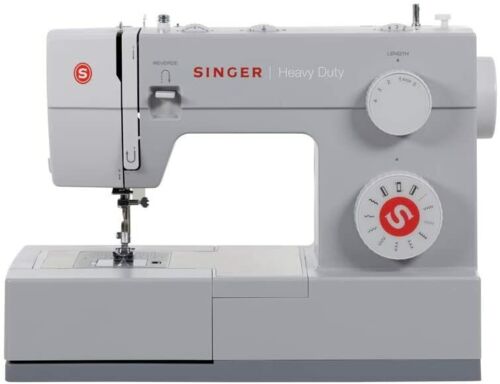 Heavy duty sewing machine
High-torque motor and metal frame for denim, canvas, and thick layers.
Mechanical sewing machine
Dial-operated, serviceable, and often available in all-metal vintage versions.
Heavy duty sewing machine
High-torque motor and metal frame for denim, canvas, and thick layers.
Mechanical sewing machine
Dial-operated, serviceable, and often available in all-metal vintage versions.