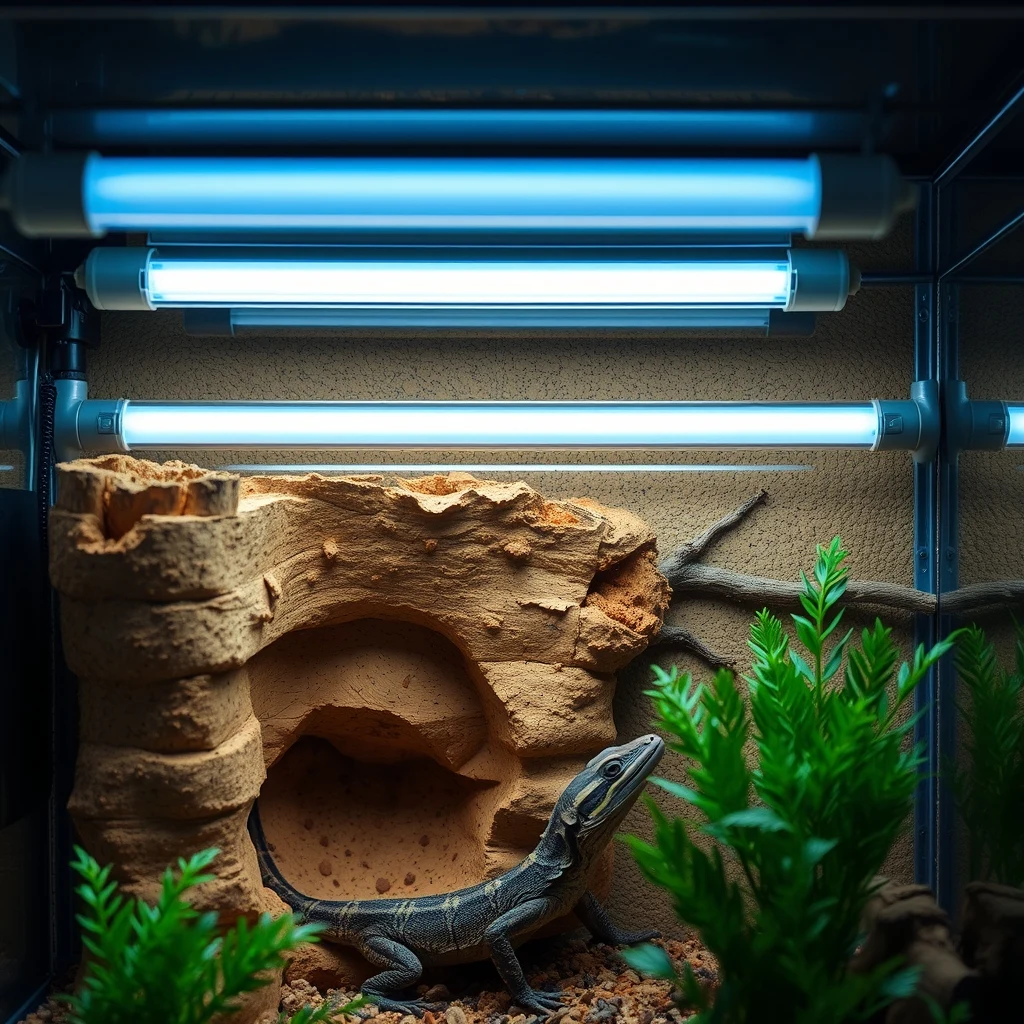
Enclosure size: bigger is almost always better
The "minimum enclosure size" figures published for most species are functional minimums, not welfare targets. A leopard gecko is often listed as needing a 10-gallon (20" × 10" × 12") tank. In practice, a 40-gallon breeder (36" × 18" × 16") allows a proper temperature gradient, more enrichment, and better long-term health. Size up when budget allows.
The species-specific consideration is height vs floor space. Arboreal species (chameleons, crested geckos, green tree pythons) prioritize vertical height. Terrestrial species (leopard geckos, bearded dragons, most colubrids) prioritize floor area. Both need enough horizontal space to create a meaningful warm/cool gradient — at least 3–4 body lengths long.
Glass vs PVC vs ABS enclosures
Glass terrariums are common and work well for most species. They lose heat readily through the glass walls, which can mean higher heating costs and is a significant disadvantage for tropical species that need consistent ambient warmth. Front-opening glass terrariums are better than top-opening ones for most species — they feel less threatening to the animal (most predators attack from above).
PVC and ABS panel enclosures retain heat much better than glass. They are preferred for boas, pythons, and other species that need consistent ambient temperatures. The trade-off is reduced visibility — these enclosures often have a solid back and sides with a glass front panel only.
The heat gradient: the most important concept in reptile keeping
Reptiles thermoregulate behaviorally: they move toward or away from heat sources to maintain their preferred body temperature. A single-temperature enclosure — one that is uniformly warm — denies the animal the ability to regulate its own temperature and causes chronic stress and long-term health problems.
A proper gradient has three zones: a warm/basking end, a cool end, and a middle transition. The difference between the warm end ambient temperature and the cool end ambient temperature should typically be 15–20°F (8–11°C) or more, depending on the species.
| Zone | Example: Bearded dragon | Example: Ball python |
|---|---|---|
| Basking spot | 105–115°F (40–46°C) | 88–92°F (31–33°C) warm hide |
| Warm ambient | 85–95°F (29–35°C) | 80–85°F (27–29°C) |
| Cool ambient | 75–80°F (24–27°C) | 72–76°F (22–24°C) |
| Night drop | 65–70°F (18–21°C) acceptable | No lower than 68°F (20°C) |
Heat sources: UTH, CHE, and basking bulbs
Under-tank heaters (UTH)
UTH pads attach under the enclosure and warm the glass floor. They are appropriate for providing belly heat to snakes and for maintaining a warm hide floor temperature. They are not suitable as a primary heat source for most species because they only heat from below and can cause thermal burns if the animal is unable to move away — always use a thermostat with any UTH.
Ceramic heat emitters (CHE)
CHE bulbs screw into standard ceramic fixtures and produce heat without light. They are useful for maintaining overnight temperatures without disturbing day/night cycles. Like UTHs, they require a thermostat — a CHE running uncontrolled can exceed safe temperatures quickly.
Basking bulbs
Incandescent or halogen spot bulbs create the basking spot. Wattage needed depends on the distance from the bulb to the basking surface and ambient room temperature. Use a digital infrared thermometer to measure actual basking spot surface temperature — not just air temperature, which reads significantly lower.
Shopping for reptile terrarium gear? Browse current eBay listings → (we earn a small commission; your price is unchanged).
UVB lighting: not optional for most diurnal species
UVB radiation allows reptiles to synthesize vitamin D3 in their skin, which is required for calcium metabolism. Deficiency causes metabolic bone disease (MBD) — softening and deformation of the skeleton. Most diurnal (day-active) reptiles, and many crepuscular species, require UVB exposure.
T5HO vs T8 fluorescent tubes
T5HO (high-output) tubes produce more UVB per unit length than T8 tubes and can be mounted further from the basking spot while still delivering adequate UV index at the animal's level. For a 4-foot enclosure with a large active species like a bearded dragon, a T5HO spanning most of the enclosure length is the standard recommendation. T8 tubes are adequate for smaller enclosures or less UV-demanding species.
UVI — the number that matters
The percentage (e.g. "10.0% UVB") printed on reptile lamps is not a reliable guide to actual UVB output at the animal's position — it varies hugely with fixture reflector design, distance, and screen/glass filtering. The useful metric is UV Index (UVI) measured at the basking spot with a solarmeter or calibrated UV meter. Most desert species like bearded dragons need UVI 3–6 at the basking spot; grassland species typically 2–4; forest/shaded species 1–2. These figures from the Arcadia and Ferguson Zone research framework are widely used in the hobby.
Replace on schedule
UVB output degrades over time while the lamp still appears to glow normally. Most manufacturers recommend replacing T5HO tubes every 12 months and T8 tubes every 6 months. Using an expired tube while assuming it still provides adequate UVB is a common cause of subclinical vitamin D3 deficiency.
Thermostats: required equipment, not optional
Running heat equipment without a thermostat creates significant risk of overheating — which can kill a reptile within hours. There are three main thermostat types:
- On/off thermostats: Simple and inexpensive. They switch the heat source completely on or off. Suitable for CHEs and UTHs; they cause basking bulbs to cycle in a way that shortens bulb life.
- Dimming thermostats: Reduce voltage to the heat source incrementally rather than switching it on/off. Appropriate for basking bulbs. Much gentler on bulbs and provides smoother temperature maintenance.
- Pulse-proportional thermostats: Send pulses of full power to the heat source at variable duty cycles. Best for CHEs and radiant heat panels; not suitable for basking bulbs (the flickering disturbs some animals and stresses bulb filaments).
Substrate: matching species needs
Substrate choice depends on the species' origin (arid vs tropical) and behavior (burrowing vs surface-dwelling). Common options:
| Substrate | Best for | Notes |
|---|---|---|
| Bioactive soil/leaf litter mix | Most tropical species | Allows natural burrowing; supports isopods/springtails for waste breakdown; requires established microfauna colony |
| Sandy soil mix (topsoil + playsand) | Desert lizards (bearded dragons, uromastyx) | Allows digging; avoid pure sand which compacts and holds heat unevenly |
| Cypress mulch | Colubrids, ball pythons | Holds humidity well; easy to replace; watch for mold in wet conditions |
| Coconut fiber / Eco Earth | Tropical species, burrowers | Holds humidity; good for bioactive or simple setups |
| Paper towel / newspaper | Quarantine setups, hatchlings | Easy to clean; allows rapid detection of parasites or health issues; not enriching |
Avoid cedar and pine shavings for most reptiles — the aromatic compounds are toxic. Avoid walnut shell substrate, which has sharp edges and can cause intestinal impaction if ingested.
Hides: two minimums, not one
Every reptile enclosure needs at least two hides: one on the warm end and one on the cool end. Without a hide on both ends, the animal must choose between security and thermal comfort — a chronic stressor that manifests as reduced feeding, hypervigilance, and long-term health decline.
The hide should be snug — just large enough for the animal to curl up with its body touching the walls. Reptiles feel most secure when enclosed. An oversized hide provides no security benefit.
For species with specific humidity needs (ball pythons, many colubrids, tropical geckos), a humid hide is essential: a warm-side hide lined with damp sphagnum moss provides the microclimate needed for proper shedding. A reptile stuck in a difficult shed is almost always a sign of inadequate ambient or hide humidity.
Search eBay for reptile terrarium gear
 Reptile terrarium kit
Front-opening glass enclosures with screen tops. Check dimensions match your species' needs.
Reptile terrarium kit
Front-opening glass enclosures with screen tops. Check dimensions match your species' needs.
 Reptile thermostat
Dimming thermostats for basking bulbs; pulse/on-off for CHE and UTH.
Reptile thermostat
Dimming thermostats for basking bulbs; pulse/on-off for CHE and UTH.
 UVB reptile light
T5HO for most diurnal species. Replace every 12 months regardless of apparent glow.
UVB reptile light
T5HO for most diurnal species. Replace every 12 months regardless of apparent glow.
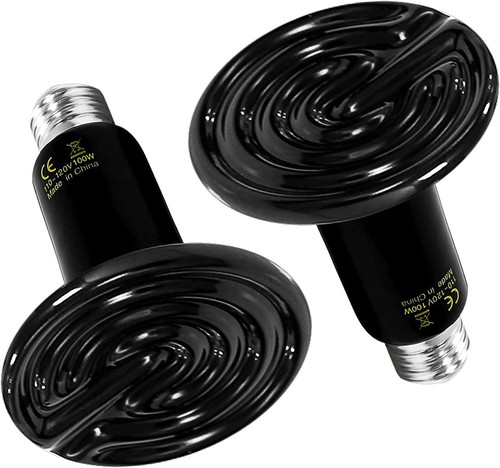 Reptile heat lamp
Halogen spot bulbs for basking zones. Measure surface temp with IR thermometer, not just air.
Reptile heat lamp
Halogen spot bulbs for basking zones. Measure surface temp with IR thermometer, not just air.
 Reptile enclosure
PVC/ABS for better heat retention; glass for visibility. Both work with correct heating setup.
Reptile enclosure
PVC/ABS for better heat retention; glass for visibility. Both work with correct heating setup.