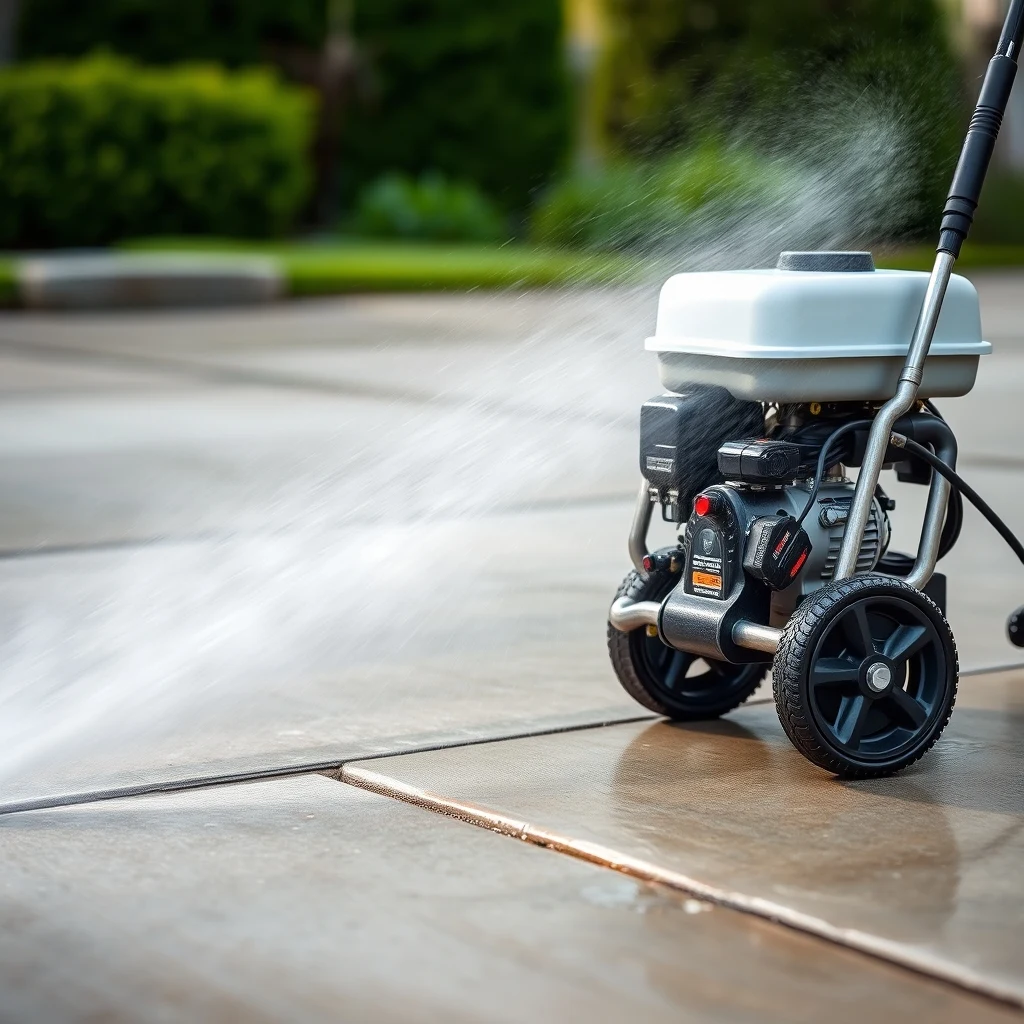
PSI, GPM, and cleaning units: the three numbers that matter
PSI (pounds per square inch) measures the force of the water stream at the nozzle. GPM (gallons per minute) measures the flow rate. Both are necessary — PSI without GPM is a concentrated stream that takes a long time to cover area; GPM without PSI is high volume at low pressure that can't dislodge stuck contaminants.
Cleaning units (CU) = PSI × GPM. This composite number gives you a single measure of cleaning productivity. A machine rated at 2,000 PSI and 2.0 GPM has 4,000 CU. A machine rated at 3,000 PSI and 1.2 GPM has 3,600 CU — less productive despite the higher PSI headline.
| Task | PSI Range | CU Needed |
|---|---|---|
| Car washing, outdoor furniture | 1,200–1,900 | 1,500–2,500 |
| Wood decks, vinyl siding, fences | 1,500–2,000 | 2,500–3,500 |
| Concrete driveways, patios | 2,000–3,000 | 3,000–5,000+ |
| Stripping paint, heavy stains | 2,500–3,500+ | 4,500+ |
| Commercial/contractor work | 3,000–5,000+ | 7,000+ |
Gas vs electric: the honest trade-offs
Electric pressure washers
Electric washers — both corded and battery-powered — are the right choice for most residential homeowners. The typical range is 1,500–2,300 PSI at 1.2–2.0 GPM, which is sufficient for vehicles, siding, decks, fences, and most patio surfaces. They're quieter, lighter, and require no fuel mixing or carburetor maintenance.
The practical limitations: they require a power outlet (or battery charge), and they typically can't match the GPM of a gas machine at equivalent PSI. If you're cleaning a large driveway frequently or tackling heavy staining, you'll notice the lower cleaning unit output. Battery-powered pressure washers are an emerging category — they provide cord freedom but currently top out at lower pressure than similarly priced corded electric models.
Gas pressure washers
Gas washers typically start at 2,700 PSI and can reach 4,000+ PSI for residential-grade models. The GPM is also higher — often 2.5–3.5 GPM — which means substantially higher cleaning units. They don't require a power outlet, which matters for cleaning detached garages, outbuildings, boats, and remote areas.
The trade-offs: they're heavier, louder, require oil and air filter maintenance, and need premixed fuel. They also require "winterizing" (running a pump protectant) before cold-weather storage to prevent cracked pump components. For homeowners who want to clean a large concrete driveway twice a year, the maintenance overhead of a gas washer may not be worth the extra power.
Shopping for pressure washers? Browse current eBay listings → (we earn a small commission; your price is unchanged).
Nozzle tips: the color code explained
Nozzle tips determine the spray angle, which directly affects pressure at the surface and the width of the cleaning path. Most washers ship with a set of color-coded quick-connect tips:
- Red (0 degrees): Zero-degree pencil stream. Maximum concentrated pressure. Used for removing thick rust, paint stripping, or dislodging debris in a specific small area. This nozzle can damage most surfaces at normal operating distance — use with extreme caution.
- Yellow (15 degrees): Narrow fan. High pressure for concrete, brick, and stone cleaning. Safe for hard surfaces but will damage wood and vinyl siding.
- Green (25 degrees): General purpose. The most common working nozzle — used for siding, fences, garden equipment, and most outdoor surfaces. Good balance of coverage and pressure.
- White (40 degrees): Wide fan, low pressure. Suitable for delicate surfaces: painted wood, window screens, outdoor furniture, vehicles.
- Black (65 degrees, low pressure): Soap/detergent injection nozzle. The wider angle and lower pressure allows the washer's downstream injector to draw detergent. Use this nozzle to apply soap, then switch to a cleaning nozzle to rinse.
The tip size (the orifice number stamped on the tip, e.g., 2505, 4004) encodes the angle (first two digits) and orifice size (last two digits). Orifice size determines flow rate and affects how much back-pressure the pump sees. Undersized orifices can cavitate or over-pressurize the pump; oversized orifices reduce working pressure below the machine's rating. For replacement tips, match the orifice size to your machine's GPM output — tip manufacturers publish sizing charts.
The surface cleaner attachment
A surface cleaner is a rotating dual-nozzle head enclosed in a shroud — typically 11–20 inches in diameter. It connects to the washer wand and spins two nozzles in a circle as you push it across flat surfaces (driveways, patios, sidewalks). The result is even coverage with no streaking, and approximately 3–4× the coverage speed compared to using a wand.
For anyone cleaning a concrete driveway larger than about 200–300 sq ft, a surface cleaner is worth the addition. Without one, cleaning concrete with a wand produces visible striping from uneven nozzle passes. The surface cleaner's spinning heads create an even pattern that eliminates stripes.
Key buying considerations for surface cleaners:
- PSI and GPM rating: Surface cleaners have a minimum required PSI and GPM to spin properly. A 2,000 PSI / 2.0 GPM electric washer needs a surface cleaner rated for that range — using a commercial-grade cleaner on a light-duty machine will result in poor performance or no spinning.
- Housing diameter: Larger diameter = faster coverage, but requires higher GPM to spin the heads. An 11-inch cleaner suits most residential electric washers; a 15–16 inch cleaner requires gas-grade GPM.
- Connector type: Most surface cleaners use a ¼-inch quick-connect to the wand. Verify the connection type before ordering.
Pump types and longevity
Most consumer-grade pressure washers use either axial cam or triplex pumps. Axial cam pumps are less expensive and found in most residential electric washers — they typically last several hundred hours of operation. Triplex pumps are heavier-duty, use oil bath lubrication, and are found in commercial and upper-tier residential gas models — they're serviceable and can last thousands of hours.
For homeowners using a pressure washer a few times per year, an axial cam pump is fine. If you're using it weekly or commercially, triplex is worth the additional cost. One practical note: running a pressure washer for more than two minutes without squeezing the trigger (leaving water in the pump at pressure) can damage seals on axial cam models — engage the trigger regularly or use a trigger lock to release pressure when not actively spraying.
Common mistakes
- Starting with the red tip: If you've never used a pressure washer on a surface before, start with the 25-degree green tip at the manufacturer's recommended standoff distance. Move to a narrower tip only if needed. Damage from the 0-degree tip happens fast.
- Pointing at windows: Pressure washers can crack single-pane windows and damage seals on double-pane glass at PSI over about 1,200. Keep nozzles away from window glass.
- Comparing PSI only: When comparing machines, calculate cleaning units (PSI × GPM), not just headline PSI. A unit with 2,000 PSI at 2.3 GPM outworks a 3,000 PSI unit at 1.2 GPM.
- Not winterizing gas models: In freezing climates, water left in a gas pump will crack pump housings. Run pump protectant at the end of the season — this is a 5-minute task that prevents expensive repairs.
Search eBay for these pressure washers
 Electric pressure washer
1,500–2,300 PSI covers most residential tasks. Check GPM alongside PSI for true comparison.
Electric pressure washer
1,500–2,300 PSI covers most residential tasks. Check GPM alongside PSI for true comparison.
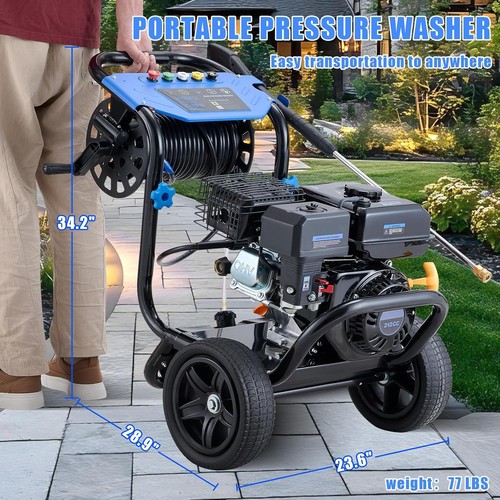 Gas pressure washer 3000 PSI
Higher GPM makes it faster for concrete and large areas. Verify pump type (axial vs triplex).
Gas pressure washer 3000 PSI
Higher GPM makes it faster for concrete and large areas. Verify pump type (axial vs triplex).
 Surface cleaner attachment
Match housing size to your machine's PSI/GPM range. Eliminates streaking on concrete.
Surface cleaner attachment
Match housing size to your machine's PSI/GPM range. Eliminates streaking on concrete.