What pour-over actually does — and why gear choices matter
Pour-over brewing passes hot water through ground coffee in a filter, letting gravity pull the liquid through into a vessel below. Unlike immersion brewing (French press, cold brew), the water passes through once and doesn't sit with the grounds. This means contact time is controlled by flow rate, which is controlled by grind size, filter resistance, and dripper geometry.
The gear you choose directly affects all three. A conical dripper with a large opening (like the V60) drains quickly and rewards an active, controlled pour. A flat-bottom dripper with multiple small holes drains at a more controlled rate and is more forgiving of pour speed. The Chemex's thick bonded filter dramatically slows flow and filters out oils. Each of these is a different cup.
Drippers: conical vs flat bottom vs Chemex
Conical drippers (V60, Origami, Kalita Wave cone)
Conical drippers funnel coffee toward a central drain. The V60 (Hario) is the most widely used: a 60-degree cone with a single large drain hole and spiral ribs that prevent the filter from sealing against the cone walls. Flow rate is fast — a typical 300ml pour takes 3–4 minutes total brew time. This speed makes the V60 responsive: grind finer to slow flow and increase extraction, grind coarser to speed it up. The tradeoff is that technique matters more. An uneven pour or wrong grind setting shows up in the cup.
V60 drippers come in plastic, ceramic, glass, copper, and stainless steel. Plastic is an underrated choice: it has lower thermal mass, which means it loses less heat to the dripper itself and maintains brew temperature better than ceramic, which requires pre-warming to avoid significant heat loss.
Flat-bottom drippers (Kalita Wave, Melodrip-style)
Flat-bottom drippers have a flat filter bed rather than a cone, typically with multiple small drain holes that regulate flow more evenly than a single large drain. The Kalita Wave uses a crimped waved filter that sits slightly off the dripper walls, promoting even saturation. Flow rate is more controlled and less sensitive to pour rate than the V60. Many brewers find flat-bottom drippers more consistent across different pouring styles and grind sizes.
Chemex
The Chemex is a glass hourglass vessel with the dripper and carafe integrated. It uses a proprietary thick bonded paper filter (3–4x thicker than standard filters) that removes essentially all oils and very fine particles. The result is a distinctly clean, bright cup with no body or sediment. Brew time is longer — typically 4–6 minutes for 500ml — because the thick filter resists flow. Grind needs to be correspondingly coarser than V60 to prevent over-extraction. The Chemex is the right choice if you specifically want clarity and cleanness over body and texture.
| Dripper | Shape | Flow rate | Cup character | Technique sensitivity |
|---|---|---|---|---|
| Hario V60 | Conical | Fast | Bright, complex | High |
| Kalita Wave | Flat bottom | Medium-controlled | Sweet, balanced | Medium |
| Chemex | Conical (integrated) | Slow | Clean, bright, no body | Medium |
| Origami | Conical or flat (interchangeable) | Variable | Varies by filter | Medium |
Gooseneck kettles: why the spout shape matters
A gooseneck kettle has a long, curved, narrow spout that lets you pour a thin, controlled stream from a specific point. This precision matters for pour-over because even saturation of the coffee bed requires placing water carefully — not dumping it in from above at high volume.
A standard kettle with a wide spout pours in high-volume blasts that disturb the coffee bed and create uneven channels. With a gooseneck, you can pour slowly in concentric circles to saturate the bed evenly, maintaining consistent extraction across the entire filter.
Stovetop vs electric gooseneck
Stovetop gooseneck kettles are lighter and cheaper. You heat them on any burner and use a thermometer (probe or clip-on) to hit target temperature. They work well but require more attention.
Electric gooseneck kettles with variable temperature control let you set a target temperature and hold it — the kettle maintains temperature for a set period (typically 30–60 minutes). This is more convenient and more consistent. For light roast filter coffee, brewing temperature matters: most recipes call for 92–96°C (198–205°F). Dark roasts are more forgiving, but temperature control helps dial in extraction for any coffee.
Temperature hold is the feature to prioritize in an electric gooseneck. Without it, the kettle reaches temperature and immediately starts cooling — you have a narrow window to brew. With hold, you can grind while the kettle sits at temperature.
Shopping for pour-over gear? Browse current eBay listings → (we earn a small commission; your price is unchanged).
Filters: paper vs metal vs cloth
Paper filters
Paper filters remove oils and very fine particles from the brew. The result is a clean cup without the slight haziness or body that oils contribute. White (bleached) and natural (unbleached) paper filters perform similarly in the cup; some brewers detect a slight papery flavor from unbleached filters when not pre-rinsed. Pre-rinsing (pouring hot water through the dry filter before adding coffee) eliminates this and also pre-warms the dripper.
Paper filter thickness affects flow rate. The Chemex's thick filter is a deliberate design choice for cleanness. Standard V60 filters are thinner and faster. Some third-party filters are slightly thicker or thinner than the originals, which can affect your brew time — worth checking if you switch brands.
Metal filters
Metal mesh filters (typically stainless) let oils and very fine particles pass through. The cup has more body, a slight haziness, and a different texture than paper-filtered coffee. Some brewers prefer this richness; others find it muddy compared to paper. Metal filters are reusable and eliminate filter cost, but require more thorough cleaning to prevent oil rancidity buildup over time.
Cloth filters
Cloth (flannel or hemp) filters occupy the middle ground: they pass some oils but catch fines. The result is a cup with more body than paper but less sediment than metal. Cloth filters require more maintenance — they must be kept wet between uses (store in water in the fridge) and replaced periodically. They're less common but have dedicated adherents, particularly for medium-roast filter coffee.
Brew ratios: the number that controls strength
Pour-over coffee is typically brewed at a coffee-to-water ratio of 1:15 to 1:17 by weight. This means:
- For 300ml of water: 18–20g of coffee (1:15–1:17)
- For 500ml of water: 29–33g of coffee
- For a Chemex 6-cup (750ml): 44–50g of coffee
Stronger preference means going to 1:14 or 1:13; weaker means 1:18 or beyond. Start at 1:16 and adjust to taste. Ratio controls strength; grind size controls extraction (bright/sour to balanced to bitter). These are two separate variables — adjust one at a time when dialing in.
The bloom step: what it does
Most pour-over recipes start with a bloom: adding 2–3x the coffee weight in water (so 40–60ml for 20g of coffee), then waiting 30–45 seconds before continuing. This step degasses the coffee — freshly roasted coffee contains CO₂ that, if not released, forms bubbles that prevent even saturation of the grounds. The bloom releases that gas before the main pour.
The bloom matters most with fresh coffee (roasted within the last 2–3 weeks) that contains significant CO₂. With older coffee, the bloom is less critical but still useful for even pre-saturation. If you see significant bubbling during bloom, your coffee is fresh and the step is worthwhile.
What to buy first
The minimum pour-over setup is a dripper, filters, a scale, and any kettle with a thermometer. You can pour-over with a standard kettle if you pour carefully — a gooseneck is a significant improvement but not a requirement to start.
If you're buying your first pour-over setup:
- A plastic V60 size 02 covers 1–4 cups and is forgiving with temperature
- The matching paper filters are inexpensive and widely available
- An electric gooseneck kettle with temperature hold adds the most convenience for the price
- A kitchen scale accurate to 0.1g (a coffee scale with a timer is ideal but not required)
The Chemex is a strong choice if you consistently brew for 3–6 people and want a server that's also your brewing vessel, or if cup clarity is your priority over body. Flat-bottom drippers are a good choice if you want more consistent results with less technique sensitivity.
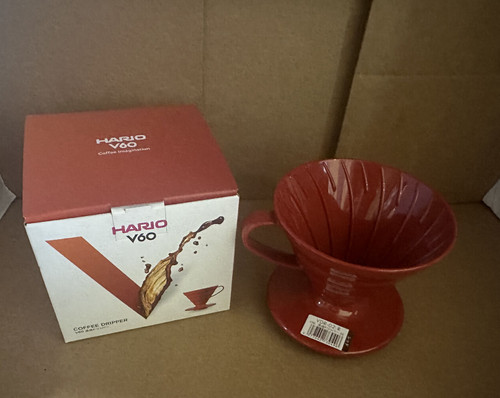 V60 dripper
 Gooseneck kettle
 Chemex coffee maker