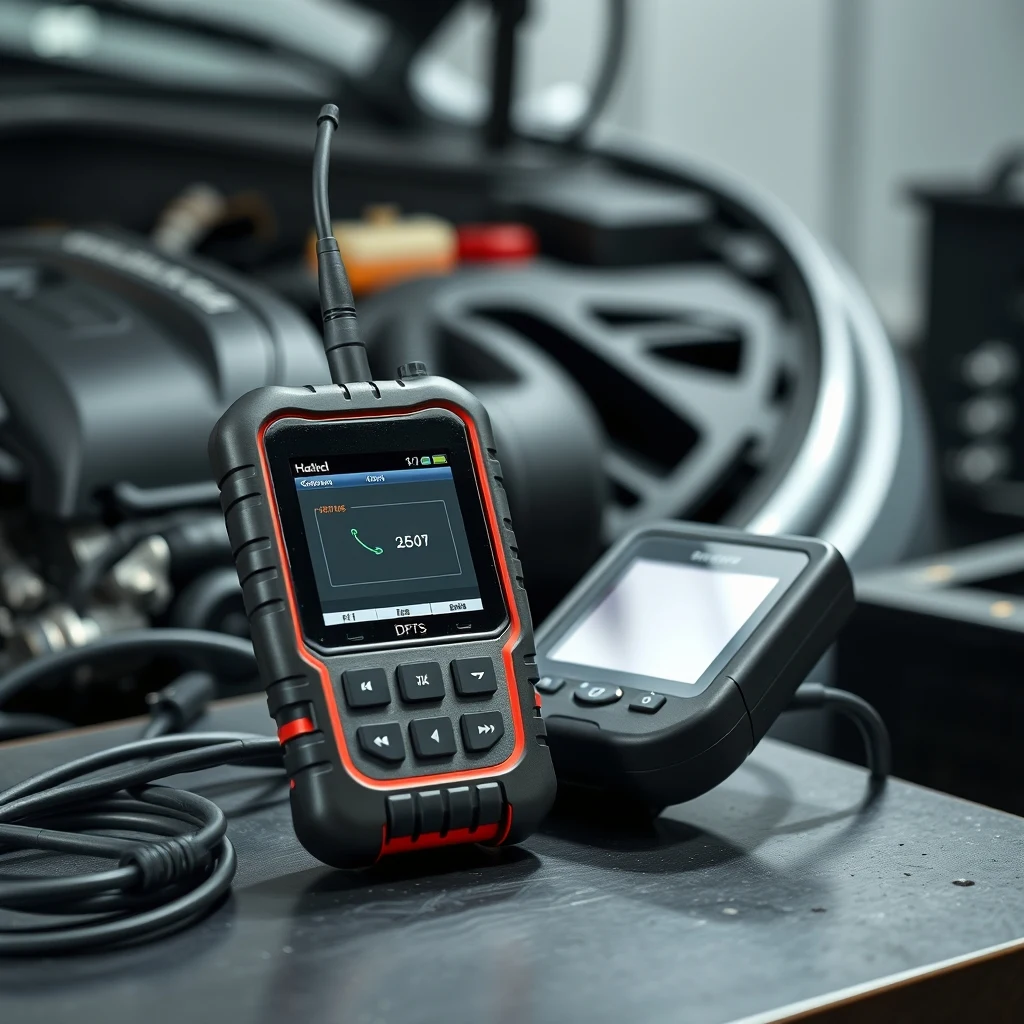
The four tiers of OBD2 scanners
OBD2 scanner marketing is confusing because brands describe capability differently. In practice, tools fall into four tiers based on what they can actually do with the vehicle's ECU.
| Tier | Reads Generic Codes | ABS/SRS/Body | Live Data | Bidirectional |
|---|---|---|---|---|
| Basic code reader | Yes | No | Limited | No |
| Enhanced scanner | Yes | Yes (read) | Full streams | No |
| Bluetooth adapter + app | Yes | Varies by app | Full streams | Rare |
| Bidirectional scan tool | Yes | Yes (read + clear) | Full streams | Yes |
Basic code readers: when they're enough
A basic code reader reads and clears generic powertrain (P-code) faults and checks I/M readiness monitors — the flags a state emissions test reads before approving your vehicle. That's it. No live data beyond a few basic PIDs, no ABS codes, no body module access.
This tier is appropriate if your check-engine light came on, you want to know what code is stored, and you may or may not clear it before driving to the shop. Basic readers do that job for $25–$60 and are good enough for the majority of "what is this light?" moments.
They are not appropriate if you're diagnosing a specific problem, monitoring engine health during a drive, or doing any service procedure that requires commanding the vehicle.
Enhanced scanners with ABS/SRS coverage
Enhanced scanners add manufacturer-specific code coverage: ABS, airbag/SRS, TPMS, transmission, and body control modules. On a basic code reader, an ABS fault simply doesn't appear — the scanner can't access that module. An enhanced scanner reads it, displays the code, and can clear it after repair.
Enhanced scanners also typically include full live data streaming: real-time values for every sensor the ECU exposes, logged over time and viewable as graphs. This is where diagnostic work actually happens. Comparing fuel trim values at idle vs. load, watching O2 sensor switching frequency, monitoring transmission temp under tow — these all require live data.
This tier runs roughly $100–$300 and covers most DIY service needs that don't involve commanding the vehicle.
Bluetooth adapters and phone apps
A Bluetooth OBD2 adapter — a dongle that plugs into the port and communicates wirelessly with an app — can replicate much of what an enhanced scanner does, often at lower cost. The hardware dongle is typically $25–$100; apps like OBD Fusion, Car Scanner, and Torque Pro are $5–$10 with broader capability than many handheld scanners at similar prices.
The trade-offs are real: iOS compatibility requires a Wi-Fi adapter or a compatible Bluetooth 4.0 LE adapter (older Bluetooth profiles don't work with iOS). ABS/SRS coverage depends on the app, not just the adapter. Some extended PID support requires vehicle-specific profiles. And for garage use, pulling up an app on a phone while working under a car is less convenient than a dedicated handheld.
The Bluetooth approach makes most sense if you want live data logging and graphing (the app experience is genuinely better than most handheld displays), or if you're primarily monitoring one known vehicle and can verify the app's specific coverage.
Shopping for OBD2 scanners? Browse current eBay listings → (we earn a small commission; your price is unchanged).
Bidirectional scan tools: what they actually do
Bidirectional means the tool can send commands to the vehicle's ECU — not just read data, but actively trigger components. This capability unlocks procedures that are otherwise impossible without a shop tool or require bleeding brake fluid in an inefficient way.
Specific bidirectional functions that matter for DIY work:
- ABS pump actuation — required to properly bleed brakes on vehicles with ABS units that trap air in the modulator block
- Throttle body relearn — necessary after cleaning a throttle body on many modern vehicles; without it, idle quality suffers
- TPMS relearn — forces the vehicle to accept new sensor IDs after a tire or sensor swap
- Injector balance / cut test — deactivates individual injectors to identify a misfiring cylinder
- EVAP system actuation — tests purge valves and vent solenoids to diagnose evaporative emission faults
- EGR valve test — opens the valve to verify operation and flow
Bidirectional tools typically start around $300 for basic coverage and extend into $1,000+ for professional-grade tools with broad vehicle coverage, ADAS calibration, and programming capabilities. Annual subscription updates are common at this tier and necessary to maintain coverage as new model years release.
Vehicle coverage matters as much as features
A scanner rated for "all OBD2 vehicles" covers the generic protocol that's standardized across all 1996+ vehicles sold in the US. That gets you powertrain codes. Manufacturer-specific codes, ABS, SRS, and bidirectional functions require proprietary access protocols that vary by manufacturer.
Coverage for Toyota, Honda, Ford, GM, BMW, and other major brands varies significantly across scanner brands and price points. Before buying an enhanced or bidirectional tool, verify explicitly that the specific makes and model years you own are covered. Most brands publish compatibility lists.
What to look for in specs
- Protocol support — confirm your vehicle's protocol (CAN, ISO, VPW/PWM for older vehicles)
- System coverage — ABS, SRS, transmission explicitly listed
- Bidirectional functions — listed by name, not just "bidirectional capable"
- Update policy — free lifetime updates vs annual subscription; some tools are orphaned
- Display and interface — matters for live data; a small screen with no graphing is frustrating for monitoring
Shop OBD2 scanners on eBay
Current listings from code readers to professional bidirectional tools. We earn a small commission on qualifying sales; your price is the same. Full disclosure.
 OBD2 scanner
General handheld scanners. Reads and clears powertrain codes, I/M monitors.
OBD2 scanner
General handheld scanners. Reads and clears powertrain codes, I/M monitors.
 Bluetooth OBD2 scanner
Dongle + phone app. Great for live data logging. Verify iOS/Android compatibility.
Car code reader
Basic entry-level. Read and clear check-engine lights. No live data.
Bluetooth OBD2 scanner
Dongle + phone app. Great for live data logging. Verify iOS/Android compatibility.
Car code reader
Basic entry-level. Read and clear check-engine lights. No live data.
 Bidirectional scan tool
Commands vehicle components. Required for ABS bleeding, TPMS relearn, throttle resets.
Bidirectional scan tool
Commands vehicle components. Required for ABS bleeding, TPMS relearn, throttle resets.
 Professional OBD2 scanner
Full-system, bidirectional, ADAS coverage. Professional tier — verify update costs.
Professional OBD2 scanner
Full-system, bidirectional, ADAS coverage. Professional tier — verify update costs.