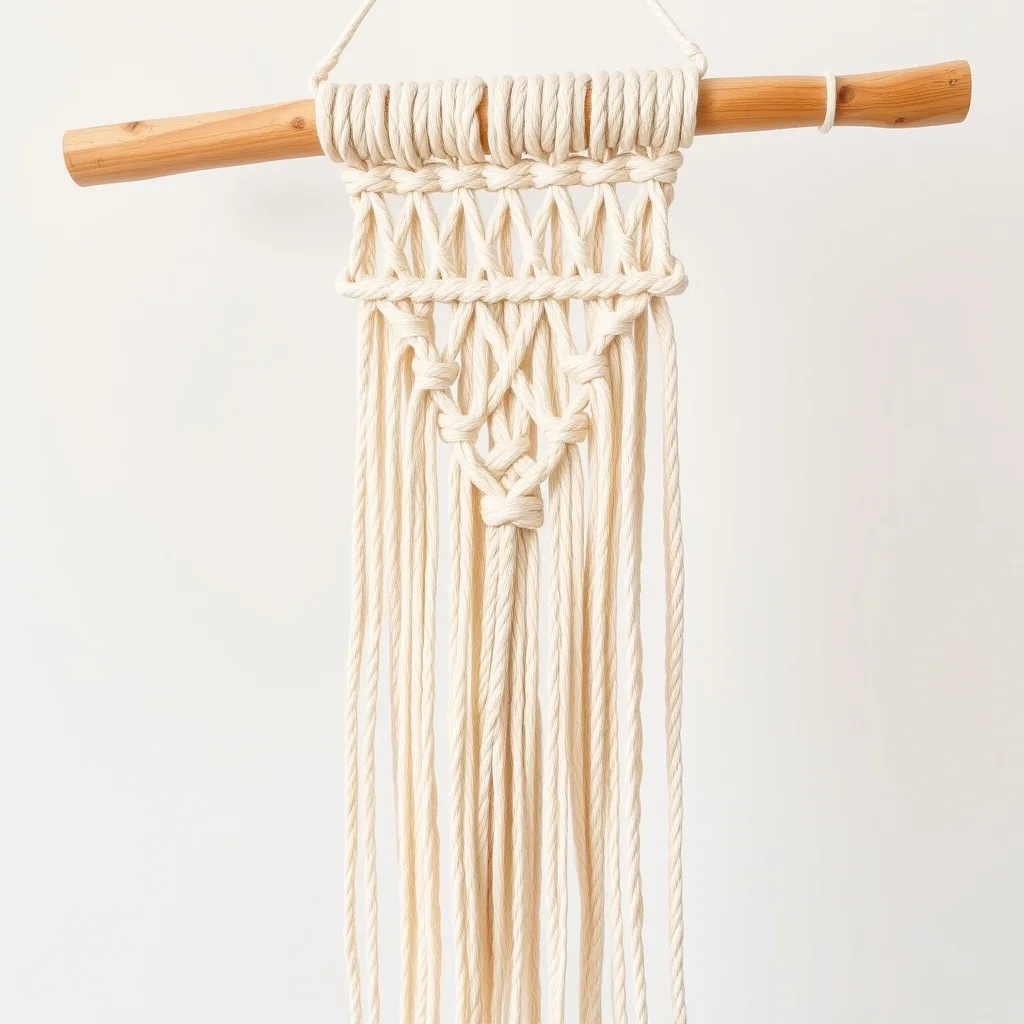
Cord construction: single-strand, 3-ply, and braided
Macrame cord comes in three main constructions, and they behave quite differently under the same knots:
Single-strand (single twist) is a loosely twisted cord made from many individual fibers. It's the most popular choice for decorative macrame because it brushes out easily into soft, fluffy fringe. The individual strands separate cleanly with a stiff brush or pet comb. Most wall hangings and plant hangers call for single-strand cord when fringe is part of the design.
3-ply twisted is three strands of single-strand cord twisted together. It holds knots tightly, has more structure, and creates a more defined knot surface. It does not brush out easily — the plies resist separation. Use 3-ply for bags, belts, keychains, or any project where durability and defined structure matter more than fringe softness.
Braided cord has the most structure and is the hardest to work with for beginners. Knots sit differently on braided cord, and the rigid construction means mistakes are more visible. Braided rope is more common in functional macrame (hammocks, furniture) than decorative wall pieces.
| Construction | Best for | Brushes out? | Structure |
|---|---|---|---|
| Single-strand | Wall hangings, fringe, tapestries | Yes — easily | Soft, flexible |
| 3-ply twisted | Bags, plant hangers (structured), keychains | Partially | Medium, defined |
| Braided | Furniture, hammocks, functional rope work | No | Firm, rigid |
Thickness: matching cord diameter to project type
Cord thickness is measured in millimeters. For macrame, the practical range for most projects is 2mm to 6mm. Here is how to match thickness to project:
- 2–3mm: Fine work — jewelry, small wall hangings, dreamcatchers, delicate plant hangers. Knots are tight and detailed. Good for patterns with lots of small square knots and half hitches where you want visible texture at small scale.
- 4mm: The most versatile and widely recommended starting thickness. Suitable for medium wall hangings, standard plant hangers, table runners. Knots read clearly in photos. 4mm is the default for most beginner tutorials.
- 5mm: Larger wall hangings, boho-style pieces with open patterns and wide spacing. Produces bold, chunky knots. Requires more cord per project and makes fine detailed patterns look crowded.
- 6mm and above: Statement pieces, large-scale installations, furniture. Not recommended for beginners — the cord is stiff and the scale requires a lot of working space and material.
Material: why cotton is the standard
100% natural cotton is the dominant macrame material for decorative work. It's soft, consistent in diameter, takes dye well, and — crucially — the fibers brush out into clean fringe without tangling badly. Recycled cotton cord uses post-industrial fiber and typically costs a bit less; the quality varies by supplier.
Jute is a natural fiber sometimes sold as macrame cord. It is rougher, harder on the hands during long knotting sessions, and does not brush out as cleanly as cotton. It works for rustic, outdoor-appropriate pieces where a natural brown texture is the goal. It is not suitable for fine decorative work.
Polypropylene and nylon cords are sold as macrame cord on marketplace sites. Avoid them for decorative work — the fibers are slippery, knots loosen over time, and they do not brush out. They have applications in outdoor functional rope work, not interior macrame.
Shopping for macrame cord? Browse current eBay listings → (we earn a small commission; your price is unchanged).
Dowels: size, wood type, and diameter
Most wall hangings hang from a wooden dowel. The key specs:
Length: The dowel should extend 2–4 inches past each side of the finished hanging width. A hanging meant to be 18 inches wide typically uses a 22–24 inch dowel. This leaves room for mounting hardware and creates a visual frame.
Diameter: 12–18mm (roughly 1/2 inch to 3/4 inch) handles most wall hanging weights without visible bowing. Larger pieces with thick cord (5–6mm) need the heavier end of this range. Thin craft dowels (6mm) will flex noticeably under a substantial piece.
Wood type: Birch and beech are the standard — both are available in consistent diameters, take finish well if desired, and are widely available. Driftwood and branches are a popular alternative for a more organic look; the irregular diameter makes attaching cord less predictable but the aesthetic can justify it for the right project.
Rings: sizes and applications
Macrame rings are used as hanging points (at the top of plant hangers), decorative elements within pieces, and structural anchors. The two materials are wood and metal:
Wood rings blend with the natural fiber aesthetic. They are lighter and typically unfinished, which absorbs any cord tension without slipping. Use for decorative pieces where the ring will be visible.
Metal rings (typically steel or brass-plated) are stronger and better for functional pieces where weight is a concern — hanging planters with heavy pots, for instance. A 3–4 inch metal ring at the top of a plant hanger is the standard for anything that will hold a ceramic pot with soil.
Common ring sizes: 3–4 inches for plant hanger tops, 1–2 inches for decorative elements, 6–10 inches for large statement rings that become the focal point of a wall piece.
Evaluating beginner kits
Kits vary enormously in quality. The checklist:
- Check the cord specification. The kit should list cord thickness (look for 3mm or 4mm) and material (look for cotton). Avoid kits that don't specify material or list "natural fiber" without naming it.
- Check the cord quantity. A wall hanging project typically needs 50–100 meters of cord. Kits with less than 50m for a wall hanging are often not enough to complete the project as shown.
- Check what hardware is included. A dowel and/or rings appropriate for the project, and ideally a comb for brushing fringe.
- Avoid kits where the project shown uses jute or synthetic cord. The finished look doesn't transfer to cotton, and the techniques aren't the same.
How much cord to buy for your first project
A standard 18×24 inch wall hanging in 4mm single-strand cord typically requires 80–120 meters. For a plant hanger (about 45 inches finished length), 50–70 meters is usually sufficient. Buy a bit more than you think you need — most beginners encounter practice knots, redos, and the desire to add fringe length.
 Macrame cord 4mm
 Macrame kit
 Wooden dowels
 Macrame rings