Why temperature control matters — and when it doesn't
Water temperature affects extraction in coffee and infusion in tea. The differences are measurable and affect the final cup significantly for some beverages, less so for others.
For black tea and most coffee methods: water at or near boiling (95–100°C / 203–212°F) is appropriate. A basic kettle that boils and shuts off is sufficient. There is no real benefit to precise temperature control for this use case.
For green tea: brewing at full boiling temperature produces bitter, astringent results because heat extracts tannins and chlorophyll aggressively. Optimal brewing temperature for most green teas is 70–80°C (158–176°F). Without temperature control, you need to let boiled water cool to temperature — which takes time and requires a thermometer to verify.
For white and oolong teas: 75–90°C (167–194°F) depending on the specific tea. Same issue as green tea, slightly wider window.
For pour-over and specialty coffee: recipes typically specify 92–96°C (198–205°F) — just off the boil. The difference between 93°C and 100°C affects extraction for light roast coffees, though the effect is less pronounced with darker roasts.
The honest assessment: if you drink primarily black tea, French press, or drip coffee, a basic kettle is adequate. If you drink green tea, white tea, pour-over specialty coffee, or multiple beverage types, variable temperature control earns its cost in convenience and consistency.
Variable temperature vs preset temperatures
Electric kettles with temperature control come in two configurations:
Variable temperature (dial or touchpad)
Set any temperature in the range — typically 1°C or 5°C increments. The kettle heats to the target and stops. The most flexible option and preferred if you brew multiple beverages at different temperatures. Typically found on mid-range and premium kettles.
Preset temperature buttons
Fixed options — common configurations include 70°C, 80°C, 90°C, 95°C, and 100°C, corresponding to green tea, oolong, white tea, coffee, and boiling. Less flexible than variable but covers the most common use cases. Usually found on entry-level temperature-control models.
| Beverage | Optimal temp range | Notes |
|---|---|---|
| Black tea | 95–100°C (203–212°F) | Near or at boil; least temperature-sensitive |
| French press coffee | 93–96°C (199–205°F) | Off the boil; dark roast tolerates full boil |
| Pour-over coffee | 92–96°C (198–205°F) | Light roast more sensitive to temperature |
| Oolong tea | 85–92°C (185–198°F) | Varies significantly by oxidation level |
| White tea | 75–85°C (167–185°F) | Delicate; oversteeping at high temp is harsh |
| Green tea | 70–80°C (158–176°F) | Most sensitive; full boil produces bitterness |
Temperature hold: the practical feature most people overlook
Temperature hold keeps water at the target temperature for 30–60 minutes after reaching it. Without hold, the kettle reaches temperature and immediately starts cooling. On a cold morning, water can drop 5–10°C within two minutes of reaching target — by the time you've ground your coffee, the water may already be out of range.
Hold solves this. You turn the kettle on before grinding; it waits at temperature until you're ready. This is the feature that most separates mid-range temperature-control kettles from entry-level ones, and it makes a real difference in daily use workflow.
Some kettles offer keep-warm without a fixed hold time (they maintain temperature indefinitely until switched off). Others have a fixed hold period — typically 30 or 60 minutes — after which they shut off automatically. Both work; indefinite hold is more convenient for slow morning routines.
Gooseneck vs standard spout
This is a binary choice with a clear use-case split:
Standard spout: Fast, high-volume pour. Good for filling French press, instant noodles, or any application where you're pouring a large volume and don't need flow control. The spout delivers water quickly but imprecisely.
Gooseneck spout: A long, curved, narrow spout that restricts flow rate and allows precise placement of the water stream. Required for pour-over coffee brewing, where controlled, circular pours onto the coffee bed determine extraction evenness. Also useful for matcha preparation, where controlled pouring prevents splashing.
The tradeoff: gooseneck kettles pour more slowly — by design. Filling a large French press takes longer than with a standard spout. The pour rate with a gooseneck is typically 100–200ml/minute depending on tilt angle; a standard spout pours 400–600ml/minute or faster.
Shopping for an electric kettle? Browse current eBay listings → (we earn a small commission; your price is unchanged).
Interior material: stainless vs glass
The interior material is the surface that contacts your water during boiling. The main options:
Stainless steel interior
Food-grade stainless (18/8 or 304 stainless) is the standard for mid-range and premium kettles. It's durable, doesn't leach into water, and handles repeated heating cycles well. Cheap kettles sometimes use lower-grade steel or plated interiors — if a stainless kettle at a very low price point has a metallic taste, it's typically a material quality issue rather than stainless as a category.
Glass interior (borosilicate)
Glass is chemically inert and adds no taste to water. The visual bonus of watching water boil is real for some users. Borosilicate glass handles thermal cycling well; soda-lime glass does not. Budget glass kettles often use soda-lime, which can crack. Most glass kettles have plastic bases and handles — the element housing is typically a different material than the carafe body.
Plastic-free claims
Some kettles are marketed as "BPA-free" or with minimal plastic contact paths. If you prefer reduced plastic contact with boiling water, a stainless interior with a stainless lid is the most straightforward option. The base, button housing, and external casing are almost always some form of plastic regardless of kettle material.
Capacity: matching to your use
Common electric kettle capacities: 1.0L, 1.5L, and 1.7L. A few specialty models go smaller (0.6–0.8L, often gooseneck) or larger (1.8–2.0L).
For single-person pour-over use: a 0.6–1.0L capacity is adequate and heats faster. A 600ml kettle heats to temperature faster than a 1.5L kettle because there's less water to heat.
For households of 2–4 or for French press use: 1.5L is the practical sweet spot. You can fill a large French press (1000ml) plus have water remaining for tea.
For households or office use: 1.7L maximum capacity in most standard kettles. Larger capacity means longer heat time but fewer re-fills.
Features that matter less than advertised
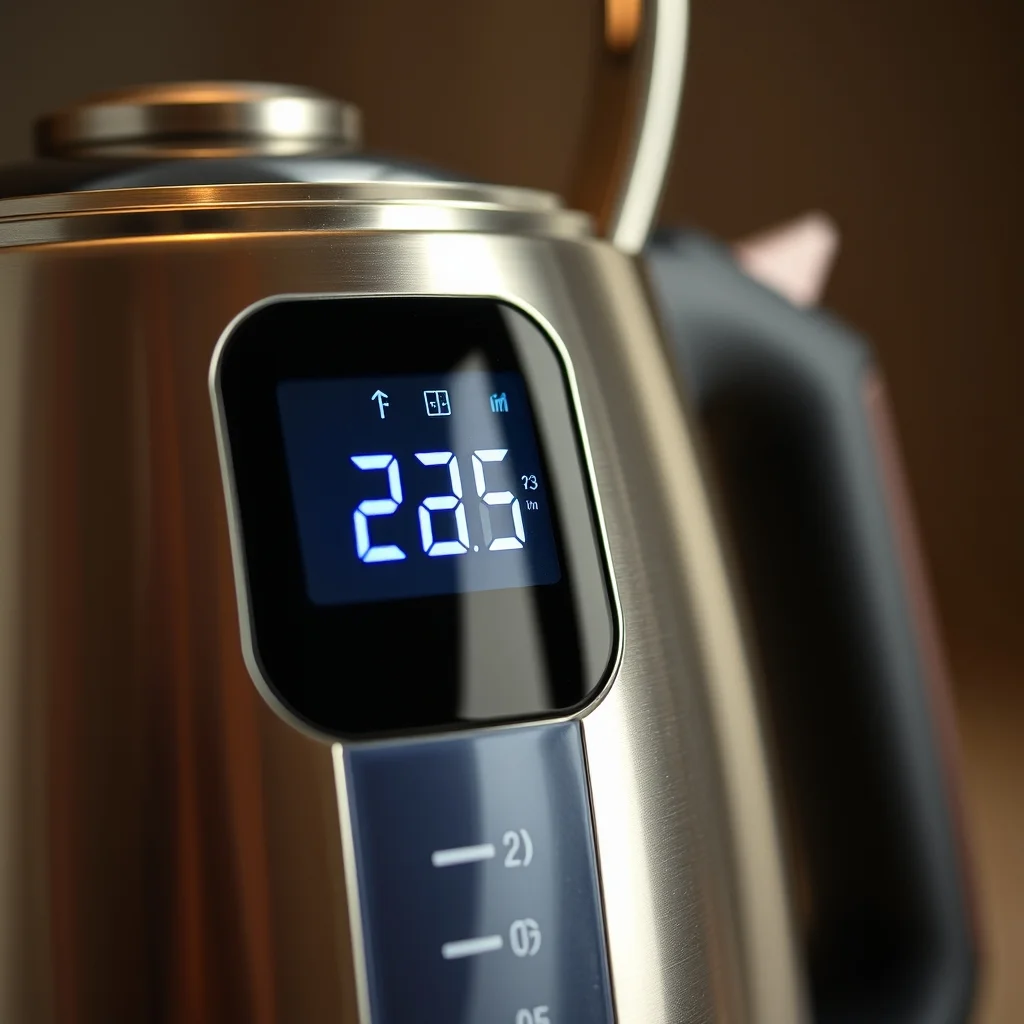
LCD temperature display: Useful to confirm you've set the right temperature, but the displayed value and the actual water temperature can differ by a few degrees. For specialty brewing, verify the actual water temperature with a probe thermometer during the first few uses.
Brew timer / countdown: Some kettles include countdown timers for specific teas. Convenient but not essential — a separate timer or phone works just as well.
Weight (for gooseneck): Heavier gooseneck kettles can be tiring to use for extended pour sessions. If you frequently brew larger pour-overs (600ml+), check the weight of the full kettle before buying.
The honest bottom line
For general household use (black tea, instant coffee, quick boiling): any reliable 1.5L electric kettle works. Basic models in the $25–$50 range are durable and functional. Don't overpay for features you won't use.
For pour-over coffee: a gooseneck kettle with variable temperature control and a hold function is genuinely useful and worth the $70–$120 investment. The gooseneck is not aesthetic — it's functional for the brewing technique.
For green tea or multiple tea types: variable temperature control is worth adding even on a standard-spout kettle. The $20–$40 premium over a basic kettle saves time (no waiting for water to cool to temperature) and produces consistently better results.
Search eBay for electric kettles
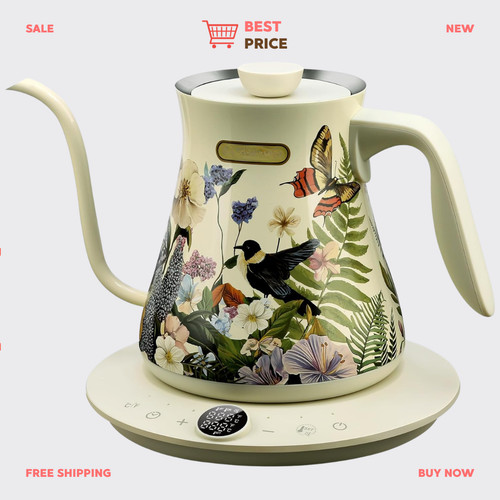 Gooseneck electric kettle
Required for pour-over. Look for temperature control + hold in the same unit.
Gooseneck electric kettle
Required for pour-over. Look for temperature control + hold in the same unit.
 Variable temperature kettle
Essential for green tea. Check for hold function; preset buttons vs dial.
Variable temperature kettle
Essential for green tea. Check for hold function; preset buttons vs dial.
 Glass electric kettle
Borosilicate glass, chemically neutral. Verify borosilicate — not soda-lime.
Glass electric kettle
Borosilicate glass, chemically neutral. Verify borosilicate — not soda-lime.