How to measure your dog for a crate
The universal crate sizing formula: measure your dog from the tip of the nose to the base of the tail (not the tip of the tail — the base). Add 2–4 inches. That is the minimum length of the crate floor. Then measure from the floor to the top of the head when the dog is standing, and add 2–4 inches. That is the minimum interior height.
The crate should be large enough for the dog to stand without hunching, turn around completely, and lie on their side with legs extended. It should not be so large that a puppy in house training can eliminate in one corner and sleep comfortably in another — that defeats the purpose of crate training for housebreaking. A divider panel solves this: buy the adult-size crate, block off the back portion with the divider, and expand it as the dog grows.
| Dog length (nose to tail base) | Crate length to look for | Typical size label |
|---|---|---|
| Up to 18" | 22"–24" | Small / XS |
| 18"–22" | 24"–30" | Small–Medium |
| 22"–28" | 30"–36" | Medium–Large |
| 28"–36" | 36"–42" | Large–XL |
| 36"–44" | 42"–48" | XL–XXL |
Wire crates: the versatile home-use standard
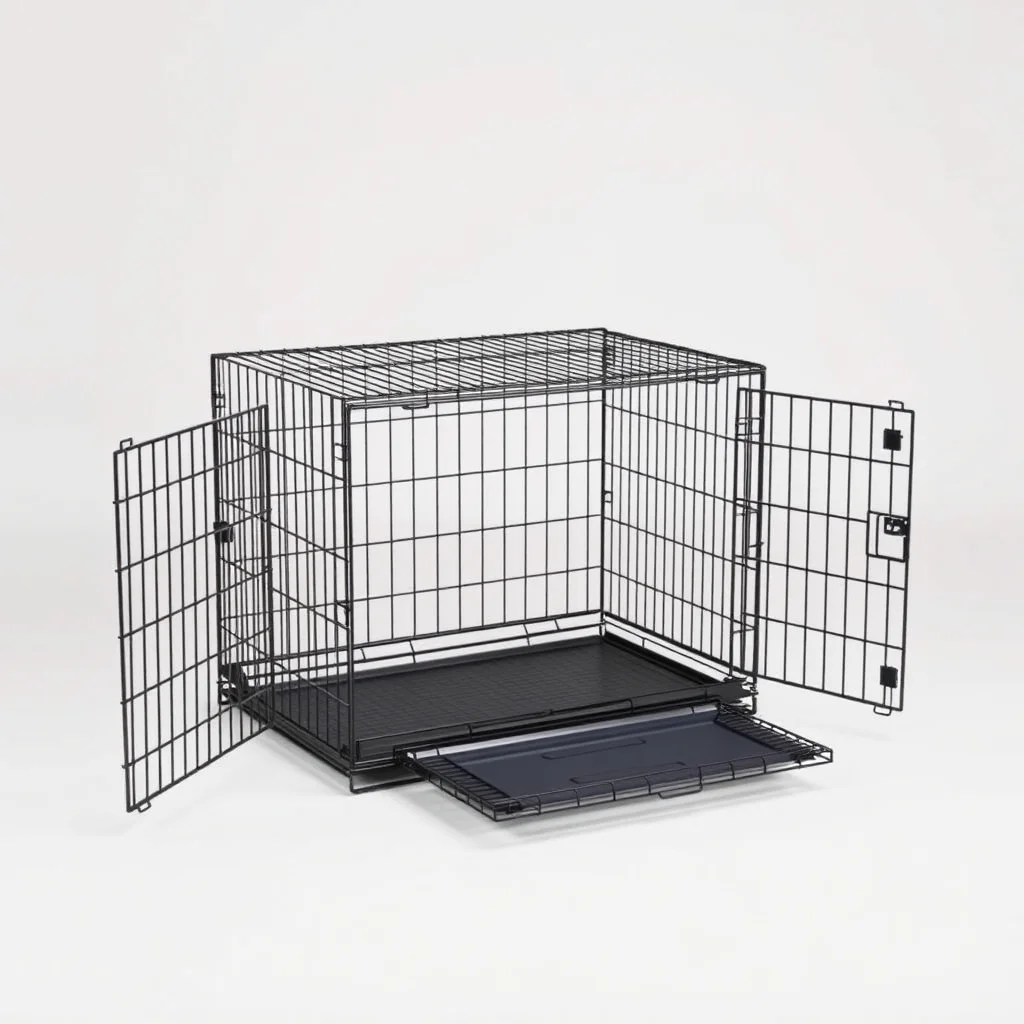
Wire crates — folding metal mesh panels assembled into a box — are the most common choice for home use, and they're genuinely the best choice for most dogs in most situations. They offer excellent ventilation from all four sides and the top (critical for dogs that run warm or live in warm climates), clear sightlines that reduce anxiety in socially-oriented dogs, and a collapsible design that stores flat or moves easily between rooms.
The key construction variable is wire gauge. Budget wire crates use 12–14 gauge wire; mid-range and better crates use 10–12 gauge. For small dogs or calm, non-destructive medium dogs, 14 gauge is adequate. For larger dogs or any dog that pushes against the crate, 10–12 gauge holds its shape significantly better. Look for double-door designs (one on the short end, one on the long side) — the side door is much easier for positioning the crate against a wall.
Most wire crates include a removable plastic tray that slides out for cleaning, which is genuinely useful. Check that the tray fits flush without gaps the dog can catch nails in; cheap trays often warp.
What wire crates are not good for
Wire crates are not suitable for airline cargo holds (most airlines require plastic ventilated carriers for checked pets). They're also not ideal for escape artists — a determined or anxious dog can bend wire panels or pop latches. And they don't blend into home décor; if that matters, furniture crates are worth considering.
Plastic crates: airline travel and den-seeking dogs
Hard-sided plastic carriers — the classic "Vari Kennel" style — are the standard for airline cargo travel and have been for decades. IATA (International Air Transport Association) sets minimum specifications for airline-approved pet carriers: rigid construction, ventilation on at least two sides, leak-proof floor, and metal hardware (no plastic bolts on the door, which some budget carriers use). Before flying, verify that your specific crate meets the airline's current approved carrier list — requirements vary by airline and change periodically.
Beyond travel, plastic crates suit dogs that prefer a more enclosed, den-like environment. The reduced ventilation and darker interior can be calming for anxious dogs, particularly those crated during thunderstorms or fireworks. Some trainers recommend plastic crates specifically during the initial crate-introduction phase because the partial enclosure reduces external stimulation.
Downsides: harder to clean than wire (fewer flat surfaces), heavier for the same interior volume, and they don't fold. For home-only use without a specific preference for the enclosed feel, wire is almost always more practical.
Heavy-duty crates: for escape artists and working dogs
A small subset of dogs destroy or escape standard crates — either because of extreme separation anxiety, high prey drive combined with external stimulation (seeing a squirrel through the window while crated alone), or simply because they figured out how to pop the latch and practiced it until it became a habit. These dogs need a different category of containment.
Shopping for dog crates? Browse current eBay listings → (we earn a small commission; your price is unchanged).
Heavy-duty crates use welded steel construction rather than folding wire panels. The welds at each wire intersection prevent the flexing and separation that allows standard crates to be forced open. Doors typically feature multiple locking points and stainless or case-hardened steel mechanisms that resist manipulation. Brands like Impact and ProSelect are commonly referenced in this category; quality varies significantly among generics, so look specifically for welded-not-folded construction and multiple door locks.
These crates are heavy (a 48" unit can weigh 80–120 lbs), expensive, and significantly more work to move. They're not for the average calm dog — they're for the specific problem of a dog that has already demonstrated it can escape or damage a standard wire or plastic crate.
Furniture crates: aesthetic integration with tradeoffs
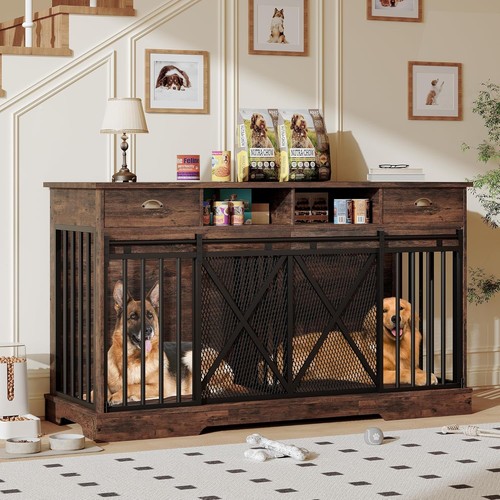
Furniture-style crates — wood-framed with mesh or slatted sides, designed to serve double duty as end tables or TV console stands — have become popular for living rooms and open-plan spaces where a wire cage is visually jarring. They work well for a specific use case: a calm, crate-trained dog in a low-traffic area of the home.
The tradeoffs are real: wood is harder to clean than metal or plastic, ventilation is typically reduced compared to wire, and the wood frame offers essentially no resistance to a dog that decides to chew or push against the structure. Furniture crates are not suitable for use unsupervised with young or anxious dogs, and not for escape artists under any circumstances.
For the specific use case they're designed for — a quiet nap space in the corner of a living room for a calm adult dog — they're a reasonable choice. Don't buy one thinking it will contain a dog that the wire crate couldn't hold.
Travel-specific considerations
In the car
Wire crates can be secured in cargo areas of SUVs or station wagons with tie-downs or purpose-built restraint straps. Crash-tested crates (tested to standards similar to child car seat standards) are a separate product category — look for crash-test certification documentation from the manufacturer if this matters to you. Most standard wire and plastic crates are not crash-tested.
Airline cargo vs airline cabin
Cabin travel (under the seat in front of you) requires a soft-sided carrier that fits specific dimensions — typically 18"×11"×11" or similar, with per-airline variation. This limits cabin travel to small dogs, typically under 20 lbs including the carrier. Cargo travel uses rigid hard-sided carriers meeting IATA live animal regulations. Each airline has its own approved carrier list and temperature restrictions; verify before booking.
| Crate type | Best for | Not ideal for |
|---|---|---|
| Wire / folding | Home use, most dogs, good ventilation needed | Airline cargo, escape artists |
| Plastic hard-sided | Airline cargo, den-seekers, anxious dogs | Hot climates without AC, home-only use |
| Heavy-duty welded | Escape artists, high-anxiety dogs, working breeds | Travel, casual home use (too heavy) |
| Furniture / wood | Calm adult dogs, aesthetic integration | Unsupervised use, anxious or young dogs |
| Soft-sided / collapsible | Airline cabin (small dogs), low-intensity travel | Unsupervised use, chewers |
Features worth paying for vs features that don't matter
The features that make a real difference in daily use:
- Removable, slide-out tray: Essential for easy cleaning. Check that it slides cleanly and sits flush.
- Divider panel: Saves you from buying a second puppy crate. The adult crate with a divider is almost always the better purchase.
- Double-door design: The side door is the one you'll use 90% of the time if the crate is against a wall.
- Latch quality: Pull the door once and try to open it with one hand using the same finger-motion a dog's snout could apply. If it opens easily, assume it will be tested.
Features that rarely matter as much as advertised:
- Fancy fold mechanisms (a simple folding crate folds fine)
- Built-in covers on wire crates (a blanket works equally well and is washable)
- Color options on budget wire crates (the coating wears in heavily-used areas regardless)