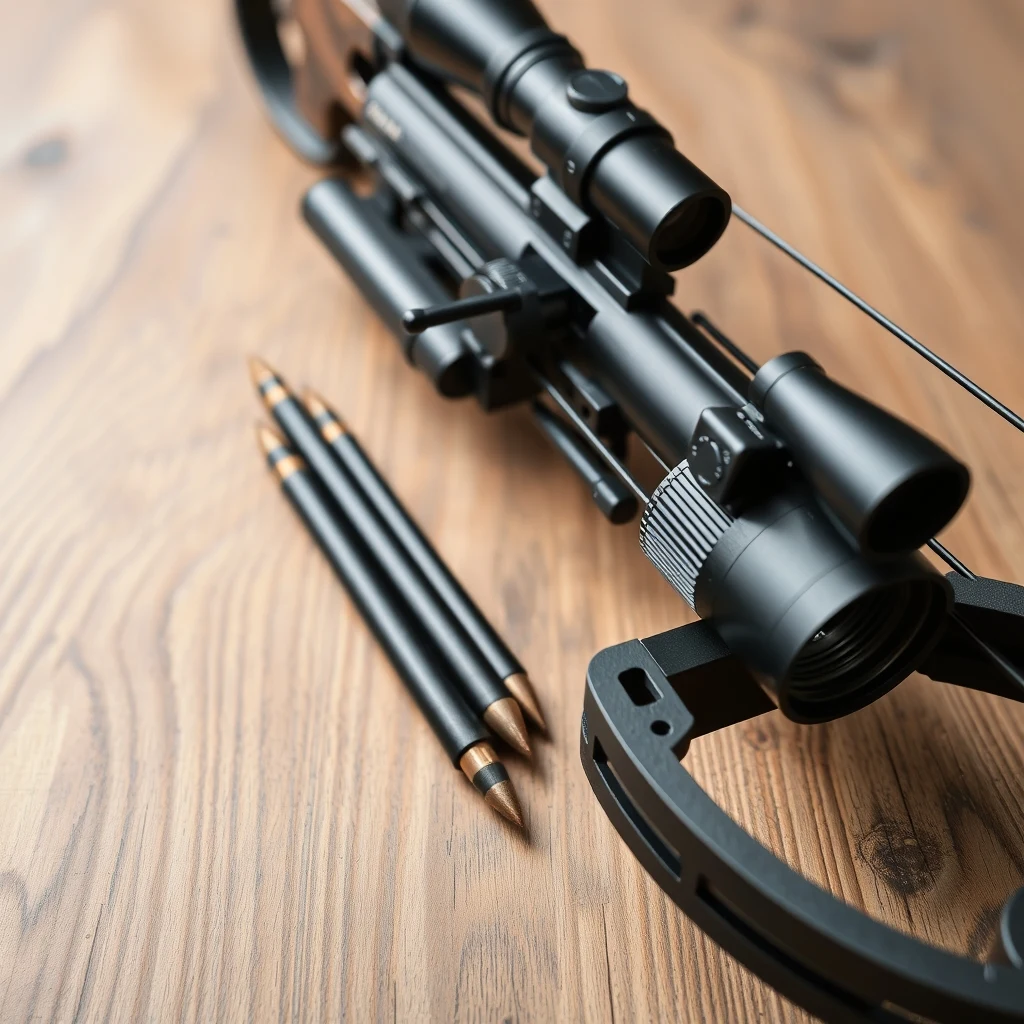
Compound vs recurve: the fundamental split
Modern hunting crossbows divide into two limb configurations: compound and recurve. Both accomplish the same thing — store energy in bent limbs and release it into a bolt — but they do it differently, with different trade-offs in width, maintenance, and performance per pound of draw weight.
Compound crossbows
A compound crossbow uses a system of cams (eccentrics) and cables at the limb tips, identical in principle to a vertical compound bow. The cam geometry provides let-off — the effective pull weight at the cocked position is significantly less than the peak draw weight. A 185-lb draw-weight compound may have 75–80% let-off, meaning the cams hold at around 40–45 lbs once fully drawn. This is less critical in a crossbow (where the limbs are held cocked by a trigger mechanism) but the cam system also generates higher arrow speeds per pound of draw weight than a recurve at equivalent power.
Compound crossbows are typically narrower axle-to-axle than recurves (some as narrow as 6–9 inches when cocked), making them maneuverable in ground blinds and treestands. The trade-off is mechanical complexity: cam timing can shift, cables wear, and tuning requires a press or shop visit.
Recurve crossbows
A recurve crossbow has longer, wider limbs with no cam system. The power stroke (distance the string travels) is typically longer than a compact compound at the same draw weight, which partially compensates for the lack of mechanical advantage. Recurve crossbows are often wider axle-to-axle — typically 28–36 inches when uncocked — and quieter in some configurations because there are no cam systems to generate string slap harmonics.
The main advantage of recurves is simplicity: a string and cables are the only wearing parts, both easily replaced in the field without specialized equipment. Recurves tend to be favored by traditional hunters and those who prioritize field-repairability over peak performance numbers.
| Factor | Compound | Recurve |
|---|---|---|
| FPS per lb draw weight | Higher (cam advantage) | Lower (no let-off) |
| Width when cocked | Narrow (6–14" typical) | Wider (24–36" typical) |
| Maintenance | Cams, cables — shop tuning | String only — field replaceable |
| Noise | Varies by design | Typically quieter |
| Price range (entry) | $200–$600 | $150–$400 |
Draw weight and kinetic energy: the real numbers
Draw weight in crossbows ranges from around 75 lbs (youth/casual) to 250+ lbs (high-performance hunting models). But draw weight alone doesn't determine performance — bolt weight matters equally. Kinetic energy in foot-pounds = (bolt weight in grains × velocity²) ÷ 450,240.
Two crossbows both rated at 380 fps perform very differently if one is tested with a 350-grain bolt and the other with a 420-grain bolt. The higher-weight bolt carries more energy and penetrates deeper, which matters for hunting. Many manufacturers publish FPS figures using IBO-standard 400-grain bolts, but verify this in the product specs before comparing numbers.
Hunting kinetic energy guidelines (these are general references — confirm with local regulations and hunting ethics standards for your quarry):
- Small game and varmints: 25+ ft-lbs adequate
- White-tailed deer at typical crossbow ranges (under 40 yards): 40–65+ ft-lbs common recommendation
- Elk and larger game: 65–80+ ft-lbs widely cited
Shopping for crossbows? Browse current eBay listings → (we earn a small commission; your price is unchanged).
Cocking aids: rope cockers vs crank devices
A crossbow's draw weight must be overcome every time you cock the bow. For crossbows under 150 lbs, many shooters can cock by hand (pulling the string evenly with both thumbs to the trigger mechanism). Above that, the effort becomes substantial, and inconsistent hand placement introduces accuracy problems by creating uneven limb loading.
Rope cocking aids are simple doubled-rope devices with stirrup handles. They halve the effective cocking weight by giving you a mechanical advantage. A 150-lb crossbow requires only about 75 lbs of effort with a rope cocker. Cost: $15–$40, and most crossbow packages include one.
Crank cocking devices (also called cocking cranks or crank aids) use a gear mechanism to dramatically reduce cocking effort — typically to 6–15 lbs regardless of draw weight. They're essential for shooters with limited upper-body strength, youth hunters, or very-high-draw-weight crossbows above 185–200 lbs. Many modern crossbows offer integrated cranks as factory options. Aftermarket cranks typically require the bow to have specific attachment points.
Bolts (crossbow arrows): length, weight, and spine
Crossbow bolts are shorter than vertical bow arrows — typically 16–22 inches depending on the crossbow's power stroke length. Match bolt length to your crossbow's specifications; using bolts too short for a power stroke is a safety hazard.
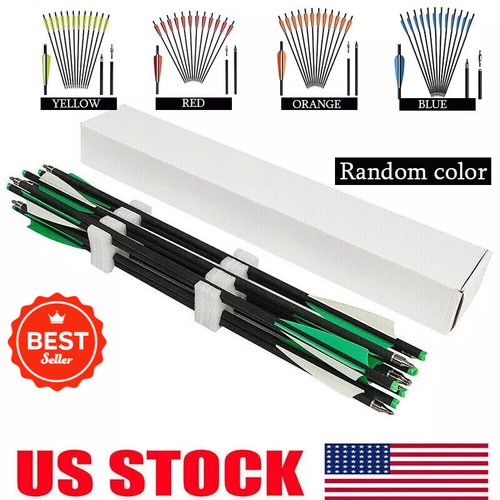
Carbon bolts are the standard for hunting use: consistent weight-per-inch, straight, and resistant to the bending that affects aluminum bolts. Bolt weight is measured in grains; heavier bolts (420–450+ grains with broadhead) retain energy better at range and penetrate deeper, while lighter bolts shoot flatter but carry less kinetic energy. Most hunting-grade bolts fall in the 350–450 grain complete weight range (shaft + nock + vanes + broadhead).
Spine (stiffness) must match your crossbow's draw weight — manufacturers publish compatible bolt specifications. Using too-flexible bolts with a high-draw-weight crossbow can cause erratic flight and potential breakage.
Scopes: reticle type and magnification
Most crossbow packages include a multi-reticle scope — a scope with multiple aiming points (crosshairs or illuminated dots) at different vertical positions, each calibrated for a specific distance. A common configuration has aiming points at 20, 30, 40, 50, and 60 yards. The critical detail: these reticle calibrations are set for a specific bolt weight and FPS. If you shoot heavier or lighter bolts than the scope was calibrated for, the subtension will be off.
Magnification of 3×–5× is typical for hunting crossbow scopes and appropriate for the 20–60 yard ranges where crossbows are most commonly used. Higher magnification isn't necessary and makes it harder to acquire a moving target quickly. Illuminated reticles (red/green) are valuable for low-light hunting; verify the scope has a simple on/off brightness control rather than requiring battery-wasting always-on operation.
Regulations: check before you buy
Crossbow hunting regulations vary significantly by US state and internationally. Some states allow crossbows only during archery season with a disability permit; others allow them unrestricted during bow season; others treat them as firearms. Minimum draw weight requirements for deer hunting exist in several states (commonly 75–100 lbs minimum). Some jurisdictions restrict certain features (cocking cranks, magazine systems). Verify your state's specific rules before purchasing.
Buying decision summary
- Treestand/ground blind hunting: compound, narrow axle-to-axle; 150–185 lb draw weight with a 400-grain bolt achieving 65+ ft-lbs
- Field simplicity/traditional: recurve; slightly heavier draw weight to compensate for no cam advantage
- Physical limitations: any draw weight with a crank cocking device; don't buy more draw than you can comfortably cock 10+ times
- Bolt selection: match length and spine to manufacturer specs; weight affects both trajectory and terminal energy
- Scope: multi-reticle with aiming points calibrated to your bolt weight; 3–5× adequate for crossbow ranges
 Compound Hunting Crossbows
 Crossbow Packages
 Recurve Crossbows
 Carbon Bolts
 Cocking Devices