The three types of countertop filters
Most buyers searching for "countertop water filter" encounter three genuinely different products that share only the fact they don't require permanent installation. Understanding which type you're looking at is the first step.
1. Gravity-fed filters (Berkey-style two-chamber systems)
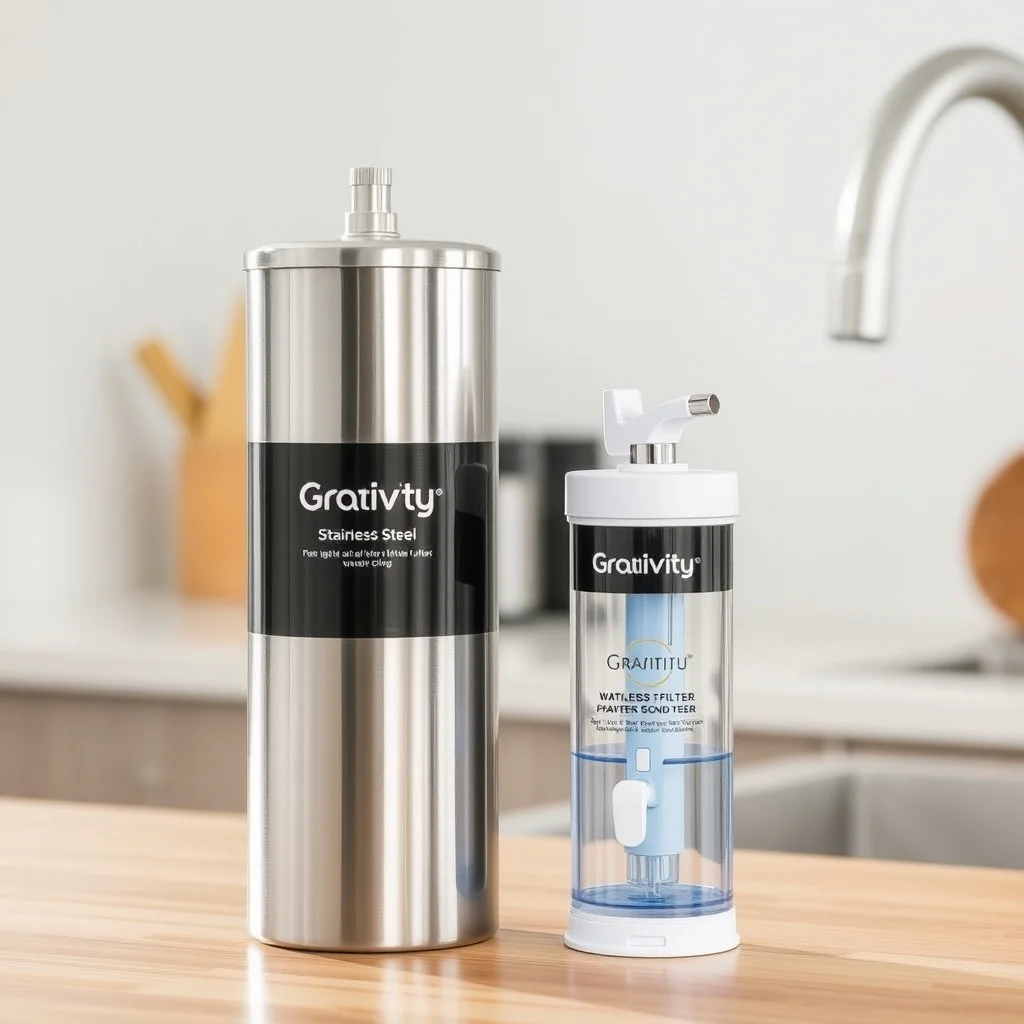
These consist of two stainless steel chambers stacked vertically. You pour unfiltered water into the upper chamber; it drips through ceramic or carbon-block elements by gravity into the lower chamber, where it's dispensed via a spigot. No power required. No plumbing connection.
Gravity systems are the most capable countertop option for removing a broad range of contaminants. High-quality ceramic elements (like Black Berkey-style elements) can reduce bacteria, protozoa, heavy metals, VOCs, chlorine, and some pharmaceuticals. Element life is very long — typically 3,000–6,000 gallons per pair of elements, representing potentially years of use for a household before replacement.
Trade-offs: they're large (a standard system is typically 8–10 inches in diameter and 19–26 inches tall), slow (gravity-fed flow is 0.5–1 gallon per hour), and take up significant counter space. The upper chamber must be manually filled — there's no connection to the tap for continuous filling.
2. Faucet-mount diverter filters
These snap onto the end of your kitchen faucet spout and include a diverter valve that lets you switch between unfiltered and filtered flow. When you divert to filtered, water passes through an integrated carbon block or activated carbon cartridge before flowing out a separate nozzle.
Faucet-mount filters are cheap, quick to install, and require no counter space. The filtration scope is typically limited to NSF 42 (taste and odor, chlorine reduction); some models are certified to NSF 53 for lead reduction. Element life is short — typically 100–200 gallons, or 2–4 months for a household using 1.5 gallons/day of filtered water.
The main limitation is compatibility: faucet-mount filters don't fit pull-down or pull-out faucets, or many commercial-style faucets with larger aerator threads. Check your faucet thread size (typically 15/16-inch male or 55/64-inch female) before ordering. If you have a non-standard faucet, a faucet-mount filter may simply not be an option.
3. Counter-standing filter units (including countertop RO)
These are standalone units that sit on the counter, connect to the faucet via a flexible hose and diverter adapter, and dispense filtered water into a separate reservoir or directly from a dedicated tap. Some include multiple filter stages; countertop RO units (increasingly popular) use a full reverse osmosis membrane in a countertop-sized enclosure.
Counter-standing units offer better filtration than faucet mounts — countertop RO can achieve the same contaminant reduction as under-sink RO systems — but they require more counter space (typically 12–20 inches of depth) and the hose connection to the faucet is mildly inconvenient when cooking.
| Type | Plumbing needed | Filtration depth | Element life | Flow |
|---|---|---|---|---|
| Gravity-fed | None | High (bacteria, metals, VOCs depending on element) | 3,000–6,000 gal | 0.5–1 GPH (slow) |
| Faucet-mount | Standard faucet thread | Low–medium (NSF 42; some NSF 53) | 100–200 gal | On-demand (fast) |
| Counter-standing | Faucet adapter | Medium–high (multi-stage or RO) | Varies by stage | Medium |
Element life: the real long-term cost
The variation in element life between these types is enormous and matters more than upfront price. A faucet-mount filter that costs $25 and has a $15 cartridge lasting 200 gallons costs about $0.075 per gallon filtered. A gravity-fed system that costs $250 with $50 elements lasting 3,000 gallons costs about $0.017 per gallon. Over two years, the faucet-mount may cost significantly more in replacement elements despite costing less to buy.
That said, if you only need filtered water for occasional drinking (not daily cooking volume), the faucet-mount's convenience and lower upfront cost may make it the practical choice. Run the math for your actual usage volume.
Contaminant reduction: what each type realistically handles
Faucet-mount filters with NSF 42 certification handle chlorine, chloramine, and taste/odor compounds well. If you're on city water and your only concern is taste, this is adequate. If you have lead concerns (older home, known lead service lines), you need a filter with NSF 53 lead certification — some faucet-mount filters have this; many don't.
High-quality gravity filters with ceramic elements can reduce bacteria, protozoa (Giardia, Cryptosporidium), heavy metals including lead and arsenic, VOCs, pharmaceuticals, and chlorine. This makes them the most capable option at the countertop level for a wide range of concerns — including well water with bacteriological concerns, though UV disinfection is the more reliable approach for bacteria.
Countertop RO systems achieve the deepest filtration: they remove dissolved contaminants (nitrates, fluoride, dissolved metals) that carbon alone cannot touch. If your water has nitrate, arsenic, or fluoride concerns, a countertop RO is the only countertop option that addresses them.
Shopping for countertop water filters? Browse current eBay listings → (we earn a small commission; your price is unchanged).
Practical considerations before buying
- Counter space: Gravity systems are tall and take up a permanent footprint. Measure your counter height clearance (especially under cabinets) before buying a large gravity unit. Standard two-chamber gravity systems can reach 26 inches tall.
- Faucet compatibility: Faucet-mount filters don't fit all faucets. Measure or confirm your faucet aerator thread before ordering. Pull-out and pull-down faucets almost never accept these filters.
- Fill frequency: Gravity systems must be manually topped up. A family of four may fill the upper chamber once or twice a day. This is a minor inconvenience that some households find annoying over time.
- Element priming: New gravity filter elements typically require a break-in period (flushing several gallons through before use) to remove carbon fines and achieve rated filtration performance.
For renters: which type works best
Renters often choose countertop filters precisely because they want no permanent installation. Gravity systems are genuinely portable — they disconnect easily when moving, and they work without any connection to the plumbing at all. Faucet mounts leave no marks on the faucet but may not fit modern pull-out faucets common in newer kitchens.
Countertop RO systems require a faucet connection via a diverter adapter, which is reversible and leaves no permanent modifications — suitable for rental situations as long as the faucet is standard-thread compatible.
Shop countertop water filters on eBay
We earn a small commission on qualifying sales; your price is unchanged. Full disclosure.
 Countertop water filter
All types. Filter by gravity, faucet, or counter-standing to narrow. View on eBay →
Countertop water filter
All types. Filter by gravity, faucet, or counter-standing to narrow. View on eBay →
 Gravity water filter
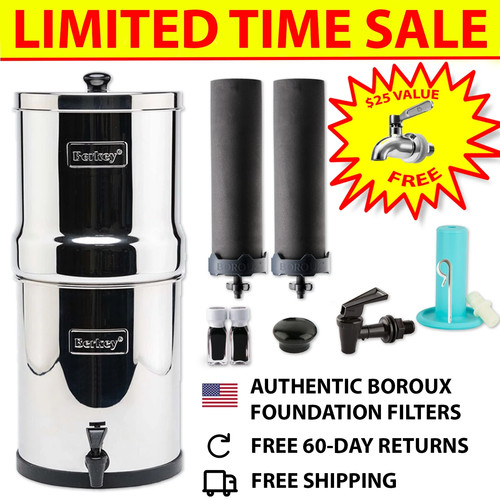
Best element life. No power or plumbing. Verify independent NSF testing on element claims. View on eBay →
Gravity water filter
Best element life. No power or plumbing. Verify independent NSF testing on element claims. View on eBay →
 Faucet water filter
Lowest upfront cost. Check faucet thread compatibility. Short element life (100–200 gal). View on eBay →
Faucet water filter
Lowest upfront cost. Check faucet thread compatibility. Short element life (100–200 gal). View on eBay →
 Countertop water filtration
Multi-stage and RO countertop units. Best for dissolved-contaminant concerns. View on eBay →
Countertop water filtration
Multi-stage and RO countertop units. Best for dissolved-contaminant concerns. View on eBay →
 Stainless gravity filter
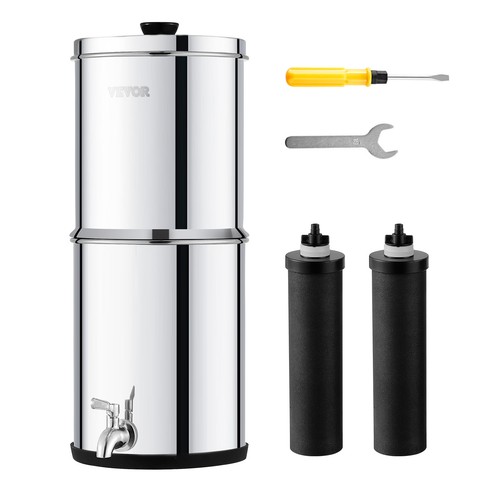
Durable, portable, no power needed. Good for off-grid and emergency use. View on eBay →
Stainless gravity filter
Durable, portable, no power needed. Good for off-grid and emergency use. View on eBay →