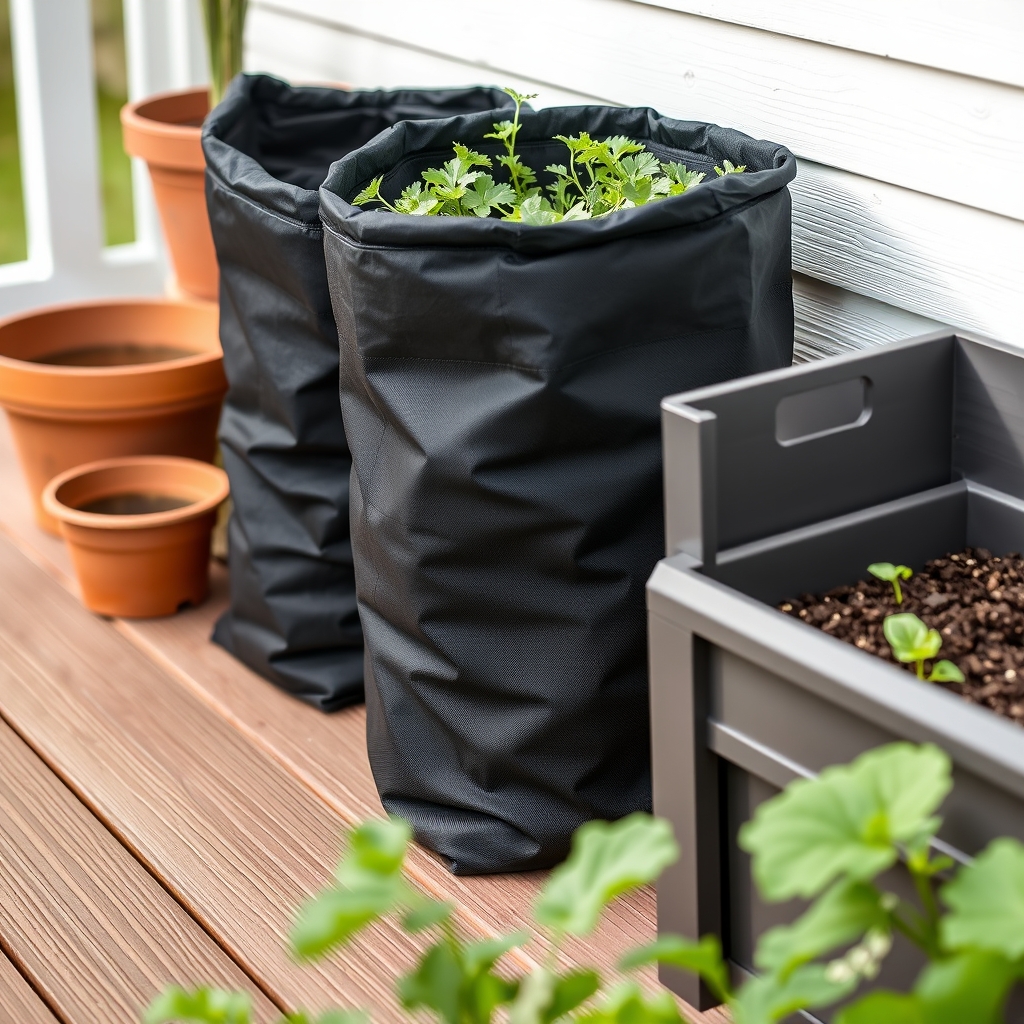
Container material: what actually differs
The material determines heat absorption, moisture retention, weight, durability, and whether the container can be moved seasonally. These properties interact with your climate, your crops, and your setup.
Fabric grow bags (geotextile)
Fabric bags are aerated on all sides, not just at the bottom. This has two significant effects. First, oxygen reaches the root zone from the sides, which beneficial soil microbes require. Second, when roots reach the fabric wall, they are "air-pruned" — the root tip desiccates and stops growing, forcing the plant to branch and produce a denser fibrous root system rather than circling the container as they do in rigid pots.
Fabric bags dry out faster than rigid containers because moisture evaporates through the sides as well as the surface. This means more frequent watering — roughly 20–40% more often than comparable plastic or ceramic containers in the same conditions. In very hot climates or on reflective surfaces like concrete, fabric bags can overheat; wrapping or shading the sides helps.
Fabric bags fold flat for off-season storage and are reusable for several seasons. They're the most common choice for vegetable growing — particularly tomatoes, peppers, and potatoes — because of the air-pruning benefit.
Plastic and resin pots
Plastic pots retain moisture longer than fabric because evaporation only occurs at the soil surface. Roots can circling within the smooth walls if a pot is kept too long — transplanting or root-pruning is needed periodically. Lightweight and inexpensive at most sizes. Dark plastic absorbs heat and can cook roots in direct summer sun; light-colored plastic or insulating pot covers mitigate this.
Resin pots (a subset of plastic, typically thicker and UV-stabilized) mimic the appearance of ceramic at a fraction of the weight and cost. They handle freeze/thaw cycling better than ceramic and don't crack in frost. A reasonable compromise for decorative balcony use.
Ceramic and terracotta
Terracotta is porous and breathes in a way similar to fabric — moisture evaporates through the walls, cooling the root zone. This is beneficial in hot climates and for drought-tolerant plants; it's a liability for plants that want consistent moisture (tomatoes, cucumbers) in dry conditions, because terra cotta pots dry rapidly and create watering debt fast.
Glazed ceramic pots are non-porous and behave more like plastic in terms of moisture retention. Heavy — a 15-inch glazed ceramic pot filled with damp soil can weigh 60–80 pounds. Not suitable for spaces where weight is a concern (balconies, rooftops) or where seasonal moving is needed. Very durable if not frozen with saturated soil inside.
Wood
Cedar and redwood have natural decay resistance. Untreated pine boxes should be lined with landscape fabric to slow rot. Wood insulates well, keeping roots cooler in summer and warmer in early spring than plastic or ceramic. Heavy when filled. Often used for permanent raised planter boxes on patios and decks.
| Material | Moisture retention | Root temp in sun | Weight | Best for |
|---|---|---|---|---|
| Fabric | Low (dries fast) | Moderate (cools through sides) | Very light | Tomatoes, potatoes, most vegetables |
| Plastic / resin | High | High in dark colors | Light | General use; drought-sensitive herbs |
| Terracotta | Low (porous) | Moderate | Heavy | Mediterranean herbs; succulents |
| Glazed ceramic | High | Moderate to high | Very heavy | Permanent decorative plantings |
| Wood (cedar) | Moderate | Low (insulating) | Heavy | Permanent raised planters; root crops |
Size and depth by crop
Container volume is the dominant limiting factor in container gardening. Roots need physical space, and soil volume determines how much water and nutrients are available between waterings. Under-sized containers produce stunted plants that need watering twice daily in summer and can't sustain full fruit loads.
Shopping for container gardening gear? Browse current eBay listings → (we earn a small commission; your price is unchanged).
| Crop | Minimum volume | Recommended volume | Minimum depth |
|---|---|---|---|
| Lettuce / spinach | 1 gallon per plant | 2–3 gallons per plant | 6 inches |
| Herbs (basil, parsley) | 1 gallon | 2–3 gallons | 8 inches |
| Peppers | 3 gallons | 5 gallons | 12 inches |
| Determinate tomatoes | 5 gallons | 7–10 gallons | 14 inches |
| Indeterminate tomatoes | 7 gallons | 10–15 gallons | 16 inches |
| Cucumbers | 5 gallons | 7–10 gallons | 12 inches |
| Carrots / parsnips | 12 inches depth minimum | 5-gallon tall containers | 12–16 inches |
| Potatoes | 10 gallons | 15+ gallons | 18 inches (for hilling) |
| Zucchini / squash | 10 gallons | 15+ gallons | 14 inches |
Drainage: not optional
Containers without drainage holes cause root rot. There is no exception to this — all plant containers used for edibles need drainage holes. "Drainage layer" myths persist (the idea that gravel at the bottom of a pot with no holes helps drainage), but research shows that a gravel layer in a sealed container actually raises the perched water table and keeps roots wetter, not drier.
Drainage hole size matters: holes that are too small clog with potting mix and fail over time. A minimum of one half-inch hole per gallon of container volume is a reasonable guideline, though more holes are generally better. Ceramic saucers trap water under the container — empty them within 30 minutes of watering to prevent the soil from re-absorbing standing water.
Elevating containers slightly (pot feet, bricks) keeps the drainage holes clear from contact with solid surfaces. Direct contact between a drainage hole and a flat surface blocks outflow.
Self-watering containers: how the reservoir works
Self-watering planters have a water reservoir below the growing media, separated by a perforated platform. A wick or soil column draws water upward through capillary action to the root zone as the plant absorbs moisture. The plant effectively waters itself from the bottom up.
The advantages are real: watering frequency drops by 50–70% compared to standard containers, and plants in self-watering containers are less susceptible to the wet-dry stress cycles that cause blossom end rot in tomatoes and tip burn in lettuce. They also prevent overwatering from top-irrigation, since the reservoir only refills when the capillary system calls for it.
Self-watering containers work best for thirsty crops in hot conditions — tomatoes, cucumbers, peppers, and large herbs. They're less well-suited for plants that prefer to dry out between waterings (Mediterranean herbs like rosemary, thyme, and lavender) — those do better in standard terracotta.
Potting mix vs garden soil
Garden soil compacts severely in containers, cutting off root oxygen and drainage. Container plants need a potting mix specifically formulated for container use: typically composed of peat or coir, perlite, and bark, without native soil. "Potting mix" and "potting soil" are used interchangeably by most brands, but read the label — some "garden soils" are blended for in-ground use and are not appropriate for containers.
For large containers (15 gallons and up), cost-per-fill becomes significant with bagged potting mix. A common approach is a "Mel's Mix" style blend: one-third compost, one-third perlite, and one-third peat or coir, mixed in volume. This performs well in containers at lower cost than premium bagged mix at large volumes.
Search eBay for container gardening gear
 Fabric grow bags
5-, 7-, and 10-gallon sizes for vegetables. Air-prunes roots and improves drainage. Look for double-stitched seams.
Fabric grow bags
5-, 7-, and 10-gallon sizes for vegetables. Air-prunes roots and improves drainage. Look for double-stitched seams.
 Self watering planter
Reservoir-based planters that reduce watering frequency dramatically. Best for tomatoes and cucumbers.
Self watering planter
Reservoir-based planters that reduce watering frequency dramatically. Best for tomatoes and cucumbers.
 Large planter pots
15–25 gallon plastic or resin pots. Verify drainage hole size and UV-resistant material before buying.
Large planter pots
15–25 gallon plastic or resin pots. Verify drainage hole size and UV-resistant material before buying.