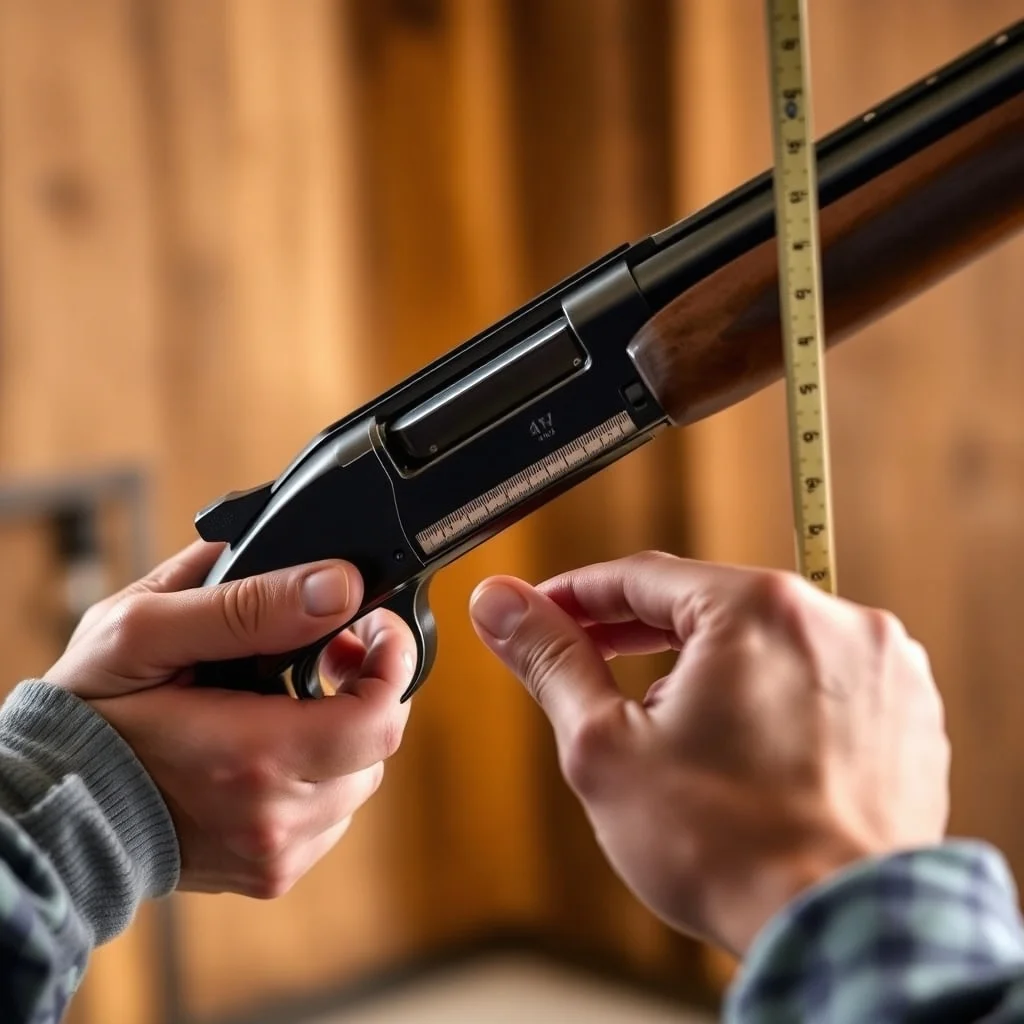
A gun that does not fit shoots where the barrel points, not where the shooter looks. The shot goes where the muzzle aims — and if the stock is too long, too short, too high, or too low, your eye will be placed in front of or behind the correct position over the rib, sending your pattern high, low, left, or right from your intended point of aim. Consistent misses in a particular direction are often a fit problem, not a technique problem. Understanding the dimensions involved lets you diagnose which.
The Core Dimensions of Gun Fit
A shotgun stock has several dimensions that a fitter measures and adjusts. The three most commonly adjusted are length of pull, drop at comb, and drop at heel. Cast off (or on) and pitch are secondary dimensions that matter for specific shooters.
Length of Pull (LOP)
Length of pull is the distance from the center of the trigger to the center of the recoil pad or buttstock. It is the single most commonly wrong dimension on production guns for non-standard-build shooters.
Standard LOP on most production shotguns is 14.25" to 14.5". This fits a shooter with approximately a 33–34" shirt sleeve and a typical arm-to-body proportion. Shooters with shorter arms, women, and younger shooters commonly need 13.5"–14". Tall shooters with long arms may need 14.75"–15.5".
How to measure your LOP: Mount the gun with your normal grip and cheek weld. Look at your trigger finger — specifically the distance between the trigger and the first crease of your index finger. If your finger is jammed against the trigger guard, the stock is too short. If you are reaching well past the first crease with the second crease at the trigger, it is too long. The trigger should rest naturally on the pad of the first crease, or just behind it, without any reaching or cramming.
The classic "bend test": bend your elbow 90 degrees and hold your forearm vertical. Place the butt of the stock in the crook of your arm. The trigger should be reachable with a natural, un-stretched trigger finger. This gives a rough LOP estimate — it is not a precision measurement, but it screens for obviously wrong lengths in under 10 seconds.
Too long: gun pulls your mount out, right cheek weld varies, thumb jabs your nose on recoil, slow mount, consistent low-and-left (for right-handers) misses from a pushed-out stock position.
Too short: stock chatters on the forearm, cheek slaps on recoil, trigger reach is cramped, inconsistent cheek weld because the gun rocks.
Drop at Comb
Drop at comb is the vertical distance from a line extended from the top of the rib down to the top of the comb (the raised portion of the stock that your cheek rests on). It controls where your eye sits relative to the rib — too much drop pushes your eye below the rib, causing you to see too much rib and shoot high. Too little drop (a high comb) pushes your eye above the rib line, causing you to shoot low.
Standard drop-at-comb on production guns is approximately 1.5". The "correct" dimension is the one that places your pupil centered just above the top of the rib — so you see a small sliver of rib ahead of the bead, not the whole rib, and not nothing. This is the "figure-8" sight picture: front bead over mid-bead, rib barely visible.
How to check drop at comb: Mount the gun to your face and close your eyes. Open your eyes and note immediately what you see. If you see a lot of rib, the comb is too low — your eye is sitting below where it should be. If you see almost no rib and cannot find the front bead without moving your head, the comb is too high. Correct drop shows a small, consistent amount of rib.
Drop at comb also has a second measurement: drop at face, which is measured slightly back from the comb. The relationship between drop at comb and drop at face describes the comb's taper — a steep taper can cause your cheek placement to shift your eye position dramatically with small changes in head position. Parallel combs (Monte Carlo stocks and high-comb adjustable stocks) reduce this sensitivity.
Drop at Heel
Drop at heel is measured at the back of the stock. Standard drop at heel is approximately 2.25"–2.5". As a general rule, more drop at heel means the stock rotates upward on recoil, increasing felt recoil as the toe punches up. Less drop at heel (a straighter stock) reduces recoil rotation. Drop at heel has less influence on point of impact than drop at comb for most shooters but affects felt recoil significantly.
Cast
Cast is the lateral (side-to-side) offset of the stock relative to the barrel. Most production guns are made with cast off — the stock bends slightly to the right — to accommodate right-handed shooters. Cast on bends the stock left, for left-handed shooters. For most shooters, the factory cast on a production gun is close enough. Cast matters significantly for shooters with facial structures that cause the eye to be positioned to the side of the rib rather than directly above it.
Pitch
Pitch is the angle of the butt relative to the barrel. Positive pitch angles the toe outward; negative pitch angles it inward. Pitch affects how the gun sits against the shoulder and how it rotates on recoil. Most shooters do not need to think about pitch until they have LOP and drop dialed in.
What You Can Adjust DIY
Several gun fit adjustments are within reach of a non-gunsmith shooter:
LOP: Recoil pad replacement
The most practical LOP adjustment is replacing the factory recoil pad with a thicker or thinner one. A standard replacement pad adds approximately 3/8" to 1/2" of LOP. Slip-on pads (like the Pachmayr Decelerator slip-on or similar) add LOP without permanent modification and can be removed. For permanently reducing LOP, a gunsmith or stock shop can cut the stock and refinish — this is a $50–100 job at most gun shops and is reversible only if the removed wood is saved.
Drop at comb: Comb raisers
A comb raiser is an adhesive or velcro pad that adheres to the top of the comb, raising it to reduce effective drop at comb. These are a legitimate, non-permanent fix for shooters whose factory stock is too low. Adjustable comb kits — which allow you to dial in height with a set screw — are available for many popular gun models and provide the most flexibility. They are standard on competition guns for a reason.
What you cannot easily DIY: increasing drop (lowering the comb) requires removing wood, which is a job for a stock maker. Changing cast requires bending the stock, which is done with heat and a bending fixture — not a home project. Changing LOP on a wood stock without affecting appearance requires stock-fitting skills.
The Patterning Board Test
Before spending money on any fit modification, run a patterning board test. Set a sheet of patterning paper at 16 yards. Mark a prominent aiming point. Mount the gun, look hard at the aiming point, and fire without changing your focus to the bead. Shoot five rounds with your normal mount. Where do the pattern centers land relative to the aiming point?
- Patterns consistently high: Comb is too high (too little drop at comb), or LOP is too short causing your eye to be pushed forward.
- Patterns consistently low: Comb is too low (too much drop), eye positioned below rib.
- Patterns left (for right-handed shooter): Cast issue, or head is being pushed off the stock on mount.
- Patterns right (for right-handed shooter): Eye positioned to the right of the rib center; cast off may be needed, or head position.
- Patterns centered: Gun fits your mount. If you are still missing targets, the problem is lead timing, not fit.
The patterning board distinguishes between a gun fit problem and a technique problem. If patterns center on the aiming point consistently, your mount is putting your eye in the right place — which means misses are about lead and target reading, not hardware. This is important to establish before spending money on stock modifications.
When to Call a Gunfitter
A professional gunfitter with a try-gun (an adjustable-dimension demonstration gun that can be fitted to any measurement on the spot) can determine your optimal dimensions in an hour and tell you exactly what your production gun needs. The cost is $100–300 at most shooting grounds that offer fitting services, and the session includes shooting adjusted configurations until the right dimensions are confirmed.
The situations that warrant a fitting session:
- You have tried comb raiser and LOP adjustments based on patterning but patterns are still consistently off-center
- You are buying a second gun and want to specify stock dimensions rather than buying and adjusting
- You have a physical asymmetry (significant scoliosis, missing eye function on your dominant side, different arm lengths) that makes standard fitting guidance unreliable
- You are a high-volume competitive shooter where the marginal gain from perfect fit is worth the investment
What a fitting session does not solve: mental game problems, timing problems, or technique issues that make your mount inconsistent round to round. A perfectly fitted gun still requires a consistent mount to shoot to point of aim. If your cheek weld varies between targets, the gun will shoot to different points of aim regardless of how well it was fitted to your best mount.
Common Production Guns That Are Commonly Wrong
Several popular production over-unders ship with stock dimensions that do not fit a statistically significant portion of their buyers:
- Most production guns with 14.375" LOP: This is too long for many women, younger shooters, and shorter-armed men. A 13.75"–14.125" LOP is more appropriate for this population. Adding a slip-on pad to extend LOP is easier than reducing it; if you think your gun is too long, try removing the recoil pad and shooting the wood stock temporarily before paying for a pad replacement.
- Guns with significant Monte Carlo combs: Monte Carlo combs (a raised, parallel comb section) can place the comb high for shooters with lower facial structure. If you find yourself consistently high and the gun has a raised Monte Carlo, the comb may need to come down.
- Entry-level trap guns with straight stocks: Some entry-level trap guns ship with stocks that produce a slightly high point of impact — fine for trap where you shoot at rising birds, but a problem if you shoot the same gun for sporting clays where targets cross at varied heights.
Gun fit is not a luxury reserved for competition shooters. It is the basic process of confirming that your equipment is pointed where you are looking. The two-hour investment in a patterning board session — or a professional fitting if the DIY adjustments don't resolve the issue — pays for itself in broken targets within a single season.
Gear actually worth buying
Smart eBay searches we'd start with ourselves. We earn a small commission on qualifying sales through these links; the price you pay is the same whether you use them or go direct to eBay. Full disclosure.
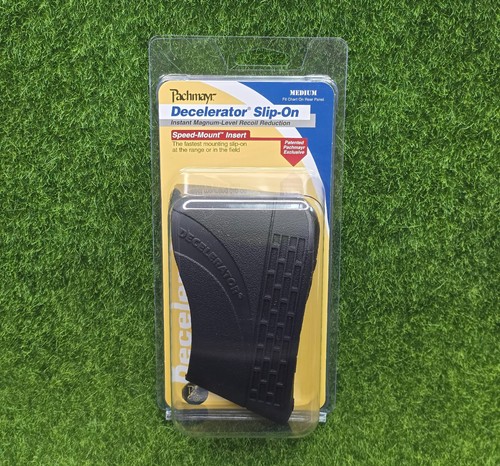 Slip-on recoil pad (Pachmayr)Adds 3/8"–5/8" of LOP without any modification. Removable. Worth trying before committing to a permanent stock cut.
 Sporting clays vestVest shoulder pad thickness affects your effective LOP by 1/4" to 1/2". Consistent vest use is part of consistent fit — shooting in a heavy jacket versus a vest changes your effective stock dimensions.
 Patterning paperA roll of patterning paper and a 16-yard lane diagnoses fit problems in under 20 minutes. It is the first step before any fitting expense.
 Replacement stocks (Beretta / Browning)An aftermarket or factory-spec replacement stock in different dimensions can be cheaper than a full custom fit for specific mismatches.