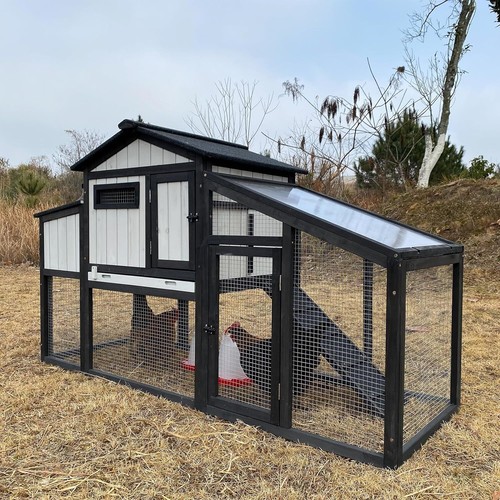
The capacity myth: what "fits 6 hens" usually means
The most consistent problem with chicken coop advertising is inflated capacity numbers. A coop marketed for 6 hens typically provides about 2–3 square feet of interior floor space per bird. That is survivable in mild climates with unlimited outdoor access, but it is below what most extension poultry guides recommend for welfare and flock health.
The widely cited minimum for standard-breed hens in a house-and-run system is 4 square feet of interior space per bird and 8–10 square feet of outdoor run space per bird. For heavy breeds like Buff Orpingtons or Jersey Giants, those minimums should be treated as actual minimums, not design targets. Bantam breeds can get by closer to 2–3 square feet interior, but even small birds need room to establish pecking order without constant stress.
When you evaluate a coop listing, divide the interior floor area (not the total footprint including nesting boxes bolted outside) by the advertised bird count. If the result is under 4 sq ft per bird for full-size hens, mentally reduce the capacity by 30–40%.
| Flock size | Min interior (4 sq ft/bird) | Min run (8 sq ft/bird) |
|---|---|---|
| 3 hens | 12 sq ft | 24 sq ft |
| 6 hens | 24 sq ft | 48 sq ft |
| 10 hens | 40 sq ft | 80 sq ft |
| 15 hens | 60 sq ft | 120 sq ft |
Predator-proofing: the material decisions that actually matter
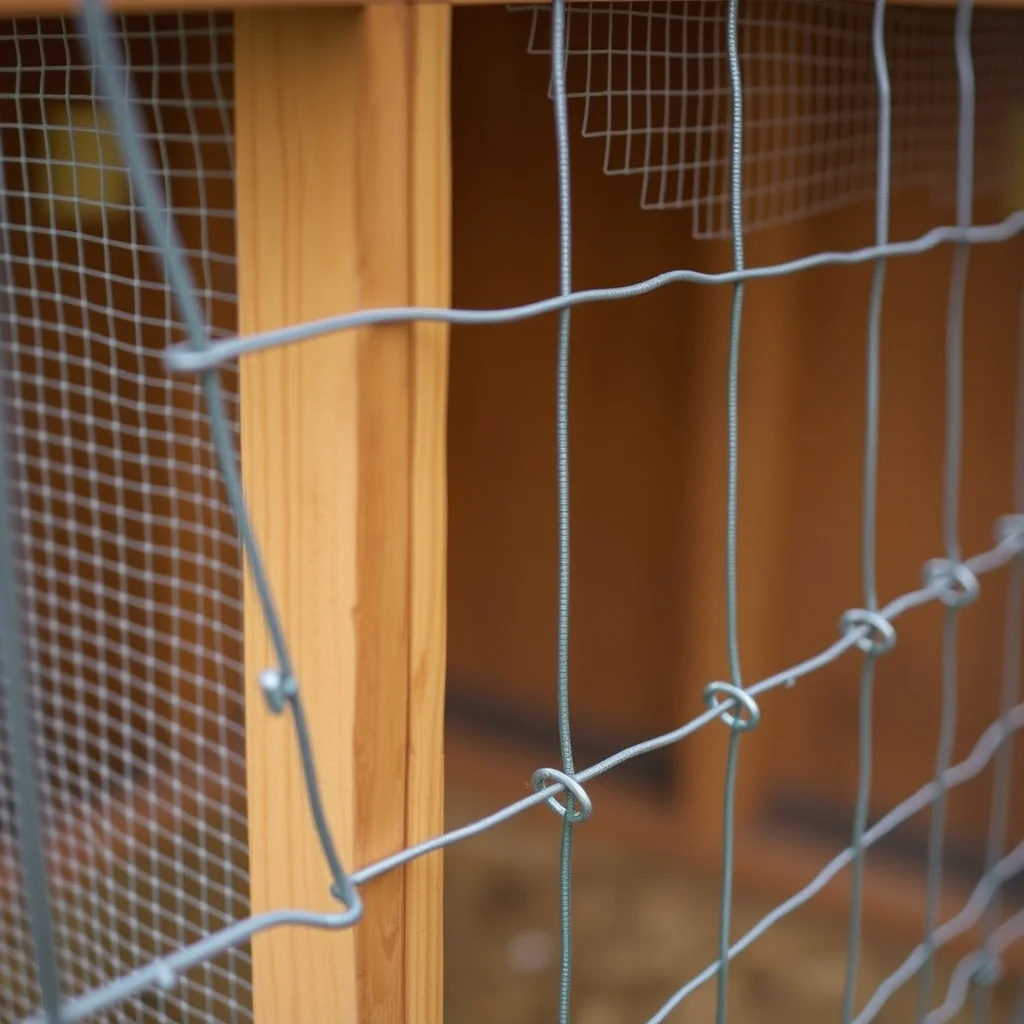
Chicken wire — the hexagonal woven wire almost every budget coop uses — is designed to keep chickens in, not predators out. Raccoons can reach through the 1" openings and pull birds apart. Determined foxes and dogs can tear or bend it. Hardware cloth is what you actually want.
Hardware cloth vs chicken wire
Hardware cloth (also called welded wire or galvanized mesh) is welded at each intersection rather than twisted. The standard gauge for predator resistance is 1/2" × 1/2" openings in 19-gauge wire. This gauge stops raccoon hands, rats, and most snakes from entering. For areas with weasels or mink, drop to 1/4" openings — weasels are remarkably slim and can squeeze through 1" hexagonal openings with ease.
Check whether a coop's run uses chicken wire or hardware cloth before you buy. Most budget coops use chicken wire; upgrading to hardware cloth on the run is a straightforward modification, but factor that cost into your total budget if the listing doesn't specify welded wire.
Ground protection
Predators that dig — foxes, coyotes, badgers in some regions — will excavate under a run floor. Two standard solutions: an apron of hardware cloth laid flat on the ground extending 12–18" outward from the run perimeter (L-shaped apron), or a floor of hardware cloth inside the run. The apron method allows chickens to scratch dirt; the floor method is more absolute but requires litter or dirt over the wire to protect their feet.
Latches and closures
Raccoons are famously dexterous and can open simple hook latches, sliding bolts, and even some carabiner clips. Two-step latches — mechanisms requiring simultaneous pull and twist — are the reliable standard. Every access door, nesting box lid, and run entry point needs hardware that a raccoon cannot figure out in 30 seconds of manipulation.
Ventilation: the spec most buyers overlook
Chickens produce substantial moisture through respiration and droppings. In a poorly ventilated coop, that moisture leads to respiratory disease, frostbitten combs in winter (wet cold is far more dangerous than dry cold), and ammonia buildup from droppings that damages lung tissue over time.
The general guideline is 1 square foot of ventilation per 10 square feet of coop floor space, with ventilation placed high in the wall or in the eaves to allow ammonia and moisture to escape without creating a cold draft at roost bar height. Vents should be hardware-cloth covered to exclude predators.
Coops marketed in cold climates sometimes seal up ventilation to "keep birds warm." This is backward: hens tolerate cold better than they tolerate damp. A well-ventilated, dry coop at 20°F is healthier than a sealed, humid coop at 30°F.
Roost bar sizing and placement
Roost bars should be 2"–4" wide — flat enough for birds to fully cover their feet with their body feathers in cold weather, which prevents frostbite. Round dowels (the standard in cheap coops) force birds to grip and don't allow full foot coverage. Roost bars should be set higher than nesting boxes; chickens always want to roost at the highest point available, and if nesting boxes are higher than roost bars, you'll get birds sleeping in boxes and soiling the nest bedding.
Nesting boxes: how many and what design
The standard ratio is one nesting box per 3–4 hens. Hens will queue for their preferred box regardless of how many are available, so diminishing returns kick in past this ratio. A box for 12 hens needs 3–4 boxes; adding a 5th adds little value.
Box dimensions for standard breeds: 12" wide × 12" deep × 12" high is the minimum comfortable size. Larger heavy breeds like Cochins or Brahmas are more comfortable in 14"×14" boxes. Boxes should have a front lip of 3–4" to keep bedding in and eggs from rolling out.
Roll-away nesting boxes have a sloped floor that directs freshly laid eggs into a covered collection trough. They reduce egg breakage, keep eggs cleaner (chickens can't stand on them and soil them), and eliminate most nest box pecking. They cost more but pay back quickly in saved eggs and cleaning time for any flock over 4 birds.
Shopping for chicken coops? Browse current eBay listings → (we earn a small commission; your price is unchanged).
Cleaning access: the feature that determines your daily experience
A coop you can clean quickly is one you'll keep clean. A coop that requires you to crawl in, reach around corners, and disassemble sections to remove soiled bedding will be neglected, which leads to disease. Evaluate cleaning access as seriously as you evaluate size and security.
Features that genuinely reduce cleaning time
- Full-height doors: Walk-in coops are the gold standard. If the coop requires crouching or crawling, you'll hate it by week three.
- External nesting box access: A hinged lid or door on the outside of the coop lets you collect eggs without entering the coop at all.
- Droppings boards: A removable shelf installed below roost bars catches the majority of overnight droppings (chickens produce about 60% of their daily output at night on the roost). Sliding out a droppings board and scraping it daily takes 2 minutes; cleaning up-accumulated deep litter takes significantly longer.
- Smooth interior surfaces: Painted or sealed wood, metal-lined corners, and plastic-coated surfaces are far easier to clean than raw or rough-cut lumber, which harbors mites and bacteria in cracks.
- Slide-out floor tray: Some coops include a removable galvanized tray under the entire floor. This is the most efficient cleaning design available; look for it specifically in smaller coops where a droppings board isn't practical.
Material: wood vs plastic vs metal
Most residential coops are wood-framed, either with T&G board siding or plywood panels. Pressure-treated lumber is not recommended for surfaces chickens contact — the preservatives (even modern ACQ-treated lumber) are questionable for long-term poultry health; use untreated lumber and seal with an exterior-grade paint or stain. Cedar and redwood are naturally rot-resistant choices.
Plastic coops (various manufacturers produce modular snap-together designs) are genuinely easier to clean, mite-resistant, and weatherproof, but they have significant limitations: less ventilation control, most designs are undersized for the bird counts advertised, and they can be brittle in severe cold. They're a reasonable choice for 2–4 bantams in a mild climate.
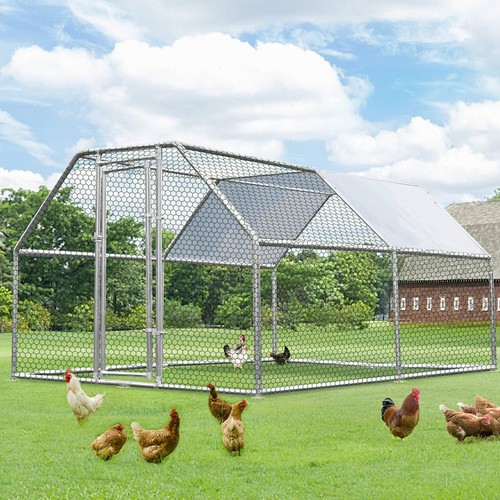
Metal chicken tractors and runs offer predator resistance and durability. For runs specifically, welded galvanized panels are excellent — heavy-gauge, permanent, and nearly impervious to digging or tearing. The main downside is weight; a metal panel run is difficult to move even if marketed as a "chicken tractor."
Automatic coop doors: the upgrade most keepers eventually make
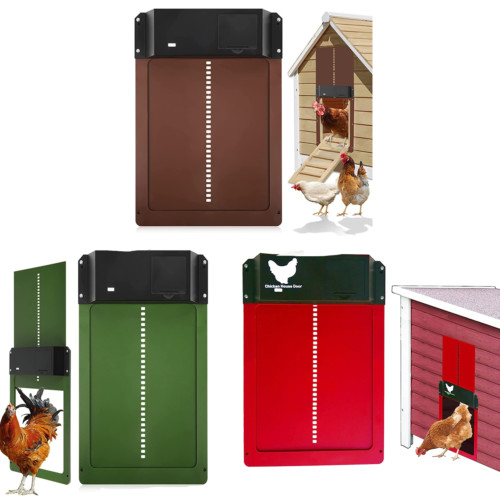
Automatic pop doors — either timer-controlled or light-sensor-activated — open at dawn and close at dusk. This single upgrade eliminates the most common cause of predator loss: forgetting to close the coop. A light-sensor door responds to actual ambient light levels rather than a fixed clock, which means it adjusts automatically through the year and still works correctly if you sleep in or stay out late.
Battery-operated units are the most common; they mount on the exterior of the coop with the motor housing protected from weather. Look for units with a built-in obstacle detection feature — a door that senses resistance and stops closing if a bird is in the doorway prevents injuries. Reliable units from established manufacturers typically run $80–$150; budget options exist but have more reported failures around the motor and control board in wet conditions.
| Feature | What to look for | Red flag |
|---|---|---|
| Wire type | Hardware cloth, welded, 19-gauge | Hexagonal chicken wire on runs |
| Latches | Two-step or bolt + clip | Single-step hook latches |
| Ventilation | High-placed vents, 1 sq ft per 10 sq ft floor | No dedicated ventilation |
| Roost bars | Flat 2"–4" wide, higher than nest boxes | Round dowels, at same height as boxes |
| Cleaning access | Walk-in or full door, slide-out tray | Crawl-in access only |
| Capacity | 4 sq ft interior per standard hen | Marketed capacity that implies <3 sq ft/bird |
What to measure before you buy
Before ordering any coop, measure your actual setup: the footprint available in your yard, gate widths you need to pass a coop through during delivery or installation, and whether you're in a jurisdiction with setback rules for poultry structures (common in suburban municipalities — check local zoning before ordering anything larger than a small backyard coop).
For flock planning: most people who start with 4 hens end up wanting 8 within a year. Biosecurity aside, adding birds to an established flock is disruptive; planning for a larger coop from the start is almost always the better financial decision. A coop that houses 10 hens comfortably costs maybe 40% more than one that houses 6, but replaces the need to buy a second coop entirely.