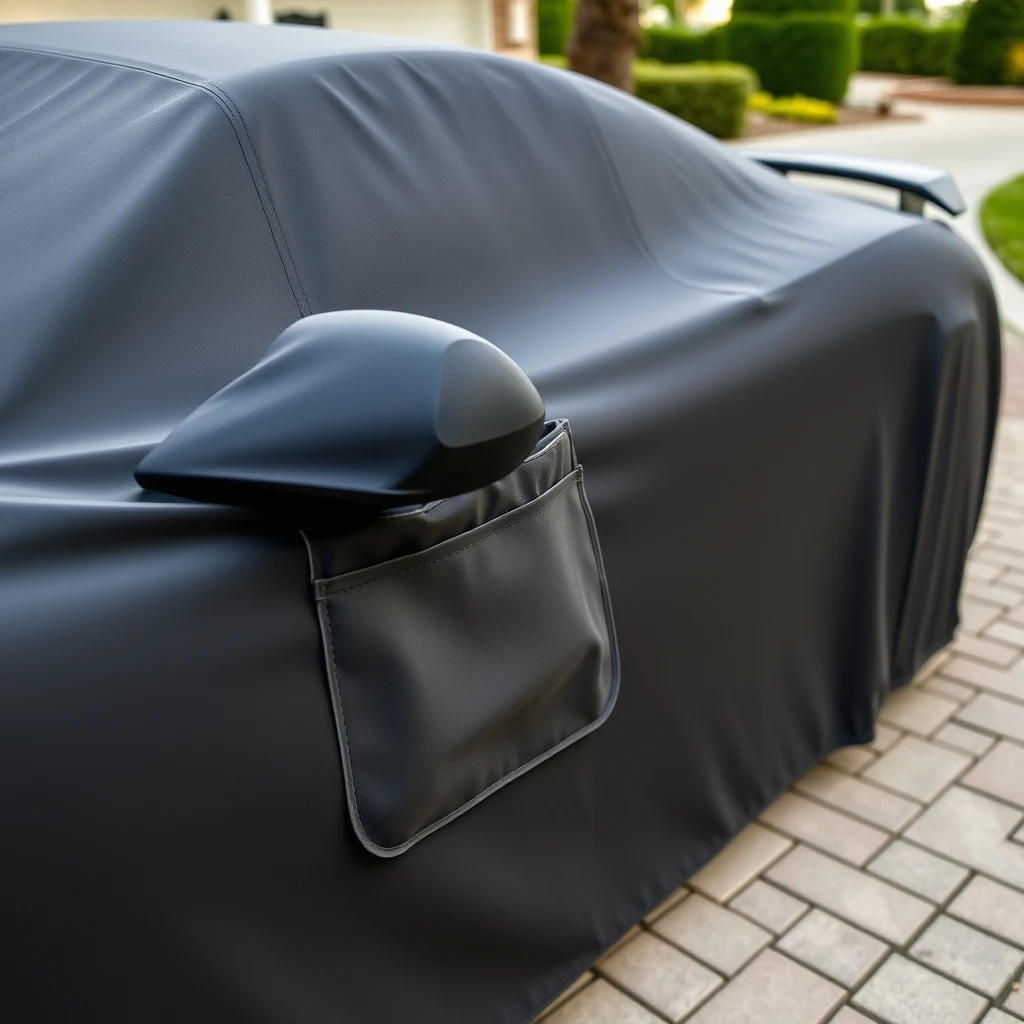
The breathability problem: why "waterproof" can be wrong
A fully waterproof, non-breathable cover — essentially an impermeable plastic or rubberized shell — blocks rain from entering but also traps moisture vapor that's already present. Cars in storage, even in garages, emit moisture from residual heat, weather seals, and temperature cycling. This moisture has nowhere to go under a non-breathable cover. The result is condensation on the paint surface, which causes water spots, accelerates surface rust on exposed metal edges, and in humid climates can promote mildew in interior gaps.
For short-term use (covering a car during an overnight storm, protecting it during a single day of work nearby), a waterproof cover is fine. For anything longer — storage over weeks, a seasonal cover for a car you're not driving — breathable fabric that sheds water while allowing vapor to escape is the correct choice.
Good outdoor covers achieve this with a multi-layer construction: a water-resistant or water-repellent (not fully waterproof) outer fabric that causes water to bead and run off, a middle layer for insulation or additional weather resistance, and a soft inner liner that doesn't scratch the paint. Moisture vapor can pass through the outer layers while liquid rain doesn't penetrate fast enough to matter.
Indoor vs outdoor covers: different jobs
| Use Case | Cover Type | Key Properties |
|---|---|---|
| Garage storage, dust only | Indoor | Soft liner, lightweight, dust/debris block. No weather resistance needed. |
| Occasional outdoor use | Semi-outdoor | Light weather resistance, breathable, easy to put on/take off. |
| Extended outdoor storage | Outdoor multi-layer | Water-repellent outer, breathable construction, UV blocking, secure fastening. |
| Short storm event only | Waterproof | Non-breathable acceptable for 1–3 day use. Not for extended storage. |
Indoor covers are often softer, lighter, and less expensive because they don't need weather-resistant materials. They protect against dust, minor scratches from garage debris, bird droppings from rafters, and accidental contact. Flannel-lined cotton or polyester blends are common. They're not outdoor covers and will degrade quickly in direct sun and rain.
Outdoor multi-layer covers are heavier, have UV-stabilized outer fabrics, and typically include some kind of fastening — elastic hems, belly straps, cable-and-lock grommets, or mirror pockets — to keep the cover from lifting in wind.
UV resistance: the overlooked spec
Ultraviolet radiation fades paint, degrades clearcoat, dries out rubber seals, and heats the interior to temperatures that accelerate plastic and leather deterioration. A car parked outdoors in a high-UV climate (desert Southwest, high altitude, coastal tropical) accumulates more UV damage in a few months than one in the Pacific Northwest does in a year.
UV blocking is listed on some covers as a UPF (Ultraviolet Protection Factor) rating — similar to sunscreen ratings. UPF 50 blocks 98% of UV radiation. For outdoor storage in high-UV environments, this spec matters as much as water resistance.
Even for moderate UV environments, any outdoor cover should use UV-stabilized fabric in the outer layer. Unstabilized synthetics degrade in direct sun and can shed particles onto the paint below.
Shopping for car covers? Browse current eBay listings → (we earn a small commission; your price is unchanged).
Custom vs universal fit: the fit problem
Universal-fit covers are sized by vehicle length and body style (sedan/coupe/SUV/truck). They're cheaper and easier to stock but almost always result in excess fabric somewhere — pooling around mirror housings, bunching at the roof line, or hanging long in the rear. In windy conditions, that loose fabric flaps. Fabric flapping against paint, even soft fabric, creates micro-abrasion over time — thousands of tiny repeated contact events that gradually dull the clearcoat.
Custom-fit covers are patterned for a specific make, model, and year. They account for mirror placement, spoilers, antenna location, and body character lines. A properly fitted custom cover has minimal excess material. It doesn't flap. It's also easier to put on and take off because it fits as designed, without wrestling excess fabric.
The cost difference is real — a good custom cover typically runs 1.5–3× the price of a comparable universal cover. For a daily driver that gets covered routinely, the paint protection benefit of proper fit justifies the difference. For occasional use, a quality universal cover from a reputable brand is a reasonable compromise.
Layer count and construction quality
Covers are commonly described by layer count: 2-layer, 3-layer, 4-layer, 5-layer. More layers generally means better weather protection and often softer inner surfaces — but the quality of the layers matters more than the count. A 4-layer cover with thin, low-quality materials can perform worse than a well-constructed 3-layer alternative.
What to look for in construction:
- Soft inner liner — should be explicitly soft, not just "non-scratch." Flannel, velvet pile, or similar soft fiber is better than bare woven polyester against paint.
- Stitching at stress points — mirror cutouts, hem edges, and strap attachment points. Double-stitched or reinforced seams outlast single-stitch construction significantly.
- UV-stabilized outer fabric — listed as UV-stabilized, UV-resistant, or with a UPF rating. Unstabilized material degrades within one season of direct sun exposure.
- Elastic hems or integrated straps — keeps the cover from lifting in wind without requiring a buyer to separately source tie-downs.
Wind and security fastening
A car cover in wind without any fastening becomes a sail. On a flat driveway with neighbors, it becomes a neighborhood nuisance. A cover that's regularly flapping is also causing abrasion and is likely to blow off entirely.
Security options, roughly from least to most secure:
- Elastic hem only — grips the lower body but won't resist sustained wind
- Belly strap — passes under the vehicle and buckles on both sides, preventing lift
- Cable and lock kit — cable threaded through grommets under the car, locked. Deters theft and resists wind. Common addition for long-term outdoor storage.
For covered parking or garages with closed doors, elastic hem is sufficient. For open outdoor driveway storage, a belly strap at minimum. For street storage in a higher-risk area, lock hardware.
Shop car covers on eBay
Current listings across indoor, outdoor, and custom-fit covers. We earn a small commission on qualifying sales; your price is the same. Full disclosure.
 Waterproof car cover
Multi-layer water-repellent + breathable construction. Not non-breathable for extended storage.
Waterproof car cover
Multi-layer water-repellent + breathable construction. Not non-breathable for extended storage.
 Outdoor car cover
UV-stabilized outer, multi-layer, breathable. For extended outdoor use.
Outdoor car cover
UV-stabilized outer, multi-layer, breathable. For extended outdoor use.
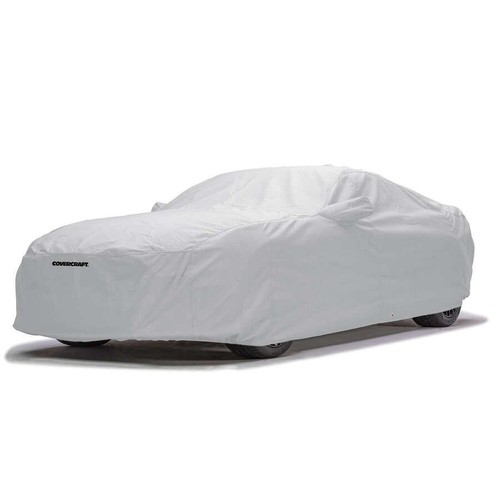 Custom car cover
Make/model/year specific. Best fit, minimal flapping, best paint protection.
Custom car cover
Make/model/year specific. Best fit, minimal flapping, best paint protection.
 SUV car cover
Sized for SUVs and crossovers. Verify length against your specific vehicle.
SUV car cover
Sized for SUVs and crossovers. Verify length against your specific vehicle.
 All-weather car cover
Year-round outdoor protection. Check for soft inner liner and belly strap included.
All-weather car cover
Year-round outdoor protection. Check for soft inner liner and belly strap included.