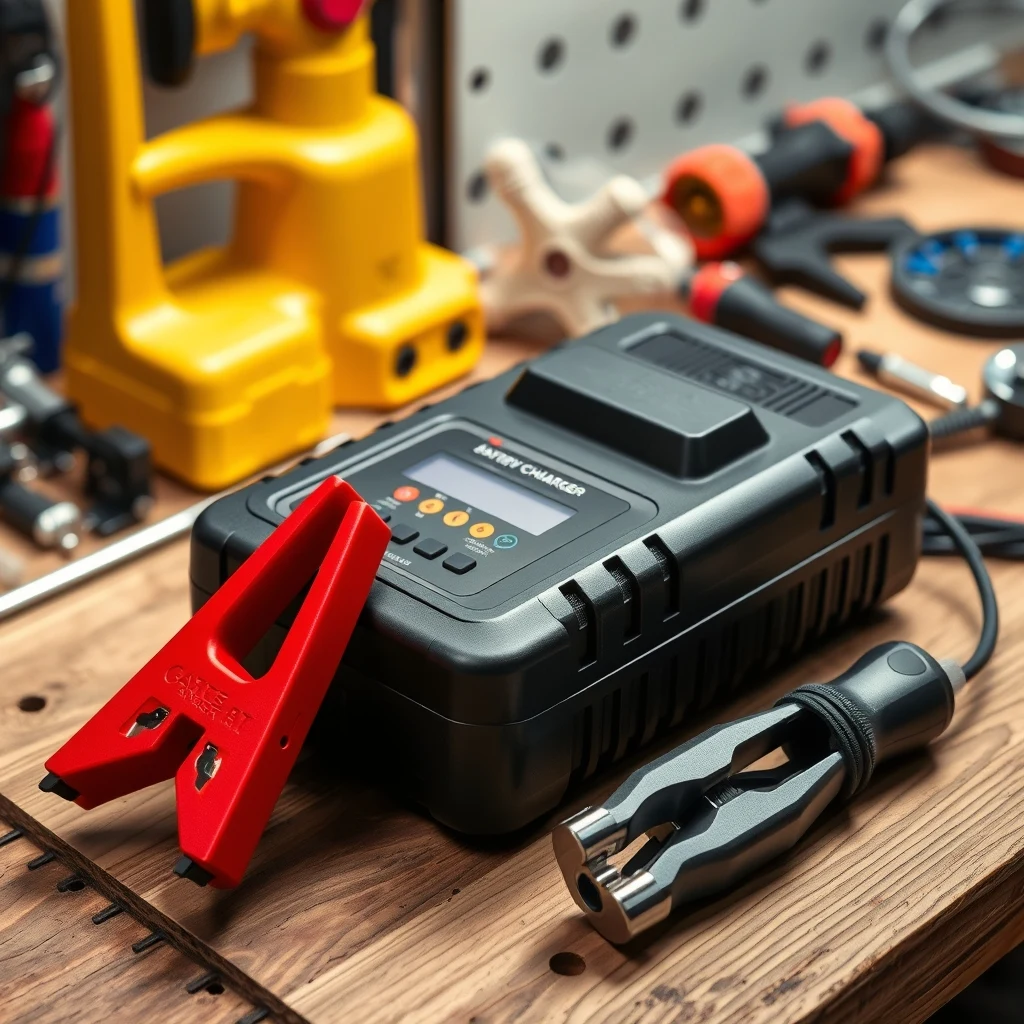
Charging amps: how fast is fast enough?
Charging amps determine how quickly the charger pushes energy into the battery. The general rule of thumb is that a safe charge rate is 10% of the battery's amp-hour (Ah) capacity. A 50Ah battery charges safely at 5 amps; a 100Ah battery at 10 amps.
At those rates, a full charge from a deeply discharged state takes roughly 10–12 hours. A 2-amp charger on the same 100Ah battery takes 50+ hours. Conversely, pushing 20–40 amps through a battery that isn't designed for fast charging generates heat and can shorten the battery's life.
Most home garage chargers in the 6–15 amp range hit the practical sweet spot: overnight charging is comfortable, recovery from a partially discharged state (which is the common case) takes a few hours, and the charge rate is within safe limits for standard automotive batteries.
Higher-amperage chargers (40–200 amp "boost" chargers) exist for professional or fleet use where downtime matters, but they're not appropriate for unattended charging at home — they need monitoring and are typically used for the bulk stage only before switching to a lower float rate.
Multi-stage smart chargers vs basic bulk chargers
A basic bulk charger applies a constant voltage until you disconnect it. If you forget it for two days, it overcharges the battery — boiling off electrolyte in a flooded lead-acid battery, or building excessive pressure in a sealed AGM. The charger doesn't know when to stop.
A multi-stage smart charger moves through three phases automatically:
- Bulk stage — maximum current at constant voltage until the battery reaches approximately 80% charge
- Absorption stage — holds voltage constant while current tapers as the battery approaches full charge (avoids overcharging)
- Float stage — drops to a lower maintenance voltage that holds the battery at full charge indefinitely without overcharging
Some smart chargers add a fourth desulfation stage for batteries with sulfation buildup (a common failure mode where lead sulfate crystals form on the plates during chronic undercharging). Desulfation applies pulsed high voltage to break down the crystals — it doesn't always work, but it can recover some batteries that would otherwise need replacement.
For any unattended charging situation, a multi-stage smart charger is the right choice. The extra cost is small compared to replacing a battery you damaged by forgetting a dumb charger overnight.
Battery chemistry: the critical match
Automotive batteries come in three primary chemistries with different charge requirements:
| Chemistry | Absorption Voltage | Float Voltage | Notes |
|---|---|---|---|
| Flooded lead-acid (wet cell) | 14.7–14.9V | 13.2–13.8V | Standard car battery. Most common. |
| AGM (Absorbed Glass Mat) | 14.4–14.6V | 13.2–13.6V | Sealed. Common in modern vehicles, start-stop systems. |
| GEL | 14.0–14.2V | 13.5–13.8V | Less common in automotive. Lower charge voltage than AGM. |
Using a flooded lead-acid charge profile on an AGM battery applies a higher absorption voltage than AGM batteries tolerate — this overcharges them, generates excess gas they can't vent (they're sealed), and can cause permanent capacity loss or rupture in extreme cases. Modern AGM batteries are increasingly common in factory-fitted vehicles (especially European cars and trucks with start-stop systems), so this isn't an edge case.
Look for a charger with an explicit AGM mode switch or selection, not just one that claims it's "compatible." The modes use genuinely different voltage thresholds.
Lithium iron phosphate (LiFePO4) batteries in some powersports and performance applications require different chargers still — a standard automotive charger will damage them. Verify chemistry before buying a charger for any vehicle that might use lithium chemistry.
Shopping for battery chargers? Browse current eBay listings → (we earn a small commission; your price is unchanged).
Battery maintainers: long-term storage care
A battery maintainer — sometimes called a trickle charger, though the terms aren't perfectly interchangeable — is designed for vehicles stored for weeks or months. Classic cars, motorcycles, ATVs, seasonal boats, and track-day cars all benefit from a maintainer connected during storage.
An unattended lead-acid battery self-discharges at roughly 1–3% per week at room temperature, faster in cold. Over a winter, an unmanaged battery can discharge enough to sulfate — a condition that progressively reduces capacity and eventually kills the battery even after charging. A maintainer holds the battery near full charge continuously, eliminating self-discharge damage.
Purpose-built maintainers operate at 0.75–3 amps — far lower than a recovery charger — and stay in float mode indefinitely. A regular charger in float mode can do the same job, but a dedicated maintainer often includes weatherproofing, ring terminal connections for permanent mounting, and a low-parasitic-draw design meant for continuous use.
Portable jump starters
A lithium-ion portable jump starter replaces the need for another vehicle to jump-start a dead battery. The good current-generation packs are compact, powerful enough for most gas engines up to 6 or 8 cylinders, and hold their charge for months in storage — making them far more practical than jump cables alone.
The key specs: peak amperage (what the pack can deliver for 1–3 seconds, enough to crank the starter motor) and which engine sizes it's rated for. Most decent packs handle 4-cylinder and 6-cylinder engines without issue; verify specifically if you have a large V8 or diesel.
They don't charge a dead battery — they just provide enough voltage and current to start the engine, which then charges the battery via the alternator. If your battery is failing, a jump start is a temporary solution; the battery still needs replacement or charging.
Shop battery chargers on eBay
Current listings across smart chargers, maintainers, and jump starters. We earn a small commission on qualifying sales; your price is the same. Full disclosure.
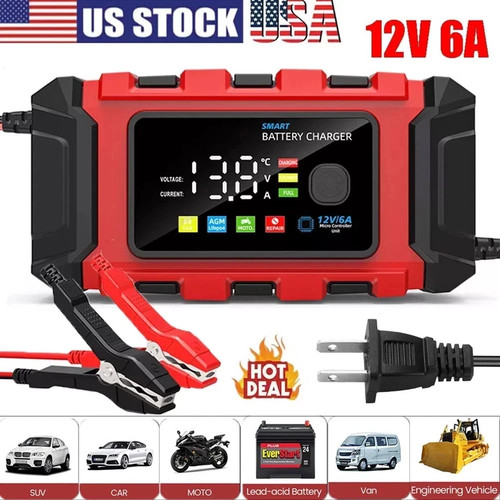 Car battery charger
General-purpose. Look for multi-stage charging and amperage matching your battery size.
Car battery charger
General-purpose. Look for multi-stage charging and amperage matching your battery size.
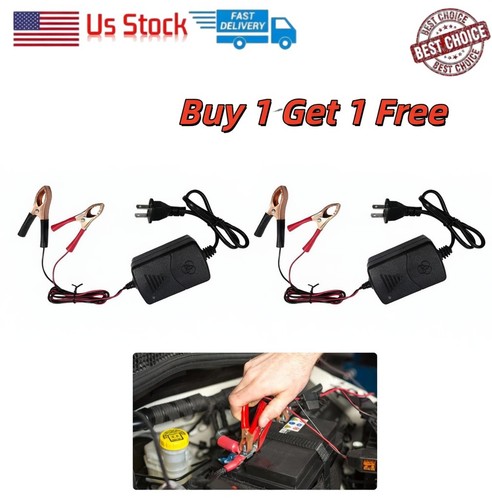 Battery maintainer
For seasonal storage. Holds charge indefinitely at 0.75–3A without overcharging.
Battery maintainer
For seasonal storage. Holds charge indefinitely at 0.75–3A without overcharging.
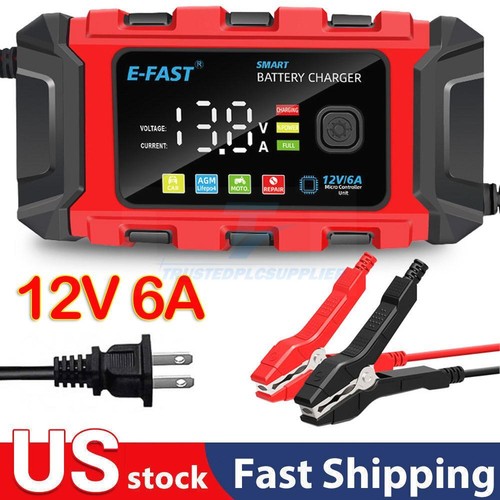 Smart battery charger
Auto multi-stage charging. Safe for unattended overnight use. Worth the extra cost.
Smart battery charger
Auto multi-stage charging. Safe for unattended overnight use. Worth the extra cost.
 Portable jump starter
Lithium-ion pack. Starts most gas engines without a second vehicle. Holds charge in storage.
Portable jump starter
Lithium-ion pack. Starts most gas engines without a second vehicle. Holds charge in storage.
 AGM battery charger
With dedicated AGM mode. Required for modern vehicles with sealed AGM batteries.
AGM battery charger
With dedicated AGM mode. Required for modern vehicles with sealed AGM batteries.