Guides
Fuel math, boil times, cold-weather performance, and system weight. No affiliate-driven rankings.
Why this page exists
Backpacking stove content online falls into two camps: YouTube "best stoves" videos that pick whichever gear the creator sponsors, and forum threads that devolve into liquid-fuel evangelism. Neither one does the fuel math.
The right stove depends on your trip profile — trip length, party size, altitude, season, and what fuel you can actually get at a resupply. An isobutane canister stove is meaningless if your trailhead is in rural Mexico in winter. A Whisperlite is overkill for a three-day summer trip. This page does the actual math.
Backpacking stoves worth searching on eBay
Proven stoves with real backcountry track records. We earn a small commission on qualifying sales; your price is unchanged. Full disclosure.
 MSR Whisperlite International
Multi-fuel liquid stove (white gas, kerosene, unleaded). ~13.1 oz with pump. The expedition workhorse — consistent output in cold and at altitude where canisters struggle.
MSR Whisperlite International
Multi-fuel liquid stove (white gas, kerosene, unleaded). ~13.1 oz with pump. The expedition workhorse — consistent output in cold and at altitude where canisters struggle.
 Jetboil Flash cooking system
Integrated canister system, ~100g water in ~100 seconds. Push-button ignition, fuel gauge indicator, color-change heat indicator on the cup. Efficient for two-person solo-boiling trips.
Jetboil Flash cooking system
Integrated canister system, ~100g water in ~100 seconds. Push-button ignition, fuel gauge indicator, color-change heat indicator on the cup. Efficient for two-person solo-boiling trips.
 MSR PocketRocket Deluxe
Ultralight canister stove (~3.1 oz). WindClip and pressure regulator make it more cold/wind-stable than most canister burners. Screws onto any standard isobutane/propane canister.
MSR PocketRocket Deluxe
Ultralight canister stove (~3.1 oz). WindClip and pressure regulator make it more cold/wind-stable than most canister burners. Screws onto any standard isobutane/propane canister.
 Snow Peak Litemax stove
~1.0 oz titanium canister burner — among the lightest standard-mount stoves made. No igniter, no frills. Pairs with a Snow Peak 300 or 450 titanium pot for a genuinely gram-counted system.
Snow Peak Litemax stove
~1.0 oz titanium canister burner — among the lightest standard-mount stoves made. No igniter, no frills. Pairs with a Snow Peak 300 or 450 titanium pot for a genuinely gram-counted system.
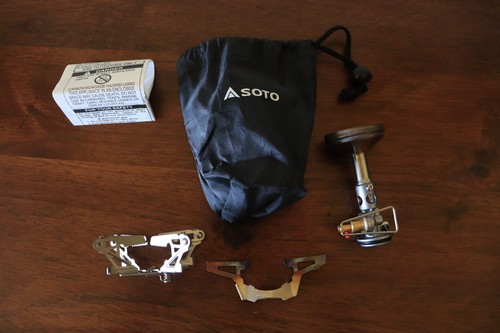 Soto Windmaster
~1.0 oz canister stove with a 4-flex burner designed to resist wind without a windscreen. Piezo igniter. Compatible with the Soto Micro Regulator for better cold performance. Popular among fast-and-light hikers.
Soto Windmaster
~1.0 oz canister stove with a 4-flex burner designed to resist wind without a windscreen. Piezo igniter. Compatible with the Soto Micro Regulator for better cold performance. Popular among fast-and-light hikers.