Where you cook decides the stove
Safety first: what the sources say
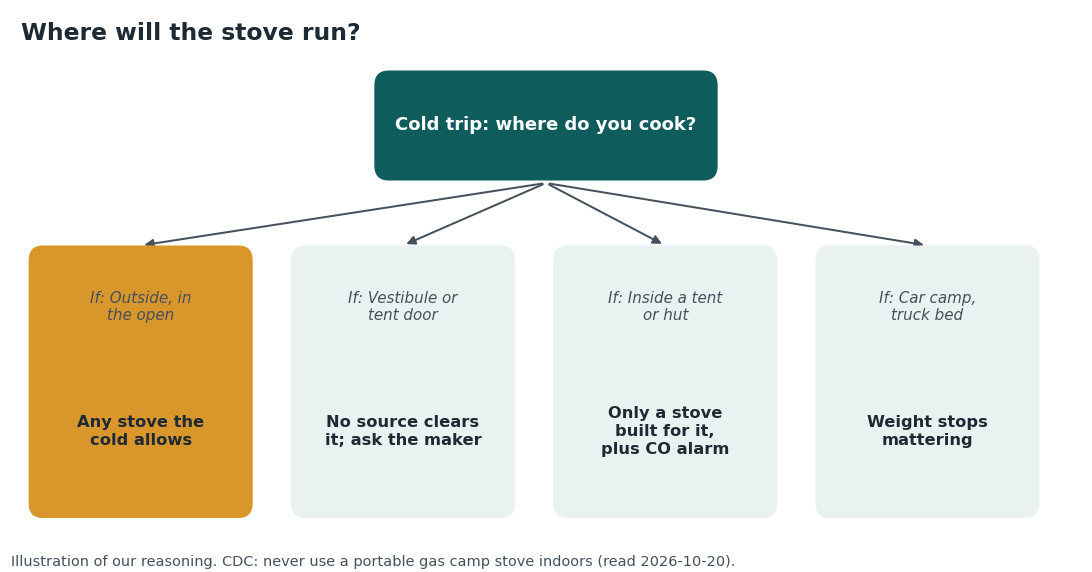
- CDC: "Never use a portable gas camp stove indoors." The same page says "Never burn charcoal indoors." It lists headache, dizziness, weakness, upset stomach, vomiting, chest pain and confusion as symptoms of carbon monoxide poisoning, and says people who are sleeping or intoxicated may die before they show symptoms. Source: CDC carbon monoxide page, read 2026-10-20. The page does not mention tents or vestibules.
- SilverAnt's wood stove page: "The stove gets extremely hot." Keep "a good clearance of at least half a meter" around the stove and chimney. Wear gloves and use a fire poker. It "can still be hot well after 12 hours of burning". Take extra care with pets and children.
- What that page does not say: nothing about carbon monoxide, an alarm, ventilation, tent fabric, a stove jack or a spark arrestor. If you plan a stove inside a tent, our hot tent guide covers those parts using another maker's pages.
- Check the fire rules where you camp. Land managers can ban stoves and fires.
Stoves in the cold
General knowledge, also in our canister vs liquid fuel guide: a gas canister loses pressure as it gets cold. Ask any stove maker for a stated minimum temperature. SilverAnt gives none for the SilverTi gas stove. Its alcohol stove page says "Use your stove in all seasons and conditions", a marketing line with no number behind it. The alcohol stove takes alcohol, solid fuel tablets or petrol and holds 60 ml; the page says no fuel is included.
SilverAnt does not sell a liquid-fuel stove. If your trip is cold enough that canister performance worries you, that is a different brand.
A winter kit, by stated weight
| Item | Stated weight | What the page states |
|---|---|---|
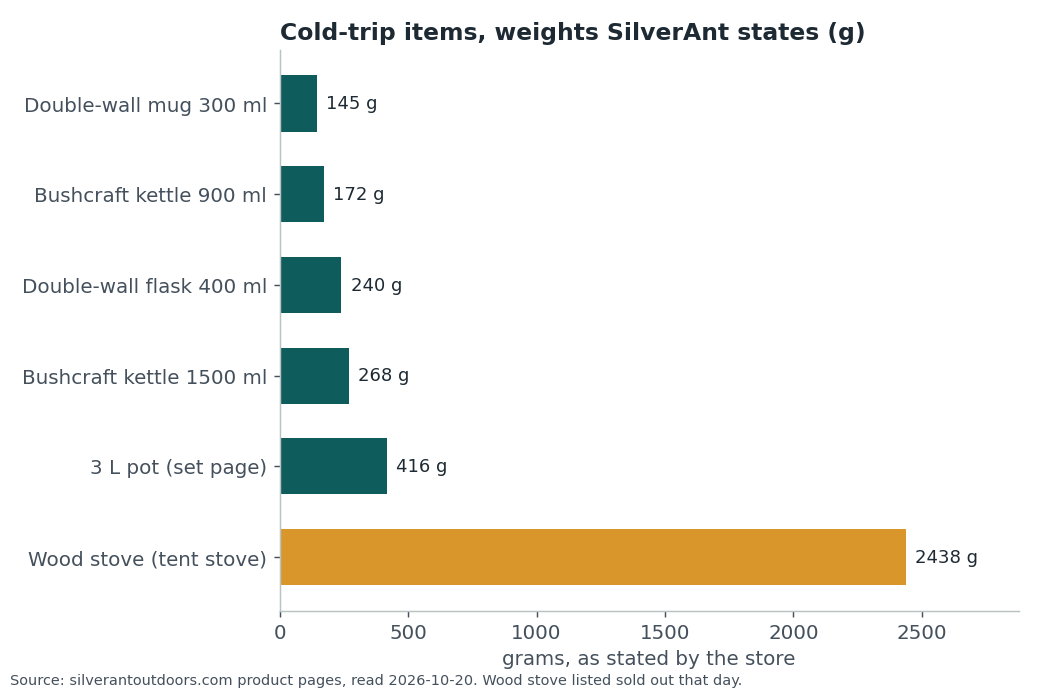
| Double-wall mug 300 ml | 145 g | Page says the "insulation between these walls keeps your hot drink warm for a long time". No hours stated. |
| Double-wall flask 400 ml | 240 g | Vacuum-insulated, silicone seal, thermal sleeve. No temperature or hours stated. |
| Bushcraft kettle | 172 g (900 ml), 268 g (1500 ml) | Page mentions "chilly mornings and evenings in winter". |
| 3 L pot | 416 g | From the XL set page. The pan in that set is stated at 230 g. |
| Wood stove | 2,438 g | Chimney "over 6 feet", 6 cm inside. Pipe rolled from one thin sheet. "Assembling can be a little tricky the first time." Listed sold out. |
| SilverTi gas stove | 102 g | No minimum temperature stated. |
The wood stove is more than ten times the weight of the gas stove, and it is a tent-heating job, not a cook-kit item. For a winter day trip or a car camp, none of that matters; for a carry-in trip, the wood stove is the sort of load our hot tent guide weighs up.
The simple option
For most cold day trips, hot water from home in a flask you already own, and a stove outside the tent for the rest, is the whole plan. Add a mug that is also a pot if you must. Skip anything that puts a flame in a sleeping space.
We have not tested any SilverAnt product in the cold. We cannot tell you how any of these perform in freezing weather.
Sources
CDC carbon monoxide page (cdc.gov/carbon-monoxide/about), read 2026-10-20. silverantoutdoors.com wood stove, stove, mug, flask and kettle product pages, read 2026-10-20.